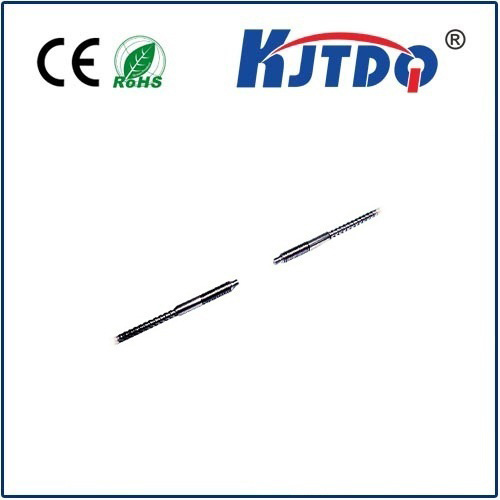
In the world of industrial automation, simplicity and reliability are paramount. The DC 2-wire photoelectric sensor stands as a testament to this principle, offering a straightforward yet powerful solution for countless detection tasks. Unlike its 3-wire or 4-wire counterparts, this sensor simplifies installation and reduces wiring complexity, making it a preferred choice for system designers and maintenance technicians alike.
The core functionality of a DC 2-wire photoelectric sensor is elegantly simple. It operates on a direct current (DC) power supply, typically in the range of 10-30V DC. The "2-wire" designation means it requires only two connections: one for power and one for the load. The sensor itself is connected in series with the power supply and the load, such as a programmable logic controller (PLC) input or a relay. When the sensor detects an object, it switches its internal circuit, allowing current to flow to the load, signaling a detection event. This design eliminates the need for a separate output wire, streamlining the entire setup.
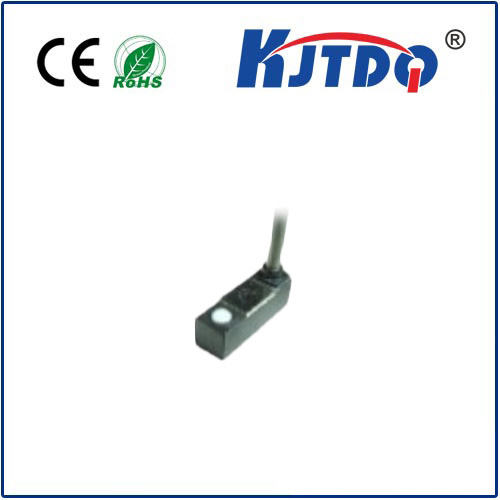
This simplicity translates into significant practical benefits. Installation time is drastically reduced because there are fewer wires to route and terminate. This not only cuts down on initial project costs but also minimizes potential points of failure in the wiring. The compact design, inherent to the simpler internal circuitry, allows these sensors to fit into tight spaces where larger sensors might not. Furthermore, the reduced part count often contributes to enhanced long-term reliability and durability in harsh industrial environments, resisting vibration, dust, and moisture.
DC 2-wire photoelectric sensors are versatile and come in the same fundamental operating modes as other photoelectric sensors. The through-beam type, with separate emitter and receiver units, offers the longest sensing ranges and highest reliability. The retro-reflective type, which uses a reflector, provides a good balance of range and easy alignment. Finally, the diffuse reflective type, where the emitter and receiver are in the same housing, detects objects by reflecting light directly off the target, ideal for sensing at shorter distances. This versatility allows them to be deployed for presence detection, counting, positioning, and quality control across packaging, material handling, automotive, and food & beverage industries.
When selecting a DC 2-wire sensor, several key specifications demand attention. The sensing range must be appropriate for the application. The output type is typically a solid-state switch (PNP or NPN function is inherent in the 2-wire series connection, often equivalent to a "dry contact" or switch). The response time must be fast enough for the process speed. Environmental ratings, such as IP67 for dust and water ingress protection, are crucial for longevity. It is also vital to ensure compatibility with the existing control system's input characteristics regarding voltage and current.
While offering immense advantages, it's important to understand the considerations. The sensor has a small residual current or voltage drop even in the "off" state, which must be compatible with the connected load's requirements. The available sensing range for a 2-wire model might be slightly less than a comparable 3-wire model due to power consumption constraints. However, for the vast majority of standard applications, these factors are easily managed during the design phase.
The integration of a DC 2-wire photoelectric sensor into a control system is remarkably straightforward. The two wires are connected in series with the power supply and the PLC input module. No separate common wire is needed. This plug-and-play nature accelerates machine commissioning and simplifies troubleshooting. Maintenance becomes easier as the wiring diagram is less complex, allowing technicians to quickly diagnose issues.
In conclusion, the DC 2-wire photoelectric sensor embodies efficiency. It delivers reliable object detection by stripping away unnecessary complexity, focusing on a robust and easy-to-implement design. For engineers seeking to reduce cabinet clutter, lower installation costs, and maintain high reliability without compromising performance, this sensor technology presents an optimal and intelligent choice. Its continued prevalence in modern factories underscores its role as a fundamental building block of efficient automation.