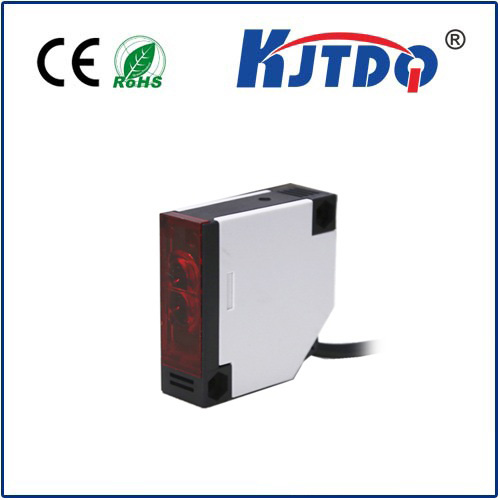
In the rapidly evolving landscape of industrial automation, precision, reliability, and efficiency are non-negotiable. At the heart of countless automated systems lies a critical component often overlooked: the photoelectric switch sensor. This technology, a cornerstone of modern manufacturing and logistics, operates on a simple yet profound principle—using light to detect the presence, absence, or position of an object without physical contact. The core mechanism involves an emitter that projects a light beam—typically infrared, visible red, or laser—and a receiver that captures this beam. When an object interrupts or reflects this beam, the sensor triggers a switch, sending a signal to a control system like a PLC (Programmable Logic Controller). This fundamental action forms the basis for a myriad of complex automated tasks.
The versatility of photoelectric sensors is staggering, primarily due to their various operating modes. The through-beam type, with separate emitter and receiver units, offers the longest sensing range and highest reliability, ideal for harsh environments where consistent detection is paramount. Retro-reflective sensors combine emitter and receiver in one housing, bouncing light off a reflector, providing a solid solution for medium-range applications. Lastly, diffuse reflective sensors detect objects by measuring the light scattered back from the target itself, perfect for close-range detection where installing a separate receiver or reflector is impractical. Each type serves distinct purposes, from counting bottles on a high-speed conveyor belt to ensuring a robotic arm's precise positioning, or safeguarding personnel by detecting entry into hazardous zones.
Why has the photoelectric switch sensor, particularly models denoted with identifiers like KJTDQ, become so indispensable? The answer lies in its unparalleled advantages. Unlike mechanical limit switches, they offer wear-free operation, leading to dramatically reduced maintenance and longer service life. Their non-contact nature allows for high-speed detection, crucial in fast-paced production lines where every millisecond counts. They are remarkably accurate, capable of detecting objects irrespective of material—metal, plastic, wood, or even glass—provided the correct sensor type is selected. Furthermore, modern photoelectric sensors are engineered to withstand industrial rigors: dust, moisture, vibration, and extreme temperatures. Advanced models feature robust housings (often IP67 or higher), built-in diagnostics via LED indicators, and adjustable sensitivity to filter out background interference, ensuring stable performance in the most demanding settings.
The application spectrum of these sensors is virtually limitless. In packaging, they ensure correct box placement and label positioning. In automotive assembly, they verify part presence and robot coordination. In material handling, they manage inventory by counting items on pallets. In food and beverage, they maintain hygiene while detecting transparent containers. The integration with Industry 4.0 and IoT frameworks is the next frontier. Smart photoelectric sensors can now communicate detailed operational data—not just on/off status but also signal strength, contamination levels, and predictive maintenance alerts—directly to networked control systems. This data-driven approach enables proactive optimization, minimizes unplanned downtime, and enhances overall equipment effectiveness (OEE).
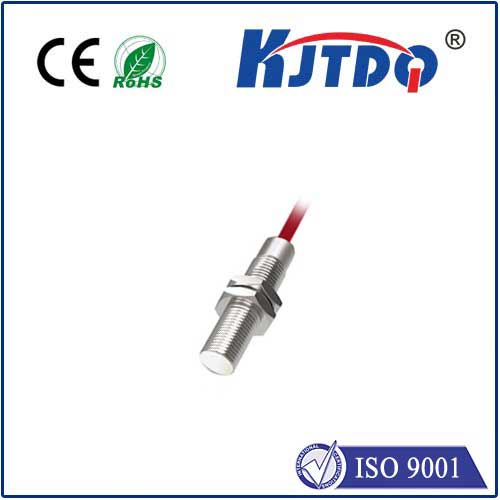
Selecting the right photoelectric switch sensor requires careful consideration. Key factors include the required sensing distance, the size and material of the target object, the environmental conditions (presence of dust, fog, or ambient light), the required response speed, and the electrical output type (e.g., NPN, PNP, analog, or IO-Link). A sensor like the KJTDQ series typically represents a range designed for robustness and versatility, suitable for general industrial automation tasks. Proper installation is equally critical; aligning the beam correctly, avoiding sensor shake, and shielding it from optical or electrical noise are essential steps for reliable operation. Regular cleaning of the lens and periodic functional checks are simple yet effective maintenance practices that sustain peak performance.
As automation grows more sophisticated, the role of the photoelectric switch sensor only becomes more central. It is the silent, reliable sentinel that enables machines to "see," transforming raw mechanical motion into intelligent, responsive, and efficient systems. From simple presence detection to complex positioning tasks, this technology empowers industries to achieve higher levels of productivity, safety, and quality control. Understanding its principles, types, and applications is the first step for any engineer or technician looking to harness the full potential of automated systems and build the resilient, smart factories of the future.