Проверка
Проверка
Проверка
Проверка
Проверка
Проверка
In the rapidly evolving landscape of industrial automation, the demand for reliable, precise, and versatile sensing technology has never been greater. Among the various solutions available, photoelectric sensors stand out as a cornerstone technology, enabling machines to "see" and interact with their environment with remarkable accuracy. The integration of advanced photoelectric sensors is fundamentally transforming production lines, logistics systems, and safety mechanisms across global industries.
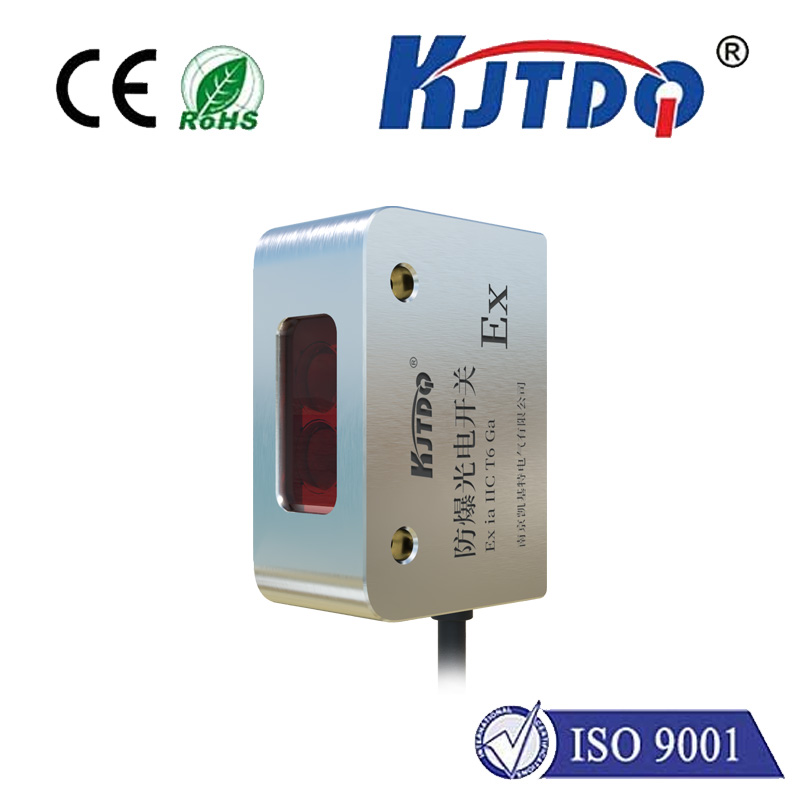
At its core, a photoelectric sensor operates by emitting a light beam—typically from an LED or laser diode—and detecting changes in the received light signal. This simple principle enables the detection of an object's presence, absence, distance, or even surface characteristics without physical contact. Modern advancements have led to the development of several key types, each suited for specific challenges. Through-beam sensors, with separate emitter and receiver units, offer the longest sensing ranges and highest reliability for clear object detection. Retro-reflective sensors use a reflector to bounce the beam back, providing a practical solution for many medium-range applications. Perhaps the most versatile are diffuse reflective sensors, where the emitter and receiver are housed in a single unit, detecting light reflected directly from the target object itself. This design simplifies installation and is ideal for detecting objects at shorter distances.
The true revolution, however, lies in the sophisticated features now embedded within these devices. Background suppression technology allows sensors to ignore objects beyond a programmed distance, eliminating false triggers from conveyor belts or machinery behind the target. Advanced models incorporate precise background suppression or time-of-flight measurement for exact distance measurement, enabling tasks like height differentiation or precise positioning. Furthermore, the development of sensors with high-intensity, focused light beams and robust housings has made them exceptionally resistant to common industrial adversaries: ambient light interference, dust, dirt, and moisture. Many now carry IP67 or IP69K ratings, ensuring reliable operation in washdown environments common in food and beverage or pharmaceutical manufacturing.
The applications are as diverse as industry itself. In packaging, photoelectric sensors count bottles, verify label placement, and check fill levels with unerring speed. Automotive assembly lines rely on them for part verification and robot guidance. In material handling, they control the flow of parcels on sortation systems, ensuring each item is routed correctly. Beyond production, they are critical for safety, forming the invisible light curtains that protect workers from hazardous machinery. The logistics sector leverages them for pallet detection, warehouse automation, and automated guided vehicle (AGV) navigation. Their ability to detect a vast array of materials—from transparent glass and shiny metals to opaque plastics—makes them an indispensable tool.
The future trajectory of photoelectric sensing is intertwined with the rise of Industry 4.0 and the Industrial Internet of Things (IIoT). The next generation of sensors are not just detectors; they are intelligent data points. Equipped with IO-Link communication, these smart sensors can transmit detailed diagnostic information—such as signal strength, operating temperature, and contamination levels—to central control systems. This enables predictive maintenance, where potential issues are flagged before they cause downtime, and allows for remote configuration and monitoring, drastically reducing machine setup times and operational costs. This shift from simple switching devices to intelligent, networked components is enhancing system transparency, flexibility, and overall equipment effectiveness (OEE).
Selecting the right photoelectric sensor requires careful consideration of the application's specific needs. Key factors include the sensing distance required, the size, color, and material of the target object, the required response speed, and the environmental conditions. Understanding whether the application requires detection, positioning, or measurement is the first critical step. Consulting with technical experts or utilizing online selection tools from reputable manufacturers can ensure the optimal sensor is chosen, maximizing performance and return on investment.
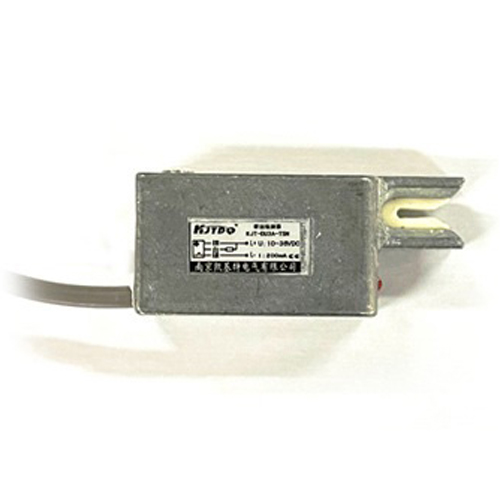
In conclusion, as automation becomes more complex and intelligent, the role of the photoelectric sensor continues to expand and evolve. From their fundamental principle of light-based detection to their current status as smart, connected devices, they remain a critical enabler of efficiency, safety, and quality. By providing reliable, non-contact sensing across countless challenging scenarios, advanced photoelectric sensors like those from KJTDQ are not merely components; they are the essential eyes of modern automated systems, driving productivity and innovation forward.