Проверка
Проверка
Проверка
Проверка
Проверка
Проверка
In industrial automation and control systems, photoelectric sensors play a critical role in detecting the presence, absence, or position of objects without physical contact. Among the various models available, the BRQM400-DDTA photo sensor stands out as a reliable and versatile solution for demanding applications. This article delves into the technical specifications, operational principles, common applications, and benefits of this specific photoelectric sensor, providing a thorough understanding for engineers, technicians, and procurement specialists.
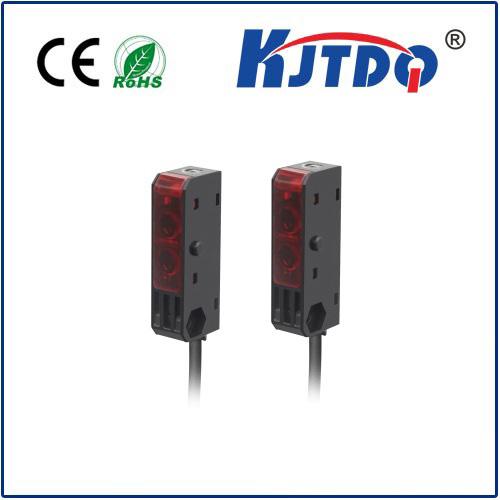
The BRQM400-DDTA is a type of photoelectric sensor that utilizes a light beam to detect objects. Its core working principle involves an emitter, which projects a light beam—often infrared, visible red, or laser—and a receiver that captures the reflected or interrupted beam. The DDTA suffix in its model number typically indicates specific features such as a diffuse reflective sensing mode with background suppression, a particular sensing range, and a defined output configuration (like a 4-pin connector or PNP/NPN output). This design allows it to accurately detect objects regardless of their color, material, or surface texture, making it highly adaptable.
One of the key strengths of the BRQM400-DDTA photo sensor is its robust construction. Designed for industrial environments, it often features a housing rated at IP67 or higher, ensuring protection against dust and water ingress. This makes it suitable for use in manufacturing lines, packaging machinery, material handling systems, and even outdoor applications where environmental conditions can be harsh. The sensor's response time is typically in the millisecond range, enabling high-speed detection crucial for modern automated processes. Its sensing range, depending on the exact variant, can effectively cover distances from a few centimeters to several meters, offering flexibility in installation.
In practical applications, the BRQM400-DDTA photoelectric sensor is frequently employed for tasks such as object counting on conveyor belts, detecting fill levels in containers, ensuring proper positioning of components in assembly robots, and triggering safety light curtains. Its background suppression capability is particularly valuable in scenarios where the sensor must ignore objects beyond a set distance, preventing false triggers from machinery parts or walls behind the target. For instance, in a bottling plant, it can reliably detect transparent bottles on a moving line, a task that challenges many standard sensors.
When integrating the BRQM400-DDTA into a system, proper installation and alignment are paramount for optimal performance. Factors like ambient light interference, the reflectivity of the target object, and the mounting angle must be considered. Many models come with built-in indicators, such as a stable LED light for power and a blinking LED for signal output, which aid in setup and troubleshooting. Regular maintenance, primarily keeping the lens clean from oil, dust, or debris, ensures long-term reliability and accuracy.
Choosing the BRQM400-DDTA photoelectric sensor offers several advantages. It enhances production efficiency by enabling precise, non-contact detection that reduces mechanical wear and tear. Its reliability minimizes downtime and maintenance costs. Furthermore, its versatility across different industries—from automotive and electronics to food and beverage and logistics—makes it a cost-effective component for various automation projects. For those sourcing this sensor, it is essential to verify the exact specifications with the manufacturer or distributor to ensure compatibility with the existing control system voltage (commonly 10-30V DC) and output type required.
In summary, the photo sensor BRQM400-DDTA represents a sophisticated piece of sensing technology integral to modern industrial automation. Its combination of durability, precision, and adaptability addresses the core needs of object detection in complex environments. By understanding its features and applications, professionals can effectively leverage this photoelectric sensor to improve system performance, safety, and operational efficiency.