Проверка
Проверка
Проверка
Проверка
Проверка
Проверка
In the world of industrial automation and precision control, the ability to detect objects accurately, reliably, and without physical contact is paramount. This is where the laser photoelectric sensor stands as a cornerstone technology. Unlike traditional mechanical switches or other sensing methods, these devices offer unparalleled accuracy, speed, and versatility, making them indispensable in modern manufacturing, packaging, logistics, and safety systems.
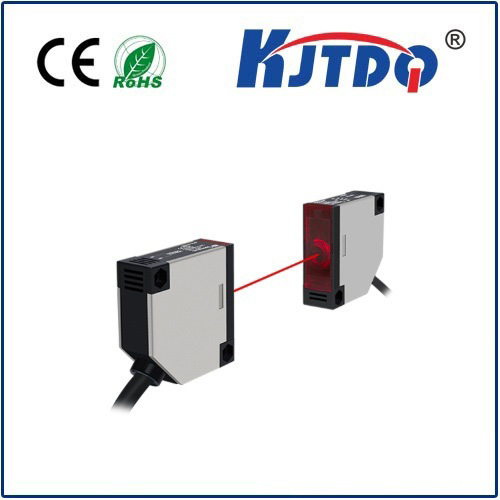
At its core, a laser photoelectric sensor operates on a simple yet powerful principle. It emits a focused beam of laser light—typically visible red or infrared—towards a target. A receiver within the sensor then detects the presence or absence of this light beam. The specific reaction to the interruption or reflection of this beam determines the sensor's output signal. This fundamental operation is categorized into three primary sensing modes, each suited for different applications. The through-beam mode, considered the most reliable for long-range detection, uses separate emitter and receiver units. An object is detected when it breaks the beam between them. The retro-reflective mode employs a single unit that emits light towards a special reflector; detection occurs when the reflected beam is blocked. Finally, the diffuse reflective mode, the most common for short-range applications, uses the target object itself to reflect the emitted light back to the receiver housed in the same unit.
The advantages of choosing a laser photoelectric sensor are numerous and significant. The primary benefit is exceptional precision. The highly collimated laser beam allows for the detection of extremely small objects or precise edges, enabling tasks like exact positioning or minute part verification. This is coupled with a long sensing range compared to standard LED-based photoelectric sensors, allowing for flexible installation in large machinery or conveyor systems. Furthermore, the visible laser spot simplifies alignment and setup, drastically reducing installation time and potential errors. Their response time is incredibly fast, capable of detecting objects moving at high speeds on production lines, which is critical for maintaining throughput and efficiency. Durability is another key factor; with no moving parts to wear out and robust housings often rated for IP67 or higher, they withstand harsh industrial environments involving dust, moisture, and vibration.
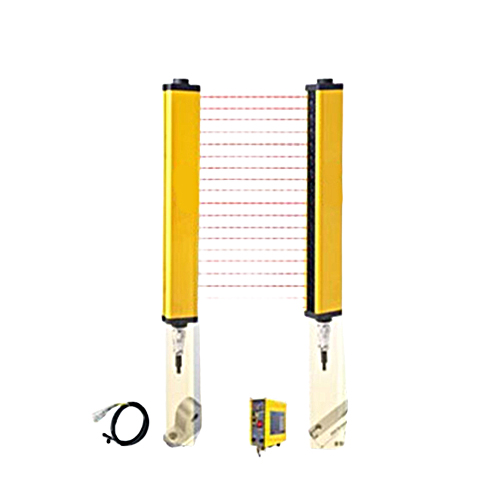
The practical applications of laser photoelectric sensors span virtually every industry. In electronics manufacturing, they are used for wafer handling, component placement verification, and lead counting. In automotive assembly lines, they ensure precise robot guidance, part presence checking, and weld seam tracking. The packaging industry relies on them for label detection, fill level control, and carton counting. They are also vital in material handling for object detection on high-speed conveyors and in palletizing systems. Beyond production, they play a crucial role in safety, forming the invisible guards of light curtains that protect workers from hazardous machine movements.
Selecting the right laser photoelectric sensor requires careful consideration of several parameters. The required sensing distance and the size of the target object are the starting points. The environmental conditions—such as ambient light, dust, fog, or the color and surface finish of the target—can affect performance and may necessitate sensors with special filters or high-power outputs. The required output type (e.g., NPN/PNP transistor, analog) must match the control system's input. Finally, the physical housing size and mounting style must fit the mechanical constraints of the application.
Modern advancements continue to push the boundaries of what these sensors can achieve. Innovations include background suppression technology, which allows the sensor to ignore objects beyond a set distance, and precise background evaluation for detecting objects against complex backgrounds. The integration of IO-Link communication provides smart sensor capabilities, enabling remote configuration, real-time diagnostics, and condition monitoring, paving the way for predictive maintenance and Industry 4.0 integration.
In conclusion, the laser photoelectric sensor is far more than just a simple switch. It is a sophisticated, reliable, and precise tool that forms the eyes of automated systems. By providing non-contact detection with high accuracy and speed, it enhances productivity, ensures quality, and safeguards processes. For engineers and system integrators aiming to optimize performance and reliability, understanding and leveraging the capabilities of the laser photoelectric sensor is not just an option—it is a fundamental step towards building smarter, more efficient, and more responsive industrial operations.