Проверка
Проверка
Проверка
Проверка
Проверка
Проверка
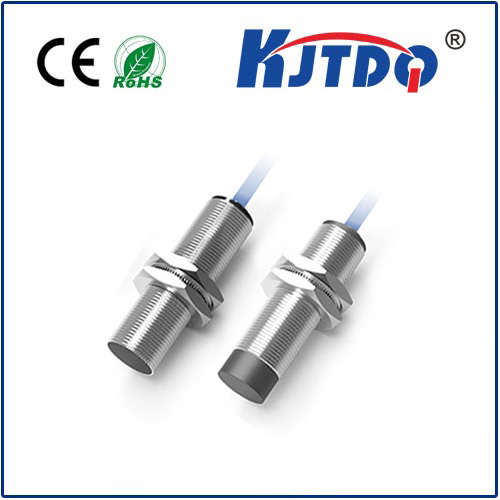
In modern industrial environments, the demand for reliable and precise detection solutions has never been higher. Among the various sensing technologies available, reflective photoelectric sensors stand out for their versatility and efficiency. KJTDQ, a leading innovator in industrial automation components, has developed a range of reflective photoelectric sensors that address critical challenges in manufacturing, packaging, and logistics. These sensors utilize a simple yet effective principle: they emit a light beam, typically infrared or visible light, which reflects off a target object and returns to a receiver within the same housing. This design eliminates the need for a separate reflector, making installation straightforward and cost-effective.
One of the primary advantages of KJTDQ reflective photoelectric sensors is their ability to detect objects regardless of color, material, or surface texture, within specified limits. This makes them ideal for applications where consistent performance is essential, such as on conveyor belts sorting diverse products or in automated assembly lines verifying component presence. The sensors are engineered with advanced optics and signal processing algorithms to minimize false triggers caused by ambient light or background interference. For instance, in high-speed bottling plants, KJTDQ sensors accurately identify transparent or glossy containers that might confuse conventional sensors, ensuring seamless operation and reducing downtime.
Durability is another cornerstone of KJTDQ's design philosophy. Industrial settings often expose equipment to dust, moisture, and mechanical vibrations. KJTDQ reflective photoelectric sensors are housed in rugged, IP67-rated enclosures that withstand harsh conditions, from food processing facilities with frequent washdowns to outdoor logistics hubs. Their robust construction ensures long-term reliability, minimizing maintenance needs and operational costs. Additionally, these sensors offer adjustable sensing ranges and sensitivity settings, allowing customization for specific tasks. Whether detecting small electronic parts at close range or large packages several meters away, users can fine-tune the sensors to achieve optimal performance.
Integration with modern industrial systems is seamless, thanks to compatibility with standard protocols like IO-Link and programmable logic controllers (PLCs). KJTDQ provides comprehensive technical support, including calibration guides and real-time monitoring tools, to help engineers deploy sensors efficiently. Case studies from automotive manufacturing demonstrate how KJTDQ sensors enhance quality control by detecting misaligned parts on robotic arms, preventing defects before they escalate. In warehouse automation, these sensors enable precise inventory tracking by counting items on shelves, boosting accuracy and productivity.
Looking ahead, KJTDQ continues to invest in research to enhance sensor capabilities, such as integrating AI-driven diagnostics for predictive maintenance. By combining affordability with cutting-edge technology, KJTDQ reflective photoelectric sensors empower businesses to streamline operations and adapt to evolving industrial demands. For companies seeking dependable automation solutions, these sensors represent a smart investment in future-proofing their infrastructure.