Проверка
Проверка
Проверка
Проверка
Проверка
Проверка
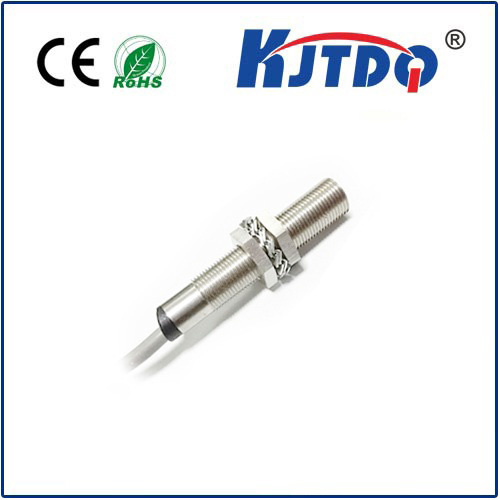
In the world of industrial automation, precision and reliability are non-negotiable. Among the myriad of components that keep systems running smoothly, the PNP NC proximity sensor stands out as a cornerstone of dependable object detection. This guide delves into the intricacies of this sensor type, explaining its operation, key advantages, and ideal applications to help you make an informed decision for your automation needs.
First, let's decode the terminology. "PNP" refers to the sensor's output configuration. A PNP sensor, also known as a "sourcing" sensor, switches the positive voltage to the load when an object is detected. The "NC" stands for "Normally Closed." In its default state without a target present, the NC circuit is closed, allowing current to flow. When a metal object enters the sensor's detection range, the circuit opens, interrupting the signal. This "break-to-make" or "open-on-detection" logic is crucial for fail-safe designs. Combining PNP output with NC functionality creates a sensor that is actively "on" until it detects a target, at which point its output switches "off."
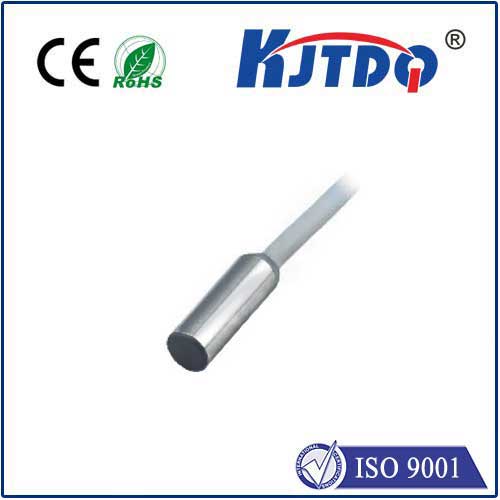
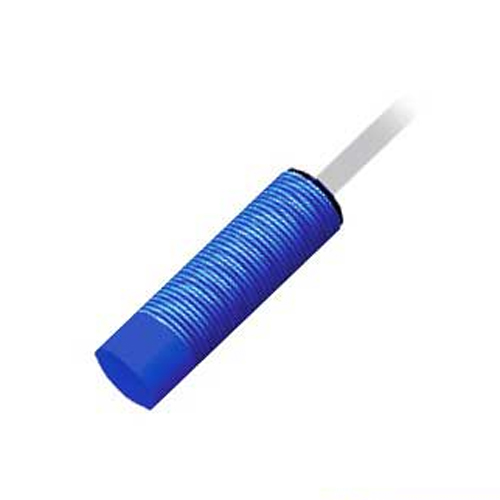
The operational principle hinges on electromagnetic fields. Most PNP NC proximity sensors are inductive, meaning they generate an oscillating electromagnetic field from their sensing face. When a metallic object disrupts this field, it causes a change in oscillation amplitude. The sensor's internal circuitry detects this change and triggers the switching action of its solid-state PNP transistor output, changing the state from the normally closed condition.
Why choose a PNP NC configuration? The benefits are significant for specific safety and monitoring protocols. The primary advantage is inherent fail-safe operation. In a critical system, a wire break or power loss to an NC sensor will cause the signal to drop, mimicking the detection state. This can trigger an alarm or a safe shutdown, preventing machinery from operating under faulty conditions. This makes PNP NC sensors ideal for monitoring safety guards, door positions, or end-of-travel limits where an open circuit must indicate a problem or a safe state. Furthermore, PNP wiring is often considered more intuitive in many PLC (Programmable Logic Controller) input card designs that are wired to source current, simplifying installation and reducing errors.
When selecting a PNP NC proximity sensor, several specifications demand attention. The sensing range is paramount—ensure it suits your application without being overly sensitive to background metals. The housing material, typically nickel-plated brass or stainless steel, must withstand the environmental conditions, including exposure to coolants, oils, or physical impact. Factor in the operating voltage range (commonly 10-30V DC) and the output current capacity to ensure compatibility with your controller. Response frequency is another key metric, determining how quickly the sensor can detect objects passing by at high speeds.
Real-world applications for PNP NC sensors are vast. They are extensively used in automated packaging lines to confirm the presence of a product before sealing. In robotic cells, they verify that a gripper is in the open (home) position before initiating a cycle. Machine tool manufacturers rely on them to confirm that protective covers are securely closed before spindle rotation begins. Conveyor systems utilize them as jam detectors; if a package stops moving and remains in front of the sensor, the maintained "off" signal can halt the line to prevent damage.
Installation and maintenance are straightforward but require care. Always ensure the sensor is mounted securely and aligned correctly for the target material. Maintain the recommended clearance around the sensor body to prevent interference from adjacent metal structures (the "flush-mountable" feature on many models helps here). Regular cleaning of the sensing face from dust, debris, or metallic swarf is essential to maintain stated sensing ranges and prevent false triggers.
In conclusion, the PNP NC proximity sensor is more than just a switch; it is a critical component for designing robust, safe, and efficient automated systems. Its Normally Closed operation provides a logical layer of safety, while the PNP output offers compatibility with a wide range of industrial controls. By understanding its working principle and matching its characteristics to your application's requirements—be it fail-safe monitoring, position verification, or high-speed counting—you can leverage this technology to enhance operational reliability and productivity on your factory floor. Choosing the right sensor is an investment in the uninterrupted flow of your automation processes.