Проверка
Проверка
Проверка
Проверка
Проверка
Проверка
In the intricate world of industrial automation and control systems, precision and reliability are non-negotiable. Among the myriad components that ensure seamless operation, the SPDT limit switch stands as a fundamental yet critical device. This guide delves into the mechanics, applications, and selection criteria for SPDT limit switches, providing essential knowledge for engineers, technicians, and procurement specialists.
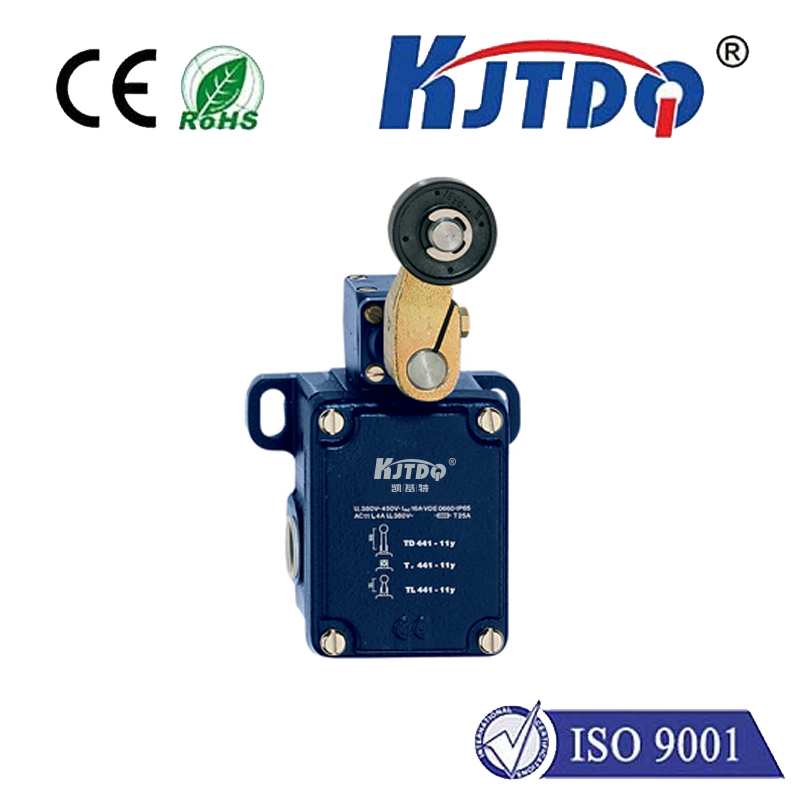
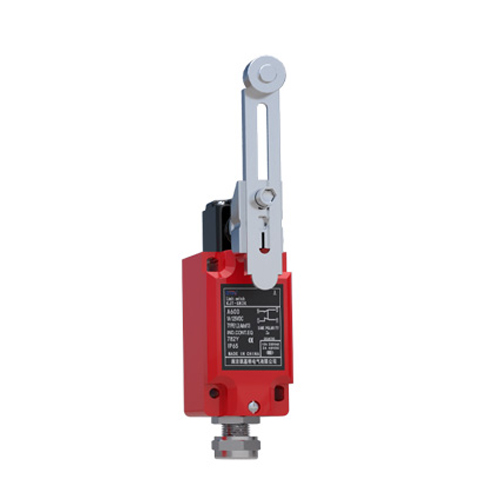
An SPDT limit switch is an electromechanical device designed to detect the presence or absence of an object, or to monitor the position of a machine part. The acronym "SPDT" stands for Single Pole, Double Throw, which defines its electrical configuration. This configuration means the switch has one common terminal (the pole) that can connect to one of two other terminals (the throws), depending on the actuator's position. Essentially, it can control two separate circuits, offering either a normally open (NO) or a normally closed (NC) contact state from a single switch unit. The "limit" aspect refers to its primary function: to act as a safety or control device that is triggered when a machine reaches a predetermined physical limit.
The operational principle is straightforward. A mechanical actuator—which can be a lever, roller, plunger, or whisker—is physically moved by the target object or machine part. This movement internally shifts the electrical contacts. In one position, the common terminal connects to the first throw terminal (e.g., NC circuit). When actuated, it breaks this connection and makes a new connection with the second throw terminal (e.g., NO circuit). This action can start or stop machinery, trigger alarms, count objects, or sequence operations. The robust construction of these switches, often featuring metal housings and sealed bodies for environmental protection (with IP ratings like IP67), allows them to perform reliably in harsh conditions involving dust, moisture, vibration, and extreme temperatures.
The versatility of the SPDT configuration makes these limit switches indispensable across numerous sectors. In manufacturing assembly lines, they are used for precise positioning of robotic arms, ensuring components are correctly aligned before a welding or fitting operation. In material handling, such as conveyor systems, SPDT limit switches detect when a package reaches the end of a belt, initiating a diversion or stopping the motor to prevent jams. They serve as critical safety interlocks on machine guards, halting operation if a safety door is opened. In packaging machinery, they confirm the presence of a product before sealing. The automotive industry relies on them for position feedback in automated painting booths and part transfer systems.
Selecting the right SPDT limit switch requires careful consideration of several parameters. First, the electrical rating (voltage and current for both AC and DC loads) must match the control circuit to avoid contact damage. The actuator type must suit the application's mechanical motion; a roller lever is ideal for cam-operated machines, while a plunger is better for direct, linear pressure. The operating force and travel distance (pretravel and overtravel) are crucial for sensitivity and longevity. Environmental factors dictate the required ingress protection (IP) rating; outdoor or washdown areas need high IP ratings. Additionally, factors like contact reliability, expected mechanical life (often in millions of cycles), and housing material (e.g., zinc alloy, stainless steel) are vital for long-term performance.
When compared to other sensor types like proximity sensors (inductive, capacitive) or photoelectric sensors, SPDT limit switches offer distinct advantages. They provide a direct, physical means of detection, which can be more reliable for sensing physical contact or position in dirty, oily, or high-electrical-noise environments where non-contact sensors might fail. They are generally cost-effective for simple position detection tasks and do not require separate power supplies or complex wiring for basic functionality. Their simple design also makes them easy to install, troubleshoot, and replace.
Maintenance is key to ensuring the longevity of these workhorses. Regular inspection for physical damage to the actuator or housing, checking for loose mounting hardware, and verifying electrical contact integrity are standard practices. For switches in dirty environments, periodic cleaning of the actuator mechanism is necessary to prevent false triggering or failure to actuate. Listening for unusual sounds during operation or monitoring for inconsistent machine behavior can be early indicators of a failing switch.
In conclusion, the SPDT limit switch remains a cornerstone of industrial control, offering a robust, reliable, and versatile solution for position sensing and safety. Its simple electromechanical principle belies its importance in ensuring efficiency, precision, and safety in automated processes. Understanding its operation, applications, and selection criteria empowers professionals to design and maintain systems that are not only functional but also resilient. As automation evolves, this fundamental component continues to adapt, proving that sometimes, the most effective solutions are those built on time-tested, reliable technology.