Проверка
Проверка
Проверка
Проверка
Проверка
Проверка
In industrial automation and control systems, proximity sensors play a crucial role in detecting the presence or absence of objects without physical contact. Among the various types, PNP and NPN proximity sensors are widely used, each with distinct electrical characteristics and wiring configurations. Understanding the difference between these two output types is essential for proper sensor selection, circuit design, and system integration.
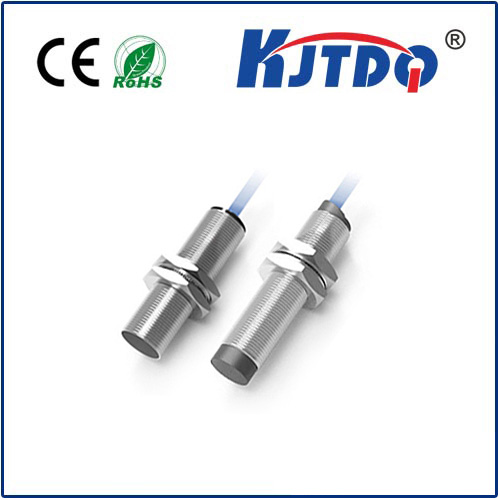
A proximity sensor generally operates by emitting an electromagnetic field or a beam of electromagnetic radiation and looking for changes in the field or return signal. The sensor detects nearby objects, often metals, and converts this detection into an electrical signal. The core distinction between PNP and NPN sensors lies in their output switching logic and the type of transistor used. This difference fundamentally affects how they are connected to a controller like a PLC (Programmable Logic Controller).
A PNP sensor, also known as a "sourcing" sensor, uses a PNP transistor for its output. When an object is detected, the sensor switches the output to connect to the positive supply voltage (+V). In simpler terms, the output acts as a source of current to the load. The load (e.g., a PLC input module) is connected between the sensor's output wire and the common negative (0V). This configuration is common in many European and Asian systems, where the PLC input modules are often designed to receive a positive signal.
Conversely, an NPN sensor, or a "sinking" sensor, utilizes an NPN transistor. Upon detection, it switches the output to connect to the common negative or ground (0V). Here, the output acts as a sink for current. The load is connected between the positive supply (+V) and the sensor's output wire. This type is frequently found in systems following Japanese and some North American conventions.
Choosing between PNP and NPN depends largely on the input circuit of the controller. Using the wrong type can lead to a non-functional system. A key mnemonic is "PNP = Positive Switched," meaning the switched signal is positive. For NPN, it is "Negative Switched." Modern PLCs often have input modules that can accept either type, but understanding the underlying principle remains vital for troubleshooting and designing robust systems.
Wiring is a practical area where the difference manifests. For a typical 3-wire DC sensor (with brown for +V, blue for 0V, and black for the output signal), the connection of the black wire changes. In a PNP setup, the black wire carries the positive signal to the PLC input. In an NPN setup, the black wire provides the path to ground when active. Always refer to the sensor's datasheet and the controller's manual. Incorrect wiring can damage components.
Beyond the electrical configuration, both PNP and NPN sensors share common performance parameters. These include sensing range, repeat accuracy, response frequency, and environmental ratings like IP (Ingress Protection) for dust and water resistance. Whether PNP or NPN, selecting a sensor with the correct sensing technology (inductive for metals, capacitive for non-metals, ultrasonic for various materials) for the application is the first step. The output type decision comes next.
In complex machinery, you might find a mix of both sensor types. This is why control panel designers must plan the power supply and common grounding carefully. A solid understanding of sourcing (PNP) and sinking (NPN) concepts helps in creating clear electrical diagrams and ensuring all components interface correctly. It also aids maintenance technicians in quickly diagnosing faults, such as a sensor that seems to be detecting but is not sending the expected signal to the PLC.
Ultimately, the choice between PNP and NPN is not about one being superior to the other. It is about compatibility with the existing control system architecture. As industrial networks evolve with IO-Link and other smart sensor protocols, the basic PNP/NPN output remains a fundamental digital interface. Knowing how to work with both types ensures flexibility, reduces downtime, and contributes to efficient and reliable automation solutions. Proper selection and installation lead to seamless object detection, precise counting, accurate positioning, and enhanced safety in automated processes.