Проверка
Проверка
Проверка
Проверка
Проверка
Проверка
In the rapidly evolving landscape of industrial automation, precision and reliability are non-negotiable. At the heart of countless automated systems lies a critical component: the M12 proximity sensor. This compact, robust device has become an industry standard for object detection, playing a pivotal role in enhancing efficiency, safety, and productivity across manufacturing floors, packaging lines, and robotic applications worldwide.
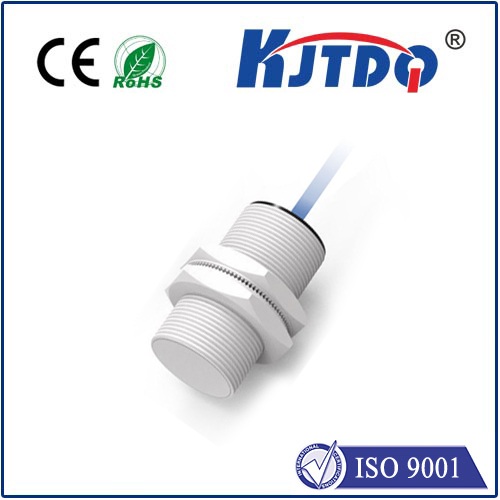
The term "M12" refers to the standardized 12mm threaded cylindrical housing that defines the sensor's physical connection. This design is not arbitrary; it offers significant advantages. The threaded body allows for quick, secure, and sealed installation in control panels, machinery, and harsh environments. Paired with industry-standard M12 connectors, it ensures compatibility and simplifies wiring, reducing installation time and maintenance headaches. Proximity sensors, in essence, are non-contact devices that detect the presence or absence of a target object within their sensing range without any physical touch. They achieve this through various technologies, with inductive and capacitive being the most common for M12 form factors.
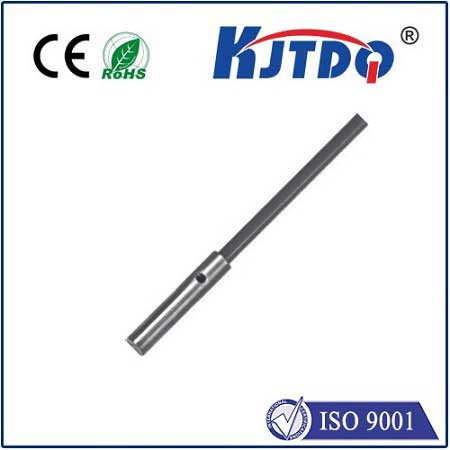
Inductive M12 proximity sensors are the workhorses for detecting metallic objects. They generate an electromagnetic field. When a metal target enters this field, it induces eddy currents within the target, causing a change in the sensor's own oscillation amplitude. This change is detected by the sensor's circuitry, triggering a solid-state output switch. These sensors are exceptionally reliable for counting metal parts, determining position limits on machinery, or confirming the presence of a metal component in an assembly process. Their immunity to dust, oil, and non-metallic debris makes them ideal for demanding industrial settings.
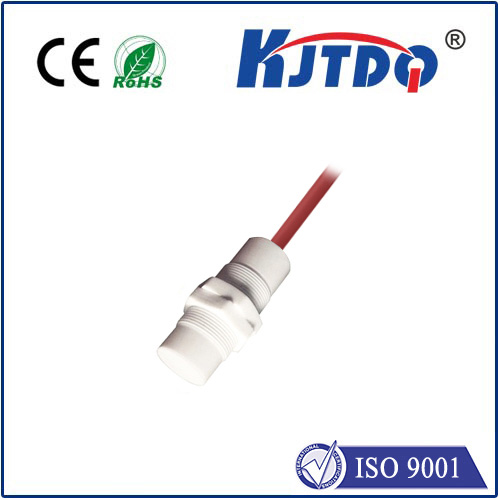
For applications involving non-metallic materials—such as glass, plastic, wood, or liquids—capacitive M12 sensors are the solution. They function by generating an electrostatic field. Any object that enters this field, regardless of its material, alters the capacitance of the system. This alteration is measured, and when it reaches a preset threshold, the sensor activates its output. This makes them perfect for level detection in tanks (liquid or granular), detecting filled bottles on a conveyor, or ensuring the presence of a label on a package.
The selection of an M12 proximity sensor goes beyond just inductive versus capacitive. Key specifications demand careful consideration. Sensing range, typically a few millimeters for these compact units, must be chosen with the application's required detection distance and installation constraints in mind. The output type is crucial: PNP (sourcing) or NPN (sinking) must match the controller's input card requirements. Furthermore, factors like switching frequency (for high-speed applications), housing material (often nickel-plated brass or stainless steel for corrosion resistance), and protection rating (IP67 and IP69K are common for wash-down and outdoor environments) are vital for long-term performance.
Real-world applications are vast and varied. In automotive manufacturing, M12 inductive sensors precisely detect piston position or confirm gear placement. On food and beverage lines, capacitive M12 sensors monitor fill levels in containers without contact, ensuring hygiene. In material handling, they provide position feedback for automated guided vehicles (AGVs) or confirm the passage of items on a conveyor belt, enabling precise sorting and routing. Their robustness allows them to withstand constant vibration, temperature fluctuations, and exposure to coolants or cleaning agents.
Installation and maintenance, while straightforward, require attention to detail. Ensuring the correct sensing distance and avoiding metal-to-metal mounting for inductive sensors prevents false triggers. Regular cleaning of the sensor face to remove buildup of dirt or debris is essential for maintaining optimal sensing performance. Understanding the environmental conditions—such as extreme temperatures or the presence of strong electromagnetic interference—is critical for selecting a sensor with appropriate specifications.
The evolution of M12 sensors continues. Modern variants now incorporate advanced features like IO-Link digital communication. This transforms a simple switch into an intelligent device capable of transmitting detailed diagnostic data, such as operating temperature, signal strength, and device health, directly to the control system. This enables predictive maintenance, where potential failures can be addressed before they cause downtime, representing a significant leap towards smarter, more connected factories.
In conclusion, the M12 proximity sensor is far more than just a simple switch. It is a fundamental enabler of modern industrial automation. Its standardized design, proven reliability, and adaptability to diverse sensing tasks make it an indispensable component. From ensuring the basic presence of a part to enabling complex, data-driven process optimization, choosing the right M12 sensor—with careful consideration of technology, specifications, and environmental factors—is a foundational step in building efficient, resilient, and intelligent automated systems. Its role in driving productivity and operational excellence remains unequivocally central.