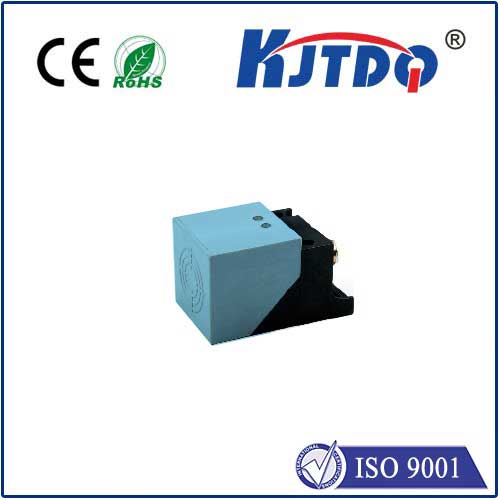
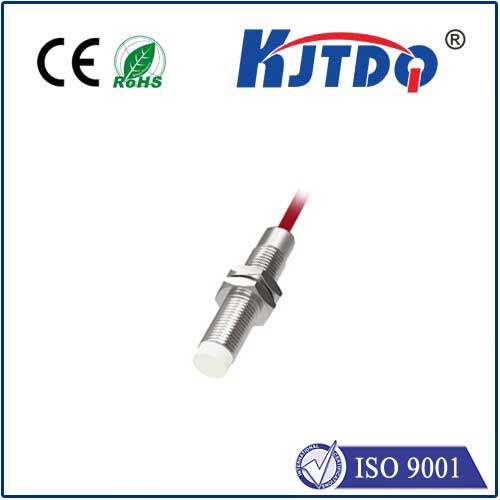
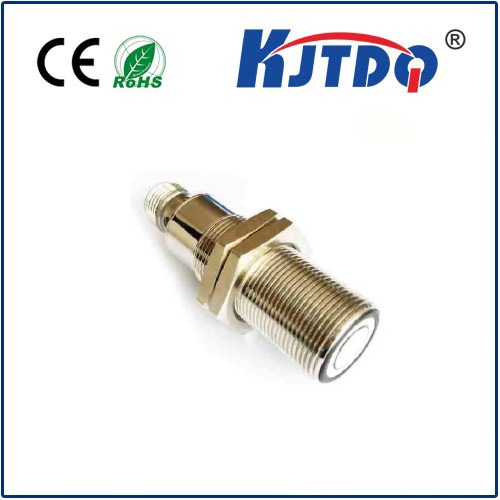
In the world of automation and smart electronics, the ability to detect the presence or absence of an object without physical contact is paramount. This is where the hall proximity sensor, a marvel of modern sensing technology, comes into play. Operating on the fundamental principles of the Hall Effect discovered by Edwin Hall in 1879, these sensors have evolved into indispensable components across countless industries. Unlike mechanical switches or optical sensors, hall sensors offer a unique blend of reliability, durability, and precision in non-contact detection.
At its core, a hall proximity sensor detects changes in a magnetic field. It contains a thin strip of semiconductor material, known as the Hall element. When this element is exposed to a perpendicular magnetic field from a nearby magnet or ferromagnetic object, a small voltage, the Hall voltage, is generated across it. The sensor's integrated circuitry then processes this signal. When the magnetic field strength crosses a predefined threshold—indicating an object is "near"—the sensor's output state changes, typically switching from high to low voltage or vice versa. This simple yet robust mechanism is the foundation of its operation.
The advantages of using a hall proximity sensor are numerous and significant. First and foremost is their exceptional reliability. With no moving parts to wear out and no need for physical contact with the target, they are immune to the issues of mechanical fatigue, dust, dirt, and moisture that plague other sensor types. This makes them ideal for harsh environments, from automotive undercarriages to industrial washdown areas. They offer consistent performance over millions of cycles with virtually no maintenance. Furthermore, their solid-state design allows for incredibly fast response times, enabling detection at high speeds, which is critical in automation and robotics.
The applications for hall proximity sensors are vast and varied. In the automotive sector, they are ubiquitous. They are used for wheel speed sensing in anti-lock braking systems (ABS), detecting gear position in transmissions, and monitoring crankshaft and camshaft position for precise engine timing. In consumer electronics, they provide the elegant functionality of laptop lid-open/close detection and smartphone flip cover sensing, conserving battery life efficiently. Industrial automation relies heavily on them for end-of-travel detection on linear actuators, rotary speed measurement on conveyor belts, and precise positioning in CNC machines. Even in everyday appliances like dishwashers and washing machines, they ensure doors are securely closed before operation.
When selecting a hall proximity sensor for a specific application, several key parameters must be considered. The sensing distance, or the range at which it can reliably detect a magnet, is crucial. The type of output is another: digital outputs provide a simple on/off signal, while analog outputs give a voltage proportional to the magnetic field strength, useful for precise distance measurement. Engineers must also consider the operating voltage, temperature range, packaging (cylindrical or rectangular), and whether a unipolar (responding to one pole of a magnet) or bipolar (responding to both poles) sensor is required. Proper shielding and installation are also vital to avoid interference from stray magnetic fields in the environment.
Looking ahead, the future of hall proximity sensor technology is intertwined with the growth of the Internet of Things (IoT) and Industry 4.0. The demand for smarter, more connected, and energy-efficient sensors is rising. Modern hall sensors are becoming more integrated, with built-in signal conditioning, diagnostics, and even digital communication protocols like I2C or SPI. This allows for easier system integration and predictive maintenance capabilities. Furthermore, advancements in materials science are leading to sensors with higher sensitivity, lower power consumption, and the ability to operate in even more extreme temperatures.
In conclusion, the hall proximity sensor stands as a testament to the power of applying fundamental physics to solve practical engineering challenges. Its non-contact nature, ruggedness, and versatility make it a cornerstone of modern detection systems. From ensuring the safety of a vehicle to enabling the smart features of a phone, this technology works silently and reliably in the background. As industries continue to push for greater efficiency and intelligence, the evolution of the hall sensor will undoubtedly continue, solidifying its role as a critical enabler in our automated world.