Проверка
Проверка
Проверка
Проверка
Проверка
Проверка
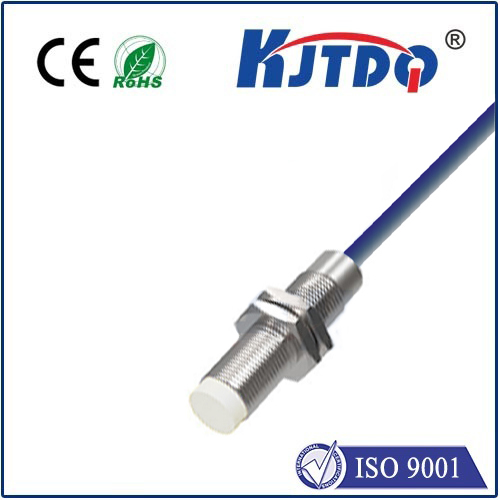
In the realm of industrial automation, precision and reliability are paramount. Among the various sensing technologies that drive modern manufacturing and process control, capacitive proximity sensors stand out for their unique ability to detect a wide range of materials without physical contact. A critical specification that defines their application and effectiveness is the capacitive proximity sensor range. This parameter is not merely a number on a datasheet; it is the cornerstone of system design, impacting everything from machine safety to production efficiency.
The sensing range of a capacitive proximity sensor refers to the maximum distance at which it can reliably detect a target object. Unlike inductive sensors, which are limited to metals, capacitive sensors can detect virtually any material, including liquids, plastics, glass, wood, and granular substances, by measuring changes in capacitance. This versatility makes them indispensable in diverse sectors such as food and beverage, packaging, pharmaceutical, and material handling. The effective range is influenced by several intrinsic and extrinsic factors. Primarily, the sensor's design, including the size and shape of its active face, directly correlates with its nominal sensing distance. Generally, a larger sensor face equates to a longer range. Furthermore, the dielectric constant (εr) of the target material is a decisive factor. Materials with a high dielectric constant, like water or metals, cause a more significant change in the sensor's electrical field and can be detected at greater distances compared to low-εr materials like dry wood or certain plastics.
Environmental conditions also play a substantial role. Factors such as ambient temperature, humidity, and the presence of contaminants like dust or oil can affect the sensor's performance and effective range. For instance, high humidity can increase the baseline capacitance, potentially reducing the effective sensing distance for a specific target. Therefore, understanding and accounting for the application environment is crucial for selecting a sensor with an appropriate range specification. Modern capacitive sensors often feature adjustable sensitivity or teach-in functions, allowing engineers to fine-tune the effective range on-site. This adaptability helps compensate for variations in target material, installation position, and environmental drift, ensuring consistent operation. A common practice is to derate the nominal range—using only 60-80% of the stated value—to build in a safety margin for reliable long-term performance.
The practical implications of sensor range are vast. In liquid level detection within non-metallic tanks, a sensor with a sufficient range must be chosen to reliably detect the liquid through the tank wall. In packaging lines, capacitive sensors monitor the presence of plastic bottles or cardboard boxes, where the range must be set to ignore conveyor belts while detecting the product. An incorrectly specified range can lead to false triggers, missed detections, or even mechanical damage, resulting in costly downtime. When integrating these sensors, installation is key. Mounting the sensor flush in a metal bracket provides shielding from lateral interference, while non-flush mounting allows for a slightly increased range. Ensuring a stable power supply and proper grounding minimizes electrical noise, which can otherwise unpredictably alter the effective sensing range.
Looking ahead, advancements in microcontroller technology and signal processing algorithms are enabling capacitive sensors with smarter range compensation and diagnostics. These developments promise even greater stability and precision, pushing the boundaries of what is possible in complex automation scenarios. In conclusion, the capacitive proximity sensor range is a fundamental characteristic that demands careful consideration. It is a dynamic interplay of physics, material science, and electrical engineering. By thoroughly analyzing the target material, environmental conditions, and application requirements, engineers can leverage the full potential of capacitive sensing technology. This leads to the creation of robust, efficient, and intelligent automated systems that form the backbone of modern industry, driving productivity and innovation forward with every precise, non-contact detection.