In the rapidly evolving landscape of industrial automation and smart device integration, the demand for reliable, high-precision sensing components has never been greater. Among the myriad of options available, the M10 proximity sensor stands out as a cornerstone technology, enabling seamless and efficient operations across diverse applications. This guide delves into the core functionalities, technical advantages, and practical implementations of the M10 proximity sensor, providing a comprehensive overview for engineers, procurement specialists, and technology enthusiasts.
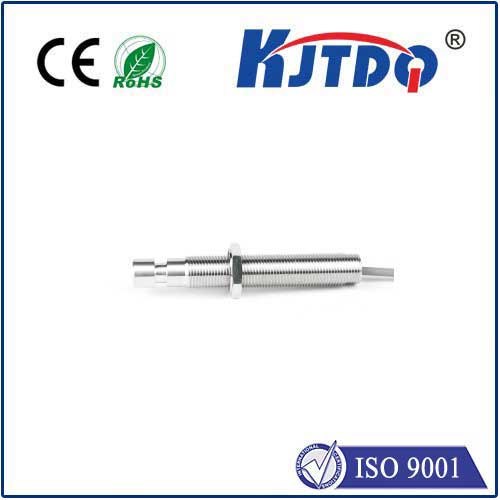
At its essence, a proximity sensor is a non-contact device designed to detect the presence or absence of an object within a specific range without any physical interaction. The M10 designation typically refers to a specific form factor—a cylindrical housing with an 18mm diameter—which has become an industry standard due to its optimal balance between size, durability, and performance. These sensors operate on various principles, with inductive and capacitive being the most prevalent for the M10 series. Inductive M10 sensors are predominantly used for detecting metallic objects. They generate an electromagnetic field; when a metal target enters this field, it induces eddy currents within the sensor, triggering a change in the output signal. This makes them indispensable in metalworking, automotive assembly lines, and machinery where precise positioning of metal parts is critical. Their inherent robustness allows them to perform consistently in harsh environments filled with dust, oil, or coolant sprays.
On the other hand, capacitive M10 proximity sensors can detect a wider range of materials, including metals, plastics, liquids, and even granular substances. They function by measuring changes in capacitance caused by the presence of any material that alters the electrical field around the sensor's face. This versatility opens doors for applications in packaging industries, level detection in tanks containing non-conductive fluids, and material handling systems where object composition varies.
The technical specifications of a high-quality M10 proximity sensor are what truly set it apart. Key parameters include sensing distance, repeat accuracy, response frequency, and environmental ratings. For instance, a standard inductive M10 sensor might offer a nominal sensing distance of 5mm or 8mm with a repeat accuracy of microns, ensuring that every detection event is consistent and reliable. A high response frequency, often in the kilohertz range, allows it to detect objects on fast-moving production lines without missing a beat. Furthermore, many premium M10 sensors boast an IP67 or IP68 ingress protection rating, meaning they are completely protected against dust and can withstand temporary or prolonged immersion in water. This resilience is crucial for washdown areas in food processing or outdoor applications.
The integration of the M10 proximity sensor into modern systems is remarkably straightforward, contributing to its widespread adoption. Most models feature a standard three-wire configuration (PNP or NPN) compatible with programmable logic controllers (PLCs), making them a plug-and-play component in automation networks. Their compact M10 threaded barrel design allows for easy mounting in tight spaces, and the availability of shielded (flush-mountable) or unshielded versions provides flexibility for different installation scenarios. Shielded sensors can be mounted flush with metal surfaces without affecting their sensing field, while unshielded types offer a longer sensing range.
Real-world applications of the M10 proximity sensor are vast and impactful. In automotive manufacturing, they are used to verify the presence of pistons in engine blocks or to count gears on a conveyor. In the realm of consumer electronics, they can be found inside automated assembly machines, ensuring components like smartphone casings are correctly positioned for the next step. Beyond manufacturing, they play a vital role in security systems, acting as door position sensors, and in vending machines to detect product dispensing. Their reliability directly translates to reduced downtime, improved product quality, and enhanced operational safety.
When selecting an M10 proximity sensor for a specific project, several factors must be considered. The nature of the target material is paramount—choosing inductive for metals and capacitive for non-metals or mixed materials. The required sensing distance and the available space for installation will dictate the choice between shielded and unshielded models. Environmental conditions such as temperature extremes, exposure to chemicals, or potential mechanical impacts necessitate careful review of the sensor's housing material and protection ratings. Lastly, the electrical output must be compatible with the control system's input module.
In conclusion, the M10 proximity sensor is far more than just a simple switch. It is a sophisticated, rugged, and versatile component that forms the sensory backbone of modern automated systems. Its standardized form factor, coupled with advanced sensing technology, provides a reliable solution for countless detection challenges. As industries continue to push the boundaries of efficiency and intelligence, the humble M10 sensor will undoubtedly remain a critical enabler, silently ensuring precision and reliability in the background of our increasingly automated world.