Проверка
Проверка
Проверка
Проверка
Проверка
Проверка
In the rapidly evolving landscape of smart technology, seamless and intuitive user interaction remains a paramount goal. Enter the photo proximity sensor, a sophisticated component quietly powering the responsive behaviors we now take for granted in our smartphones, tablets, and an expanding universe of IoT devices. Unlike traditional infrared-based sensors, a photo proximity sensor typically utilizes a combination of an infrared LED and a photodiode or a more advanced time-of-flight (ToF) sensor. Its core function is elegantly simple: to detect the presence of nearby objects without any physical contact.
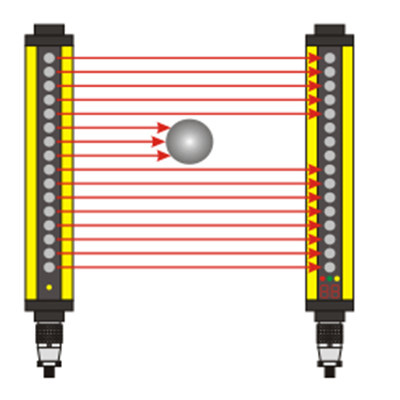
The operational principle is a marvel of precision engineering. The sensor emits an invisible beam of infrared light. When an object, like your face during a phone call, comes close to the device, this light is reflected back towards the sensor. The photodiode detects this reflected light, and the sensor's integrated circuitry measures the intensity or the time taken for the light to return. This data is instantly processed to determine the object's proximity. This entire process, occurring in milliseconds, enables your smartphone screen to turn off automatically when held to your ear, preventing accidental touch inputs and saving battery life—a small but critical feature for user experience and device efficiency.
The applications of photo proximity sensors extend far beyond silencing the screen during calls. They are fundamental to enabling modern bezel-less display designs. By accurately detecting when a user is holding the phone, they prevent false touches from the edges of the screen. In laptops and tablets, these sensors can be used to wake the device when a user approaches or to dim the screen when the user looks away, contributing to energy conservation. Furthermore, in the realm of home automation and smart appliances, photo proximity sensors facilitate touchless controls, enhancing hygiene and convenience. Imagine a soap dispenser that activates when it senses your hand or a smart faucet that turns on water flow as you approach.
The advantages of using a photo proximity sensor are multifaceted. Firstly, they offer high accuracy and reliability in detection across various environmental conditions. Modern sensors are designed to compensate for ambient light interference, ensuring consistent performance. Secondly, their compact size allows manufacturers to integrate them seamlessly into sleek device designs without compromising aesthetics or functionality. Thirdly, they are incredibly power-efficient, a non-negotiable trait for battery-operated portable devices. This efficiency stems from their ability to operate in a low-power dormant state, springing into action only when needed.
When compared to older capacitive or ultrasonic proximity sensors, photo-based sensors, especially ToF variants, provide superior range and spatial awareness. They can not only tell if an object is present but also gauge its precise distance, opening doors for more nuanced interactions like gesture control. This capability is being leveraged in augmented reality applications, robotics for obstacle avoidance, and even in automotive systems for driver monitoring and interior sensing.
For product designers and engineers, selecting the right photo proximity sensor involves careful consideration of several parameters: detection range, response time, power consumption, package size, and immunity to external optical noise. Leading semiconductor companies continuously innovate in this space, offering sensors with integrated algorithms that can distinguish between intentional proximity events and accidental ones, like a phone shifting in a bag.
As we move towards an increasingly connected and interactive world, the role of the photo proximity sensor will only grow more significant. It is a key enabler of the "invisible interface"—where technology responds to our presence and actions intuitively, making our interactions with devices more natural, efficient, and effortless. From conserving battery on your phone to enabling futuristic gesture-based controls, this tiny sensor is a giant pillar supporting the smart, responsive technology of today and tomorrow. Its continued evolution will be central to unlocking new levels of automation and user-centric design across all facets of digital life.