Проверка
Проверка
Проверка
Проверка
Проверка
Проверка
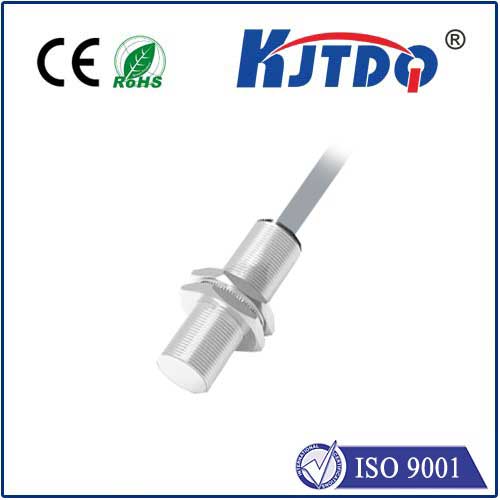
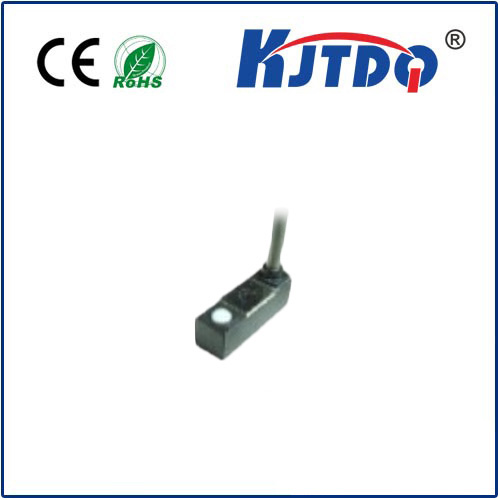
In the world of industrial automation, precision, reliability, and durability are non-negotiable. Among the myriad of components that keep modern production lines humming, the 3 wire inductive proximity sensor switch stands out as a fundamental workhorse. This device is a cornerstone for countless applications, from manufacturing and packaging to automotive assembly and material handling. Understanding its operation, advantages, and proper implementation is crucial for engineers, technicians, and procurement specialists aiming to optimize system performance and minimize downtime.
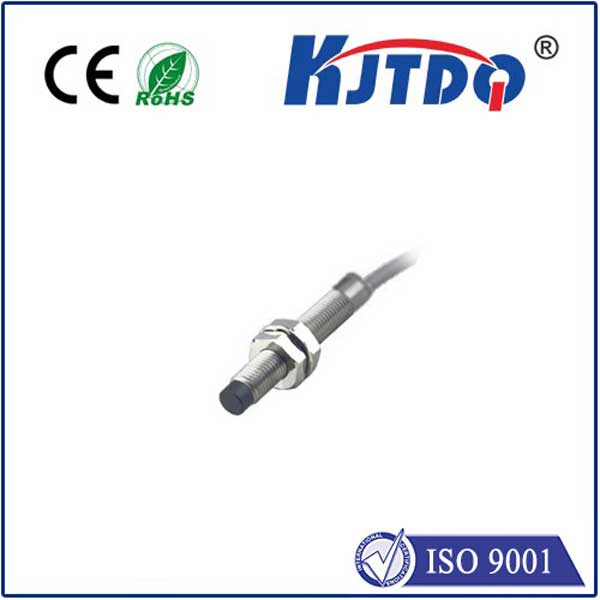
Unlike mechanical limit switches that require physical contact, an inductive proximity sensor operates on a non-contact principle. It generates an electromagnetic field from its sensing face. When a metallic target—typically ferrous metals like steel or iron, though some models detect non-ferrous metals—enters this field, it causes eddy currents to form on the target's surface. This change in the electromagnetic oscillation is detected by the sensor's internal circuitry, which then triggers a solid-state output signal to switch state. The "3 wire" designation refers to its common wiring configuration: one wire for DC supply voltage (brown), one for the output signal (black), and one for the common ground or 0V (blue). This design simplifies installation compared to 2-wire models and offers better performance stability than 4-wire versions in most standard applications.
The core advantage of the 3-wire inductive proximity switch lies in its robustness. With no moving parts to wear out, it offers an exceptionally long operational life, even in harsh environments filled with dust, oil, coolant, or vibrations. Its solid-state switching ensures fast response times, often in the microsecond range, enabling high-speed counting, positioning, and detection tasks that are impossible for mechanical switches. Furthermore, these sensors are inherently resistant to environmental factors like dirt accumulation on the sensing face, making them ideal for dirty industrial settings.
Selecting the right 3 wire inductive sensor involves several key parameters. The sensing distance, or nominal range, is critical and must be chosen with a safety margin, as factors like target material, size, and temperature can affect performance. The housing material, typically nickel-plated brass, stainless steel, or PBT plastic, must be selected based on the environmental conditions (e.g., chemical exposure, washdown requirements). Output type is another vital decision: NPN (sinking) or PNP (sourcing) outputs must match the input requirements of the connected controller (PLC, relay, etc.). Lastly, the electrical specifications, such as operating voltage (commonly 10-30V DC) and current rating, must be compatible with the system's power supply.
Installation and wiring are straightforward but demand attention to detail. Proper mounting is essential; sensors should be secured firmly to prevent misalignment from vibration. It is also crucial to maintain the specified lateral and axial clearance from surrounding metal objects to avoid false triggering. For wiring, always refer to the manufacturer's datasheet. A typical connection involves linking the brown wire to the positive DC supply, the blue wire to the negative/0V, and the black (output) wire to the load. Ensuring correct polarity and using shielded cables in electrically noisy environments can prevent most operational issues.
Common applications are vast. They are used for end-of-travel detection on machine tools, part presence verification in assembly jigs, jam detection in conveyor systems, and high-speed revolution counting on rotating shafts. In automated storage and retrieval systems, they provide precise positioning feedback. Their sealed variants are indispensable in food and beverage processing for liquid level control or container detection.
Despite their reliability, users may occasionally encounter problems. Failure to detect a target can stem from an incorrect sensing distance, an unsuitable target material (e.g., trying to detect aluminum with a standard ferrous-only sensor), or a misaligned sensor. Constant output activation might be caused by a sensor mounted too close to a metal structure or electrical noise interference. Regular maintenance, though minimal, involves periodic cleaning of the sensing face and checking for physical damage or loose connections.
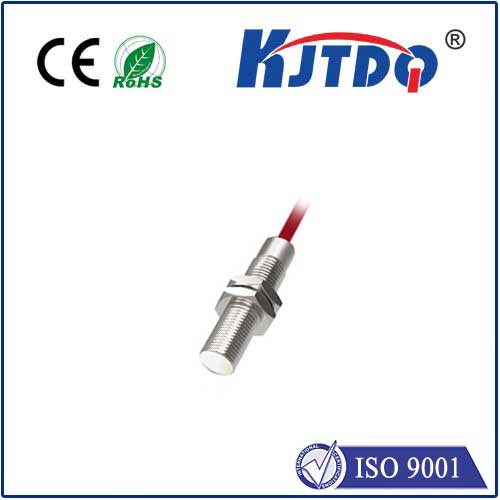
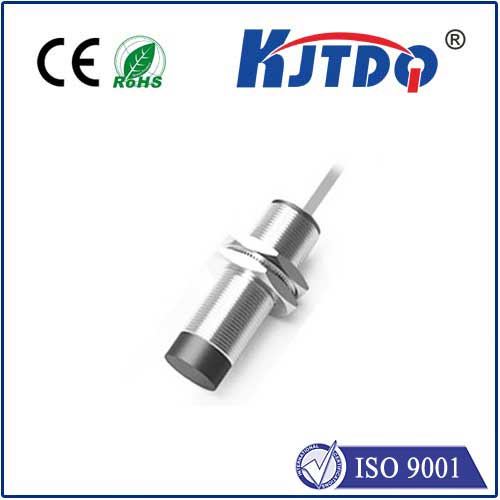
The evolution of these sensors continues, with modern versions offering enhanced features like IO-Link digital communication for diagnostics and parameter setting, increased resistance to welding fields, and factor-1 capability (detecting all metals at the same rated range). When integrated thoughtfully, the 3 wire inductive proximity sensor switch KJTDQ series and similar products form the invisible nervous system of automated equipment, delivering the unwavering detection performance that modern industry relies upon for efficiency, safety, and quality control. Their simplicity, combined with sophisticated underlying technology, makes them an indispensable component in the engineer's toolkit.