Проверка
Проверка
Проверка
Проверка
Проверка
Проверка
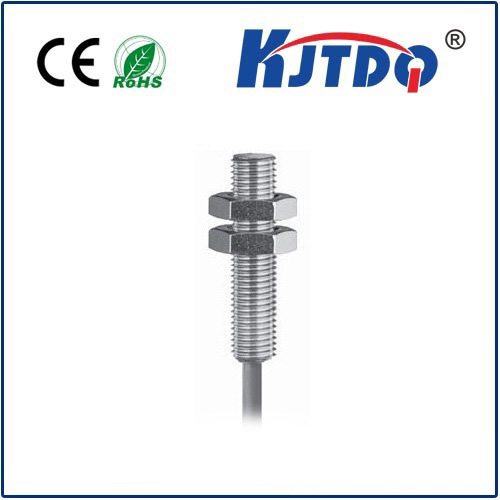
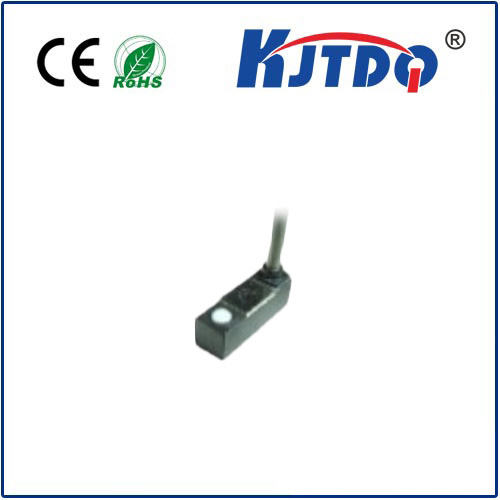
In the rapidly evolving landscape of industrial automation, precision, reliability, and durability are non-negotiable. Among the myriad components that drive modern manufacturing and machinery, the M12 proximity sensor stands out as a cornerstone of efficient and safe operations. This compact yet powerful device is engineered to detect the presence or absence of an object without physical contact, making it indispensable in environments where hygiene, speed, and accuracy are paramount.
The M12 designation refers to the sensor's standardized 12-millimeter threaded cylindrical housing, a form factor that has become ubiquitous in factory settings worldwide. This standardization ensures compatibility with a vast array of machinery and control systems, simplifying installation and maintenance. Proximity sensors, particularly the inductive type commonly housed in M12 connectors, operate by generating an electromagnetic field. When a metallic object enters this field, it causes a change in the oscillation amplitude, which the sensor detects and converts into an electrical signal. This signal then triggers a predefined action in the connected programmable logic controller (PLC) or other control unit, such as stopping a conveyor belt, counting items, or initiating a robotic arm sequence.
One of the primary advantages of the M12 proximity sensor is its robustness. Designed to withstand harsh industrial conditions, high-quality models feature IP67 or higher ingress protection ratings. This means they are dust-tight and can withstand temporary immersion in water, making them suitable for washdown areas in food processing or beverage plants. Furthermore, they are resistant to vibrations, shocks, and exposure to oils or coolants commonly found in machining centers. Their non-contact nature eliminates mechanical wear and tear, leading to a significantly longer operational lifespan compared to mechanical limit switches. This translates to reduced downtime and lower total cost of ownership, a critical consideration for any operation focused on lean manufacturing principles.
The application scope of M12 proximity sensors is remarkably broad. In automotive assembly lines, they ensure precise positioning of components. In packaging machinery, they verify the presence of containers on a filling line. Within material handling systems, they detect the position of pallets on automated guided vehicles (AGVs) or in warehouse racks. Their versatility extends to sensing different types of metals, with sensing ranges typically varying from 2 to 15 millimeters depending on the specific model and target material. Some advanced versions offer teach-in functionality or built-in diagnostics like IO-Link connectivity, providing valuable data on sensor health and process parameters for predictive maintenance strategies.
When selecting an M12 proximity sensor for a specific application, several technical parameters must be carefully evaluated. The sensing distance, or nominal range, must be appropriate for the required detection gap. The choice between shielded (flush-mountable) and unshielded models is crucial; shielded sensors can be installed flush in metal without affecting their sensing field, while unshielded types offer a longer sensing range but require non-metallic surroundings. Output configuration—whether NPN (sinking) or PNP (sourcing)—must match the input requirements of the control system. Operating voltage, typically 10-30V DC, and output current capacity are also key specifications.
Installation and wiring, while straightforward due to the M12 connector, demand attention to detail. Ensuring proper cable strain relief and avoiding excessive bending radii near the sensor head are essential for long-term reliability. It is also critical to maintain the recommended clearance between multiple sensors to prevent mutual interference of their electromagnetic fields. Regular functional checks should be part of routine maintenance schedules to confirm the sensor's response time and switching accuracy remain within specified tolerances.
In conclusion, the M12 proximity sensor is far more than a simple switch. It is a sophisticated, reliable, and versatile workhorse that forms the sensory backbone of countless automated processes. Its standardized design, environmental resilience, and non-contact detection principle empower engineers to build smarter, faster, and more reliable systems. As Industry 4.0 continues to push the boundaries of connectivity and data intelligence, the humble M12 sensor evolves alongside, integrating digital communication capabilities to provide not just a binary signal, but a stream of operational intelligence, solidifying its role as an enduring and critical component in the automated world.