Проверка
Проверка
Проверка
Проверка
Проверка
Проверка
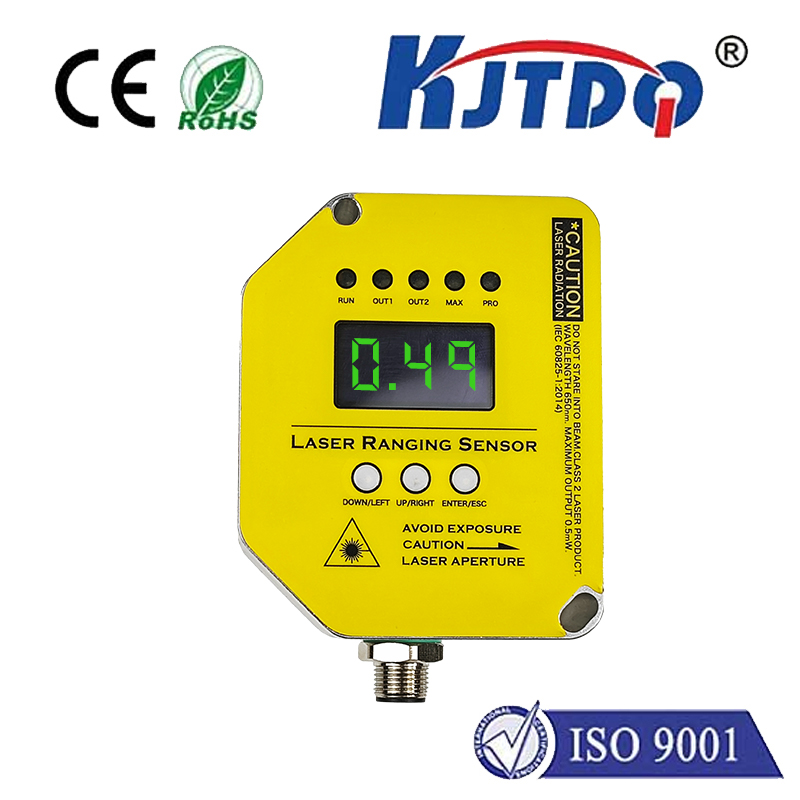
Laser Sensors for Height Measurement: Precision, Applications, and Key Considerations Did you know that over 60% of industrial quality control errors stem from inaccurate dimensional measurements? In industries ranging from manufacturing to aerospace, achieving precise height measurements isn’t just a preference—it’s a necessity. Enter laser sensors, the unsung heroes of modern metrology. These devices combine speed, accuracy, and versatility to redefine how we measure height in complex environments. But how exactly do they work, and what makes them superior to traditional methods? Let’s dive into the science, applications, and critical factors behind laser-based height measurement.
At its core, a laser sensor for height measurement operates on the principle of optical triangulation or time-of-flight (ToF) technology. In optical triangulation, a laser diode projects a focused beam onto the target surface. The reflected light is captured by a detector array, and the sensor calculates the height based on the beam’s displacement angle. This method excels in high-resolution measurements for small to medium ranges (up to 1 meter). For larger distances, time-of-flight sensors take the lead. These devices measure the time it takes for a laser pulse to travel to the target and back. Using the speed of light as a constant, the sensor calculates the distance—and thus the height—with remarkable precision. ToF sensors are ideal for applications like warehouse automation or construction site monitoring, where ranges can exceed 100 meters.
Traditional height measurement tools, such as calipers or ultrasonic sensors, often struggle with limitations like contact-based wear, environmental interference, or limited resolution. Laser sensors address these challenges head-on:
The adaptability of laser height sensors makes them indispensable in diverse sectors:
Not all laser sensors are created equal. Here’s what to prioritize:
Innovation in laser sensing shows no signs of slowing. Emerging advancements include:
Even the most advanced sensors require care. Best practices include:
From ensuring the safety of aircraft landing gears to optimizing crop yields, laser height sensors are quietly transforming how we interact with the physical world. As industries continue to prioritize precision and efficiency, these devices will remain at the forefront of measurement technology—proving that sometimes, the smallest beam of light can illuminate the biggest solutions.