Проверка
Проверка
Проверка
Проверка
Проверка
Проверка
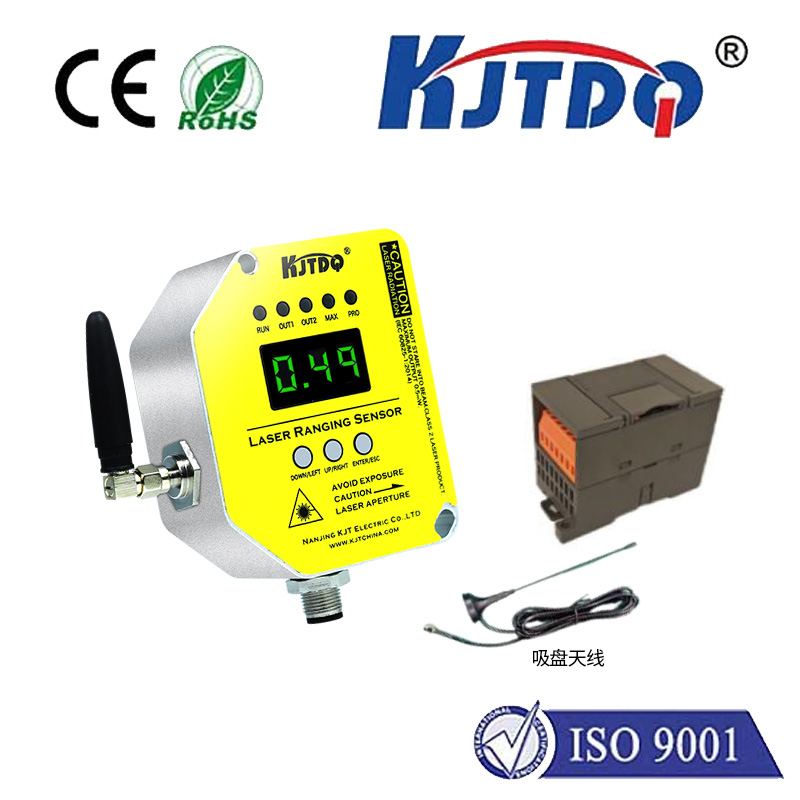
In the world of industrial automation, quality control, and robotics, achieving micron-level accuracy is not just a goal—it's a necessity. This is where the Laser Displacement Ranging Sensor steps into the spotlight. Far from being just another measuring tool, this technology represents a paradigm shift in non-contact metrology, offering unparalleled precision, speed, and reliability for a vast array of demanding applications.
At its core, a Laser Displacement Ranging Sensor operates on the principle of optical triangulation or time-of-flight measurement. A focused laser beam is projected onto the target surface. The reflected light is then captured by a high-resolution receiving element, such as a CCD or CMOS sensor. By precisely calculating the position of the reflected light spot, the sensor determines the exact distance to the target with exceptional accuracy. This non-contact method eliminates the risk of surface damage or measurement errors caused by physical probe wear, making it ideal for delicate, hot, or fast-moving objects.
The advantages of integrating a high-performance Laser Displacement Ranging Sensor into a production line or research setup are substantial. First and foremost is its extraordinary precision. Modern sensors can reliably detect displacement changes as minute as 0.1 micrometers, enabling the detection of the slightest variations in thickness, warpage, or vibration. Secondly, the measurement speed is remarkably high, often reaching tens of thousands of samples per second. This allows for real-time, 100% inspection on high-speed assembly lines, something impossible with traditional contact gauges.
Furthermore, these sensors exhibit remarkable versatility. They can accurately measure a wide range of materials, including shiny metals, dark rubber, transparent glass, and even liquid surfaces. Advanced models come equipped with sophisticated algorithms that compensate for challenging surface conditions, ensuring stable readings regardless of color or texture. This flexibility opens doors for applications across diverse sectors, from automotive and aerospace to electronics and pharmaceuticals.
Consider a typical application in the automotive industry: measuring the precise gap and flushness between car body panels. A Laser Displacement Ranging Sensor mounted on a robotic arm can quickly scan the contours, providing instant feedback to ensure perfect alignment, which is crucial for both aesthetics and aerodynamic performance. In electronics manufacturing, these sensors are indispensable for measuring the coplanarity of BGA (Ball Grid Array) solder balls or the thickness of wafer substrates, where even a micron of deviation can lead to circuit failure.
Another critical area is vibration analysis and predictive maintenance. By continuously monitoring the displacement of rotating shafts or machinery components, these sensors can detect abnormal vibrations long before a catastrophic failure occurs, enabling scheduled downtime and preventing costly production halts. In the realm of robotics, they provide essential feedback for precise positioning and obstacle avoidance, enhancing the autonomy and safety of robotic systems.
When selecting a Laser Displacement Ranging Sensor, several key specifications demand attention. The measuring range defines the minimum and maximum distances over which the sensor can operate accurately. The spot size of the laser beam determines the spatial resolution, which is vital for measuring small features or steep edges. Linearity error indicates the deviation from a perfect straight-line response across the measuring range. Environmental robustness is also crucial; look for sensors with high IP ratings for dust and water resistance and robust designs that can withstand industrial vibrations and temperature fluctuations.
The future of Laser Displacement Ranging Sensor technology is geared towards even smarter, more integrated solutions. We are seeing the emergence of sensors with built-in Ethernet or IO-Link interfaces for seamless Industry 4.0 integration, allowing for easy data collection and centralized process control. Multi-point and profile measurement sensors, which use laser lines instead of single points, are gaining traction for capturing complete 2D and 3D profiles in a single scan, revolutionizing quality inspection.
In conclusion, the Laser Displacement Ranging Sensor is far more than a simple distance meter. It is a cornerstone technology for modern precision engineering. By delivering fast, accurate, and reliable non-contact measurements, it empowers manufacturers to enhance product quality, optimize production efficiency, and implement robust predictive maintenance strategies. For any operation where precision is paramount, understanding and leveraging the capabilities of this advanced sensor technology is a decisive step towards operational excellence and innovation.