In the demanding world of industrial automation, where machinery operates under extreme conditions, the reliability of every component is paramount. Among these critical components, proximity sensors play a vital role in ensuring seamless operation, safety, and efficiency. When the application involves high-pressure environments, such as hydraulic systems, heavy-duty presses, or offshore equipment, the choice of sensor becomes even more crucial. This is where specialized solutions like the BES M12EG1-NSC60Z-S04G-S11, also known as the BES02WF High Pressure Proximity Sensor, step into the spotlight, offering unparalleled performance where standard sensors would fail.
The BES M12EG1-NSC60Z-S04G-S11 is engineered to withstand the rigors of high-pressure industrial settings. Its robust construction begins with a high-grade stainless steel housing, providing exceptional resistance to mechanical stress and corrosion. This durability is non-negotiable in environments where sensors are exposed to powerful jets of coolant, high-pressure washdowns, or are submerged in hydraulic fluids. The "S04G" and "S11" designations often refer to specific sensing ranges and output configurations, typically indicating a precise 4mm range and a stable PNP normally open (NO) switching output, making it highly compatible with standard programmable logic controllers (PLCs).
What truly sets this sensor apart is its ability to maintain accurate and stable detection even when subjected to significant external pressure. Traditional inductive proximity sensors can experience housing deformation or internal component shift under high pressure, leading to false signals or complete failure. The BES02WF model is designed with this challenge in mind. Its internal structure and sealing technology are optimized to prevent pressure from affecting the sensing face or the electronic circuitry. This ensures consistent switching points and long-term reliability, which is critical for processes where a missed detection could lead to costly downtime or safety hazards.
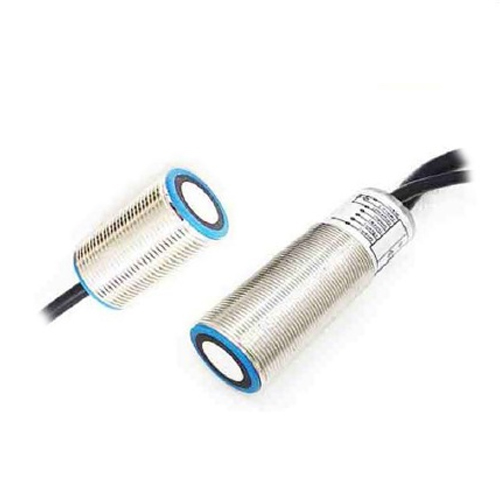
The M12 connector is a key feature, offering a compact yet secure connection that is industry-standard for sensor networks. This threaded connector provides excellent resistance to vibration and ensures a reliable electrical connection even in environments with constant movement or shock. The cable or connector version (as indicated by the suffix) allows for flexible installation in tight spaces commonly found in complex machinery. Installation and maintenance are straightforward, reducing integration time and total cost of ownership.
Typical applications for this high-pressure proximity sensor are found across various sectors. In metalworking and CNC machining, it reliably detects tool position or workpiece presence despite being bombarded with high-pressure coolant. Within the packaging industry, it can monitor piston positions in hydraulic drives. In the oil and gas sector, it performs essential tasks on equipment where it might be exposed to extreme pressures. Its resilience also makes it ideal for food and beverage processing plants that utilize high-pressure cleaning systems, as it can withstand frequent, aggressive washdowns without compromise.
Selecting the right sensor for a high-pressure application involves several considerations. The BES M12EG1-NSC60Z-S04G-S11 addresses these directly: its pressure rating, clearly specified for its design, ensures it can operate within the required parameters. The IP rating, likely IP67 or higher, guarantees protection against dust ingress and temporary immersion, which often accompanies high-pressure environments. The temperature range is another vital factor, as pressure systems can generate heat; this sensor is built to maintain performance across a wide operational temperature spectrum.
In conclusion, the BES M12EG1-NSC60Z-S04G-S11 (BES02WF) is not just another proximity sensor. It represents a specialized tool designed for a specific and challenging set of conditions. Its robust construction, pressure-resistant design, and reliable performance make it an indispensable component for engineers and system integrators who cannot afford sensor failure. By ensuring accurate detection in high-pressure scenarios, it contributes directly to enhanced machine uptime, improved process safety, and overall operational efficiency. For any application where pressure is a constant factor, investing in a purpose-built sensor like this one is a strategic decision for long-term reliability and productivity.