Проверка
Проверка
Проверка
Проверка
Проверка
Проверка
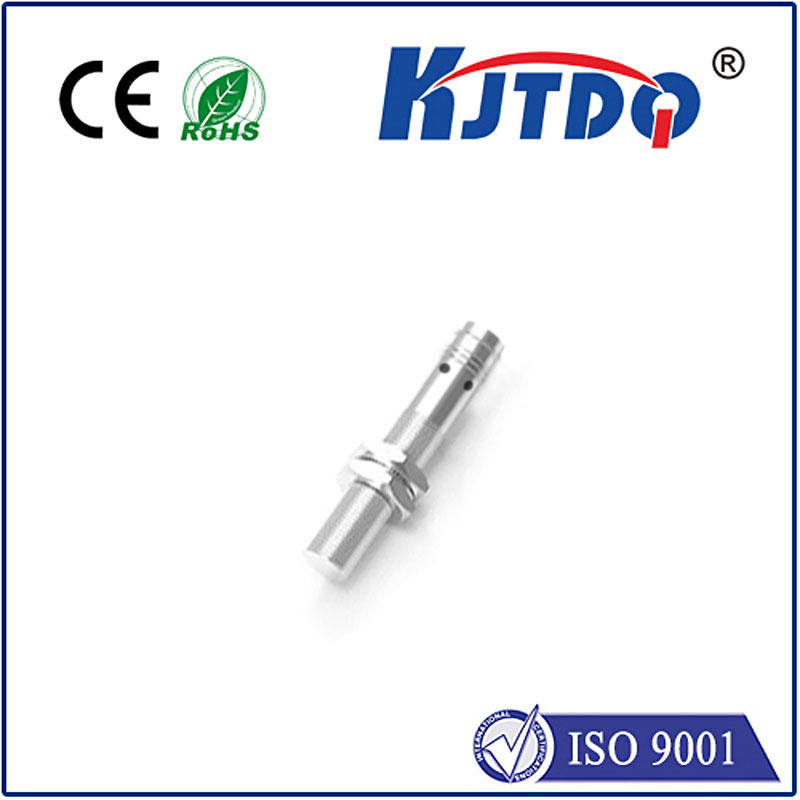
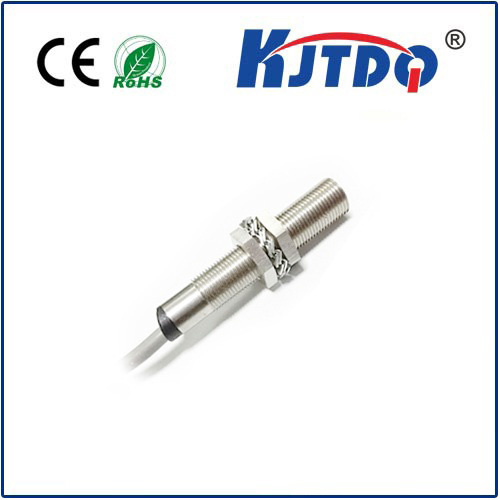
In the world of industrial automation and process control, reliability is not just a feature; it's a fundamental requirement. Equipment must perform flawlessly under extreme conditions, from punishing pressures to corrosive atmospheres. This is where the BES 516-300-S323-S4-D (BHS004R) High Pressure Proximity Sensor stands apart, engineered to deliver unwavering performance where others fail. This sensor represents a pinnacle of design, specifically built to thrive in high-pressure applications that demand precision, durability, and absolute dependability.
The core challenge in high-pressure environments is the immense stress exerted on sensing components. Standard inductive proximity sensors can falter, with housings deforming or seals compromising under sustained pressure, leading to inaccurate readings or catastrophic failure. The BES 516-300-S323-S4-D is constructed to overcome this. Its robust, stainless-steel housing (typically AISI 303 or 316L) is not merely a shell but a pressure-resistant vessel. The design incorporates specialized sealing technologies and a reinforced sensing face that can withstand pressures significantly higher than conventional models. This makes it an indispensable component in hydraulic systems, high-pressure pumps, valve position monitoring, and offshore drilling equipment, where system integrity is paramount.
Beyond its brute strength, the sensor excels in precision. Utilizing a high-quality inductive sensing principle, it provides non-contact detection of metallic targets with remarkable repeatability and a minimal hysteresis. The "S4" designation often refers to a flush-mountable design, allowing it to be installed without a gap, which is crucial in high-pressure lines to prevent material buildup or turbulence. Its short-circuit, overload, and reverse polarity protection (commonly denoted in its specifications) ensure that electrical anomalies do not lead to downtime. The output, typically a stable PNP or NPN signal, interfaces seamlessly with PLCs and control systems, providing a reliable binary signal for critical control loops.
A key aspect of its value lies in its resilience against environmental factors. The IP67 or higher ingress protection rating means it is completely protected against dust and can withstand temporary immersion, a common scenario in washdown areas or outdoor installations. The specified temperature range allows operation in both freezing cold and high-heat settings near engines or furnaces. This combination of pressure tolerance and environmental sealing translates directly into reduced maintenance costs, fewer unplanned stoppages, and a longer service life, offering a superior total cost of ownership.
Choosing the right sensor for a high-pressure application involves several considerations. The BES 516-300-S323-S4-D model, with its specific part number BHS004R, is designed for a defined set of operational parameters, including its rated pressure threshold, sensing distance, supply voltage, and output type. It is critical for engineers and procurement specialists to match these specifications precisely to the application's needs. For instance, in a food and beverage processing line using high-pressure steam cleaning, this sensor's robust construction and sealing prevent failure from both the pressure pulses and the corrosive cleaning agents.
In conclusion, the BES 516-300-S323-S4-D (BHS004R) is more than just a sensor; it is a critical reliability component engineered for boundary-pushing industrial applications. Its design philosophy centers on enduring the most severe mechanical and environmental stresses while delivering consistent, accurate performance. For industries ranging from oil and gas to heavy manufacturing and marine engineering, integrating this high-pressure proximity sensor is a strategic decision to enhance system robustness, ensure operational safety, and achieve uninterrupted productivity. It embodies the engineering excellence required to turn extreme industrial challenges into routine, managed processes.