Проверка
Проверка
Проверка
Проверка
Проверка
Проверка
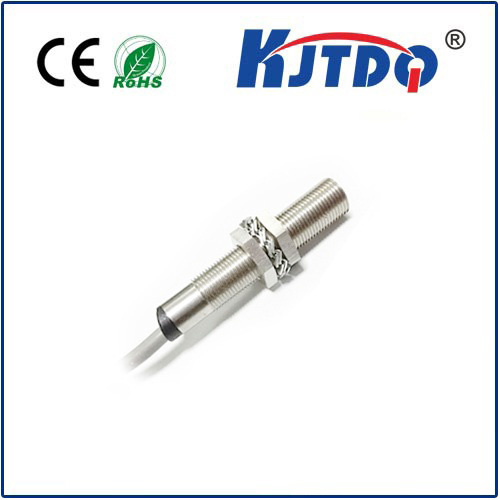
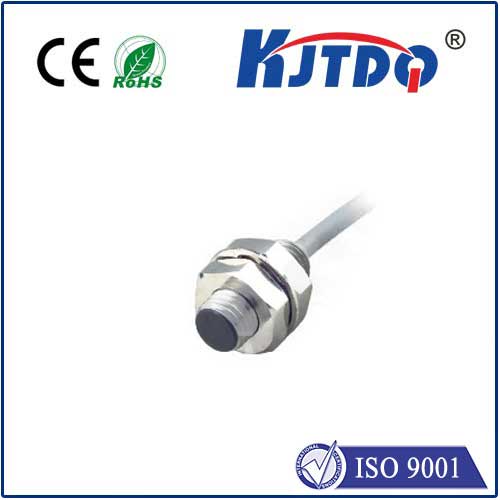
In the high-stakes world of industrial automation, where machinery operates under immense pressure and within tight tolerances, the reliability of every component is non-negotiable. Sensor failure in such environments is not merely an inconvenience; it can lead to catastrophic downtime, safety hazards, and significant financial loss. This is where precision-engineered components like the DW-AD-502-P12 High Pressure Proximity Sensor prove their indispensable value. Designed to thrive where others falter, this sensor represents a paradigm shift in monitoring and control within extreme conditions.
The core challenge in high-pressure applications lies in maintaining consistent, accurate detection despite environmental stressors. Traditional sensors often succumb to signal drift, physical deformation, or seal failure when subjected to sustained high pressure. The DW-AD-502-P12 is engineered from the ground up to conquer these challenges. Its robust housing is constructed from high-grade stainless steel, capable of withstanding pressures that would compromise lesser devices. This isn't just about durability; it's about ensuring the sensor's sensing characteristics remain stable, providing the same reliable output on day one as it does after years of continuous operation. The P12 variant specifically indicates a heightened level of ingress protection and pressure resilience, making it suitable for hydraulic systems, heavy-duty press machines, and offshore equipment where exposure to high-pressure fluids and particulates is constant.
What truly sets this proximity sensor apart is its advanced sensing technology. Utilizing a high-frequency oscillation principle, it can detect the presence of metallic targets with exceptional accuracy, even through certain non-metallic tank walls or barriers, a critical feature for contained high-pressure systems. The sensing distance is precise and repeatable, eliminating false triggers that could lead to improper machine sequencing. This precision is crucial for applications like monitoring piston position in hydraulic cylinders, ensuring robotic arms halt at the exact point, or confirming the closure of high-pressure valves in chemical processing plants. The sensor's output is typically a clean, stable digital signal, easily integrated into Programmable Logic Controllers (PLCs) and existing industrial networks for real-time data acquisition and process control.
Beyond its technical specifications, the DW-AD-502-P12 is designed for practical, hassle-free integration. Engineers appreciate its compact form factor, which allows for installation in space-constrained locations common in complex machinery. The connection is streamlined with a robust, sealed connector or pre-wired cable option, ensuring the electrical integrity is as resilient as the sensor body itself. This focus on installation ease reduces commissioning time and lowers the total cost of ownership. Maintenance is minimal, often limited to periodic wiping of the sensing face to remove grime, thanks to its non-contact operation principle. There are no moving parts to wear out, which translates to a dramatically extended service life and reduced spare parts inventory.
The applications for this high-pressure proximity sensor are vast and varied. In the automotive manufacturing sector, it ensures stamping presses operate safely and precisely. Within the energy sector, it monitors critical components on oil rigs and inside high-pressure pipelines. For machine builders specializing in plastic injection molding or die-casting, the sensor provides reliable ejection confirmation and mold protection. In each scenario, the DW-AD-502-P12 acts as the unwavering digital eye, delivering the trustworthy data needed for automated systems to make split-second decisions that uphold efficiency, quality, and most importantly, safety.
Ultimately, selecting a sensor for high-pressure environments is a decision that impacts overall system integrity. The DW-AD-502-P12 High Pressure Proximity Sensor is more than just a component; it is a commitment to operational excellence. It offers plant managers and automation engineers peace of mind, knowing that their monitoring points are secured by a device built to endure and perform. By ensuring accurate detection, resisting environmental extremes, and providing long-term reliability, this sensor becomes a foundational element for building resilient, productive, and safe industrial operations. It transforms a potential point of failure into a pillar of strength for any automated process facing the demands of pressure, proving that in the realm of industrial sensing, true robustness is measured by consistent performance under duress.