In the complex and unforgiving world of industrial automation, the margin for error is razor-thin. Machinery operates under immense pressure, both literally and figuratively, demanding components that are not just reliable but exceptionally robust. Sensor failure in a high-pressure environment isn't merely an inconvenience; it can lead to catastrophic downtime, safety hazards, and significant financial loss. This is where precision engineering meets operational resilience. The HR182-15-601.5EO High Pressure Proximity Sensor stands as a testament to this philosophy, engineered specifically to deliver unwavering performance where standard sensors falter.
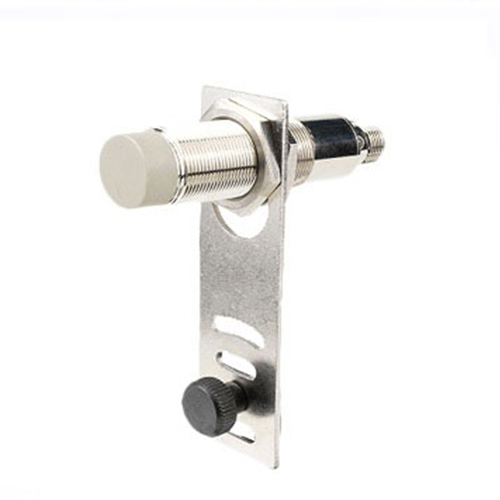
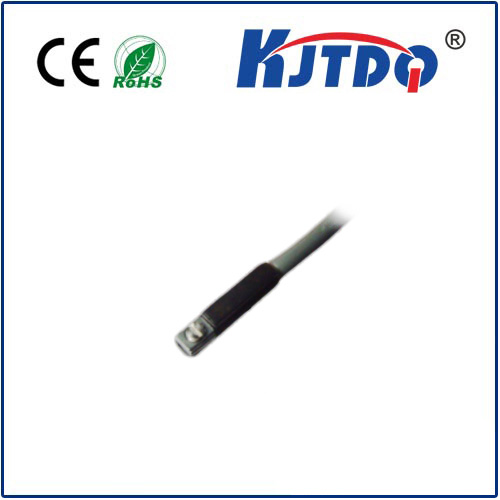
The core challenge in high-pressure applications—common in hydraulic systems, die-casting machines, plastic injection molding, and heavy-duty press lines—is the constant assault of extreme forces on sensor integrity. Conventional inductive proximity sensors may function initially, but sustained exposure to pressures exceeding several hundred bar can compromise their housing, damage internal electronics, and lead to premature signal failure. The HR182-15-601.5EO is designed from the ground up to withstand these conditions. Its defining feature is a housing and sensing face constructed from high-grade, martensitic stainless steel, treated and reinforced to resist mechanical deformation. This isn't just about being "sturdy"; it's about maintaining precise dimensional stability under load, ensuring the sensing distance remains consistent throughout its lifecycle.
Beyond brute strength, the sensor incorporates advanced sealing technologies. It typically features multiple redundant seals, often combining radial shaft seals and specialized O-rings, to achieve an ingress protection rating of IP67 or higher. This robust sealing is crucial not only for keeping out hydraulic fluid, cutting oils, and coolants but also for preventing pressure media from penetrating the sensor's internal cavity. The "High Pressure" designation means it can operate reliably while directly exposed to the pressurized medium, a scenario where standard IP-rated sensors would quickly fail. The electrical connection is equally fortified, with a high-quality, shielded cable or a ruggedized M12 connector that resists vibration and pull-out forces, common in dynamic industrial settings.
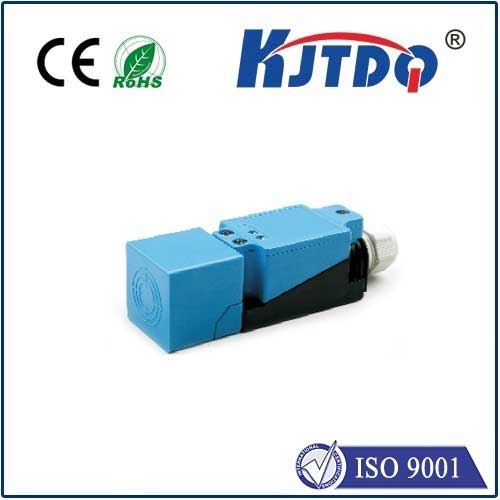
Performance specifications of the HR182-15-601.5EO are tailored for precision in tough environments. It offers a stable sensing distance of up to 15mm for ferrous metals (the "15" in its model number), with minimal temperature drift. The 601.5EO variant often indicates specific electrical characteristics, such as a 3-wire DC configuration (PNP or NPN output) and a voltage range compatible with standard PLC and control system inputs. Its switching frequency is optimized for fast-moving targets in presses or automated lines, while built-in protection against short-circuits, overload, and reverse polarity enhances system-wide reliability. The LED status indicator, visible even with a robust housing, provides immediate visual feedback for quick diagnostics during maintenance.
The practical benefits for plant managers and maintenance engineers are substantial. First and foremost is dramatically reduced downtime. By eliminating a frequent point of failure, the HR182-15-601.5EO contributes directly to higher overall equipment effectiveness (OEE). Its longevity translates into lower total cost of ownership, reducing the frequency of replacements and associated labor costs. Furthermore, its reliable operation enhances process safety. In applications like monitoring clamp position in injection molders or cylinder end-position detection in hydraulic presses, a false signal can have serious consequences. This sensor's unwavering accuracy ensures control systems receive correct data, enabling safe machine cycles and protecting both equipment and personnel.
Integration is straightforward. Designed to global standards, it can often directly replace less capable sensors in existing mounts, offering an immediate upgrade path. When installing, attention to detail is key: ensuring the recommended tightening torque is applied to the locknut to maintain seal integrity, verifying the pressure rating matches or exceeds the application's maximum system pressure, and correctly aligning the sensing face to the target. For optimal performance in environments with heavy metallic swarf or particulates, choosing a flush-mountable version (if available) can prevent the accumulation of debris.
From automotive manufacturing lines where hydraulic robots wield massive force to the relentless cycles of metal stamping presses, the HR182-15-601.5EO High Pressure Proximity Sensor proves its mettle. It represents a strategic component choice, moving beyond basic functionality to become a pillar of predictive maintenance and operational stability strategies. It is the definitive answer for engineers who specify components not just for what they do, but for where they must do it—reliably, day after day, under pressure. In the pursuit of unbreakable automation, this sensor is a cornerstone of confidence.