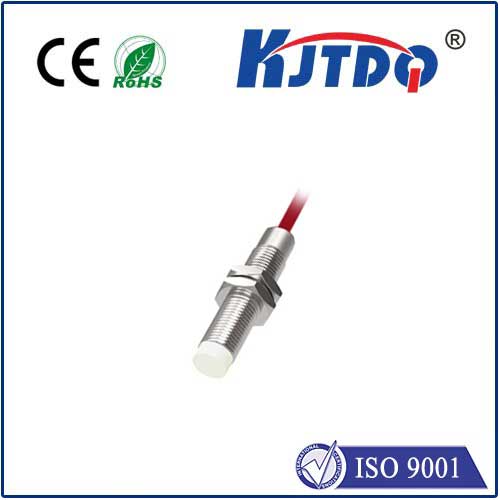
In the intricate world of industrial automation, the reliability of a single component can dictate the efficiency of an entire production line. Among these critical components, photoelectric switches stand as silent sentinels, enabling non-contact detection with unparalleled accuracy. The RL33-2443GH photoelectric switch emerges as a standout solution in this category, engineered to meet the rigorous demands of modern manufacturing, logistics, and packaging systems. This guide delves into the core features, operational principles, and diverse applications of this advanced sensor, providing a comprehensive overview for engineers and system integrators.
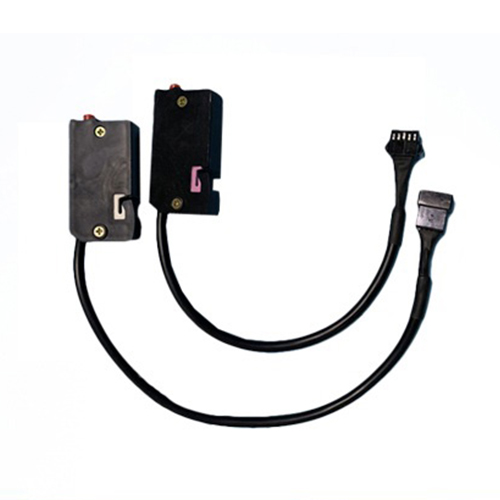
At its heart, the RL33-2443GH is a through-beam photoelectric sensor. This design involves separate units: a transmitter that emits a focused beam of light (typically infrared or red visible light) and a receiver positioned directly opposite. Detection occurs when an object physically interrupts this light beam. This method offers significant advantages, including exceptionally long sensing distances—often several meters—and high immunity to environmental interference such as dust, ambient light, or the color and surface finish of the target object. The "GH" suffix often denotes a specific housing material or ingress protection rating, suggesting a robust build suitable for challenging industrial environments.
The operational principle is elegantly simple yet highly effective. The transmitter unit houses a light-emitting diode (LED) that projects a continuous or modulated beam. The receiver contains a phototransistor or similar light-sensitive element. When the beam is unbroken, the receiver's output is in one state (e.g., "ON" or "OFF"). The moment an object passes through the beam, the light path is blocked, causing the receiver to switch its output state. This instantaneous change generates a clear, digital signal that can be used to trigger counters, activate machinery, signal a presence on a conveyor, or initiate a safety shutdown.
Key technical specifications make the RL33-2443GH a preferred choice. It typically operates on a standard DC voltage range, such as 10-30V DC, ensuring compatibility with common industrial power supplies. Its output is often in the form of an NPN or PNP transistor, providing a solid-state switch that interfaces seamlessly with Programmable Logic Controllers (PLCs), relays, and other control systems. A critical feature is its high switching frequency, allowing it to detect very fast-moving objects on high-speed lines without missing a beat. Furthermore, models like these are frequently built with an IP67 protection rating, making them resistant to water jets and dust ingress, which is vital for washdown areas in food processing or outdoor applications.
The applications for the RL33-2443GH photoelectric switch are vast and varied. In packaging machinery, it is indispensable for detecting the presence of boxes, bottles, or cans, ensuring proper filling, capping, and labeling. On assembly lines, it verifies the correct positioning of components. Within automated storage and retrieval systems (AS/RS), it provides precise carton and pallet detection for inventory management. It also plays a crucial role in security systems, acting as a safety beam to protect hazardous areas on robotic cells or press brakes. Its through-beam design makes it ideal for tasks requiring precise edge detection or for counting objects on transparent conveyors where diffuse sensors might struggle.
Selecting and installing the RL33-2443GH requires attention to detail. First, ensure the required sensing distance matches the physical separation possible between the transmitter and receiver. Proper alignment is paramount; even a slight misalignment can cause unreliable operation. Mounting brackets should be secure to prevent vibration from shifting the units. When wiring, correct polarity and load matching must be observed as per the manufacturer's datasheet. For long-term reliability, regular maintenance, such as cleaning the lenses to prevent buildup of grime or condensation, is recommended.
Troubleshooting common issues often involves a systematic approach. If the sensor fails to detect, verify the power supply and check for physical obstruction or misalignment. Using the indicator LED present on most units can help diagnose the state—whether the beam is received or blocked. Interference from powerful adjacent light sources can occasionally be a problem, though the modulated light source in quality sensors like the RL33-2443GH is designed to filter this out. Consulting the detailed technical manual is always the best first step in resolving persistent issues.
In conclusion, the RL33-2443GH photoelectric switch represents a fusion of robust engineering and practical functionality. Its through-beam sensing technology delivers reliable, long-range object detection critical for maintaining uptime and precision in automated processes. By understanding its specifications, correctly applying it within suitable environments, and following proper installation practices, this sensor becomes a cornerstone for building resilient and efficient automated systems. For professionals seeking a dependable solution for challenging detection tasks, the RL33-2443GH offers a proven track record of performance.