Проверка
Проверка
Проверка
Проверка
Проверка
Проверка
In the fast-paced world of industrial automation, precision, reliability, and durability are non-negotiable. The E18-LAS/92 photoelectric switch stands as a testament to engineering excellence, designed to meet the rigorous demands of modern manufacturing and process control environments. This compact yet powerful sensor is engineered to deliver consistent performance where it matters most, ensuring seamless operations and enhanced productivity.
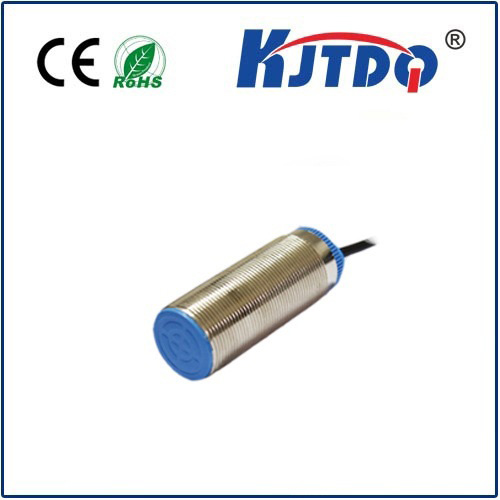
The E18-LAS/92 is a through-beam photoelectric sensor, a design known for its superior sensing distance and high immunity to environmental interference. Unlike diffuse or retro-reflective models, the through-beam configuration consists of separate emitter and receiver units. The emitter projects a focused beam of light, which is directly received by the opposing unit. An object is detected when it interrupts this beam. This principle allows the E18-LAS/92 to achieve a remarkable sensing range of up to 15 meters, making it ideal for applications requiring long-distance detection, such as conveyor belt monitoring, warehouse door control, and large machinery safeguarding.
One of the core strengths of the E18-LAS/92 lies in its robust construction. Housed in a rugged, cylindrical metal casing, it is built to withstand harsh industrial conditions, including exposure to dust, moisture, and mechanical vibrations. Its IP67 protection rating guarantees reliable operation even in demanding settings, ensuring that production lines continue to run smoothly without unexpected downtime caused by sensor failure. The device operates effectively within a wide temperature range, providing flexibility for various climatic and operational environments.
Installation and integration are straightforward with the E18-LAS/92. Its standard M18 threading allows for easy mounting on machinery frames, brackets, or custom fixtures. The sensor features both NPN and PNP output configurations, offering compatibility with a vast array of programmable logic controllers (PLCs), relays, and other control systems prevalent in global markets. This versatility simplifies the design process for system integrators and maintenance teams, reducing setup time and potential errors.
The application scope for the E18-LAS/92 is extensive. In packaging lines, it accurately detects the presence or absence of products, triggering subsequent actions like filling, capping, or labeling. In material handling, it serves as a critical component for counting objects, controlling gate operations, and preventing jams. Within automotive assembly plants, it ensures precise positioning of components. Furthermore, its high-speed response time makes it suitable for detecting fast-moving objects on high-speed production lines, a crucial requirement for maintaining efficiency.
Beyond basic object detection, the E18-LAS/92 contributes significantly to safety and energy efficiency. By monitoring access points or the perimeter of dangerous machinery, it can initiate emergency stops or warning signals, protecting personnel and equipment. Its precise detection also helps in optimizing machine cycles, preventing unnecessary operation and thus conserving energy—a key consideration for sustainable manufacturing practices.
For engineers and procurement specialists, selecting the E18-LAS/92 translates to a long-term investment in operational stability. Its proven design minimizes the need for frequent recalibration or replacement, leading to lower total cost of ownership. When sourcing this component, it is essential to partner with reputable suppliers who provide genuine products, comprehensive technical data sheets, and reliable after-sales support to ensure optimal system performance.
In conclusion, the E18-LAS/92 photoelectric switch is more than just a sensor; it is a fundamental building block for intelligent automation. Its combination of long-range detection, environmental resilience, and easy integration addresses the core challenges faced in industrial settings. By incorporating such reliable sensing technology, businesses can achieve higher levels of automation precision, improve safety protocols, and drive overall operational excellence, solidifying their competitive edge in an increasingly automated world.