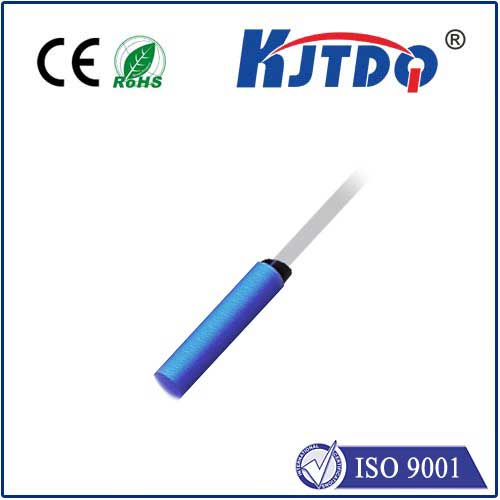
In the intricate world of industrial automation, the reliability of every component dictates the efficiency and safety of the entire system. Among these critical components, photoelectric sensors stand as silent sentinels, enabling non-contact detection of objects with precision. The GV18, GV25, GV103, and GV115 series of photoelectric switches represent a pinnacle in this technology, offering robust solutions for diverse and demanding applications. This guide delves into their core functionalities, distinct advantages, and practical implementation scenarios, providing a comprehensive overview for engineers and system integrators.
At its core, a photoelectric switch operates by emitting a beam of light—typically infrared, visible red, or laser—and detecting changes in the received light signal. The GV series utilizes this principle through three primary sensing modes: through-beam, retro-reflective, and diffuse reflective. Through-beam models, ideal for long-range detection, consist of separate emitter and receiver units. The GV103, with its extended sensing range, excels here, ensuring reliable operation even in environments with potential misalignment. Retro-reflective types, like the compact GV18, combine emitter and receiver in one housing, using a reflector to bounce the light back. This design simplifies installation while maintaining good range. Finally, diffuse reflective sensors, such as the versatile GV25, detect objects by measuring the light scattered directly from the target's surface, making them perfect for detecting objects regardless of color or surface texture at closer ranges. The GV115 often incorporates advanced background suppression technology within this category, allowing it to ignore distant objects and focus only on the preset sensing field.
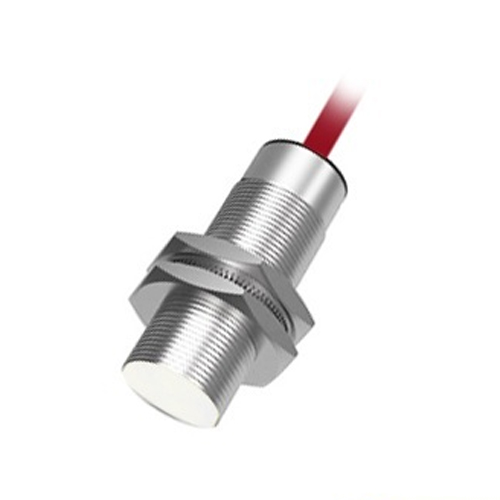
The designation "GV18/25/103/115" is not arbitrary; it signifies a family of sensors designed to meet specific physical and performance criteria. The GV18 and GV25 typically refer to compact, cylindrical housing styles with 18mm and 25mm diameters, respectively. Their small form factor makes them indispensable in space-constrained machinery. The GV103 and GV115 usually indicate rectangular or block-style housings, engineered for more robust mounting and often featuring enhanced environmental protection. Key specifications across the series include sensing distance, which can vary from a few centimeters to several meters; light source type (modulated LED for immunity to ambient light); output configuration (PNP/NPN transistor, relay, or analog); and response time, which is crucial for high-speed production lines.
The real strength of these photoelectric switches lies in their application versatility. On packaging lines, a GV25 diffuse sensor can reliably detect transparent bottles or foil wrappers, triggering fillers or labelers. In material handling, through-beam GV103 sensors form invisible safety curtains or accurately count boxes on a conveyor. The robust GV115, with a high IP67 or IP69K rating for dust and water resistance, thrives in harsh settings like automotive wash tunnels or food and beverage processing plants, where frequent washdowns are necessary. Their ability to function consistently despite vibration, temperature fluctuations, and airborne contaminants is a testament to their design.
Selecting the right model from the GV series requires careful consideration. First, define the sensing mode based on the installation layout and target object. Next, determine the required sensing distance, adding a safety margin. The operating environment is critical: for oily or dusty conditions, a sensor with a high IP rating and a stainless-steel housing is mandatory. Output type must match the control system's input card (sinking vs. sourcing). Finally, consider special features like adjustable sensitivity, built-in timers, or diagnostic LED indicators, which simplify setup and maintenance.
Installation and alignment are straightforward but vital for optimal performance. Ensure the sensor is securely mounted to minimize vibration. For through-beam types, precise alignment of the emitter and receiver is key; many models feature alignment indicators. For diffuse sensors, avoid highly reflective backgrounds that could cause false triggers. Regular maintenance involves keeping the lens clean from dust, oil, or condensation, which can attenuate the light beam. Most GV sensors are designed for easy cleaning and offer stable performance over long periods, minimizing downtime.
In conclusion, the GV18, GV25, GV103, and GV115 photoelectric switches are more than just components; they are foundational elements for building intelligent, responsive, and efficient automated systems. By understanding their operating principles, specifications, and ideal applications, professionals can leverage their full potential to enhance productivity, ensure safety, and reduce operational costs. In an era where precision and reliability are non-negotiable, choosing the right sensing solution is the first step toward operational excellence.