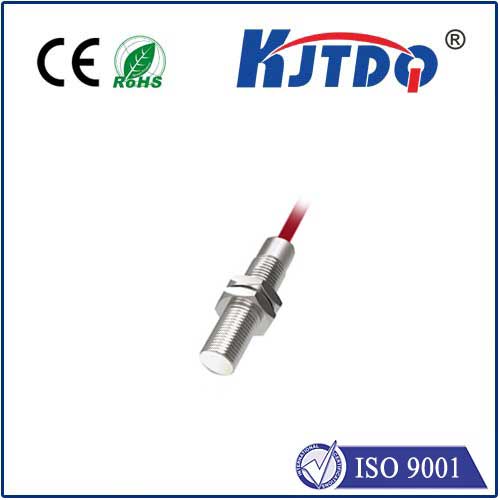
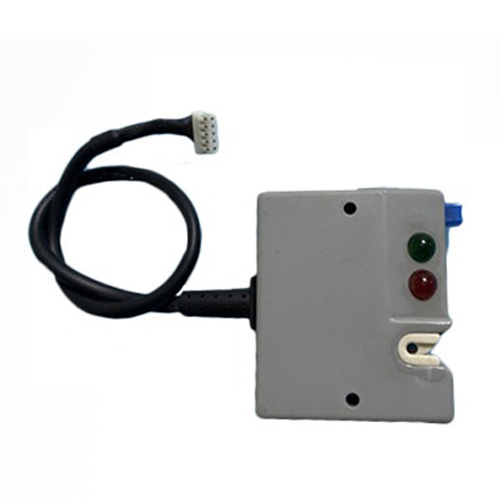
In the intricate world of industrial automation, the reliability of a single component can dictate the efficiency of an entire production line. Among these critical components, photoelectric switches stand as silent sentinels, and the BGS-LL61NS model has emerged as a benchmark for precision and durability. This comprehensive guide delves into the core features, operational principles, and diverse applications of this advanced sensor, providing essential insights for engineers and system integrators.
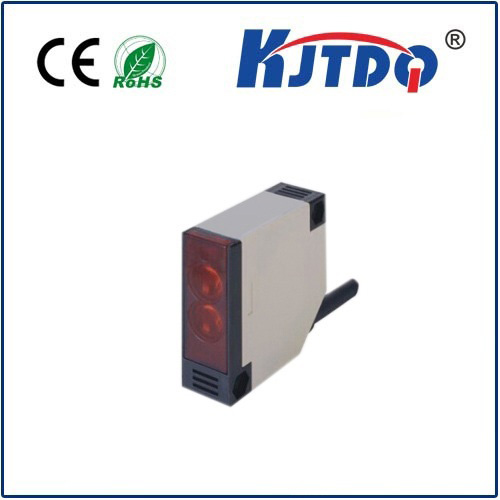
The BGS-LL61NS is a through-beam photoelectric sensor, a design renowned for its long sensing distance and high reliability. Unlike reflective or diffuse models, the through-beam type consists of two separate units: a transmitter and a receiver. The transmitter emits a focused beam of light—typically infrared or visible red—which is continuously received by the opposing unit. An object is detected the moment it interrupts this beam. This fundamental principle grants the BGS-LL61NS significant advantages, including exceptional stability and resistance to environmental factors like color or surface texture of the target object. Its sensing range is robust, capable of reliably detecting objects several meters away, making it ideal for applications requiring non-contact detection over distances.
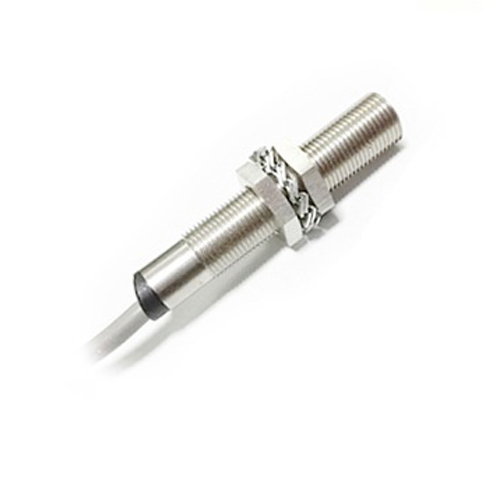
Durability is engineered into every aspect of the BGS-LL61NS. Housed in a rugged, often metal or high-grade polymer casing, it is built to withstand the harsh conditions prevalent in industrial settings. It typically boasts high ingress protection ratings, such as IP67, ensuring it is dust-tight and can withstand temporary immersion in water. This makes it perfectly suited for environments exposed to coolant, oil mist, or frequent washdowns. Furthermore, it is designed to resist electrical noise and vibration, common challenges in facilities with heavy machinery, ensuring consistent operation without false triggers.
The versatility of the BGS-LL61NS photoelectric switch is one of its strongest assets. In packaging machinery, it is indispensable for precise object counting, bottle cap presence verification, and label positioning. Within the automotive assembly sector, it ensures components are correctly aligned before robotic welding or assembly steps. On conveyor systems, it acts as a vital part of traffic control, signaling the presence of packages to sorters or diverters. Its high-speed response time allows it to keep pace with rapid production cycles, while its precise beam ensures accurate detection even of small or transparent objects when configured correctly.
Integrating the BGS-LL61NS into a control system is straightforward, thanks to its standard output configurations. Common models feature NPN or PNP transistor outputs, or relay contacts, providing compatibility with a wide range of Programmable Logic Controllers (PLCs) and other control devices. Many variants also include a handy alignment indicator, usually an LED, which simplifies installation and troubleshooting by confirming when the receiver is properly aligned with the transmitter's beam. For optimal performance, careful installation is key. The units must be securely mounted to prevent misalignment from vibration. The beam path must be kept clear of obstructions, and ambient light interference from sources like direct sunlight or high-intensity lamps should be minimized, often achievable with proper shielding or by using sensors with modulated light signals.
When selecting a sensor like the BGS-LL61NS, several factors must be evaluated. The required sensing distance, the size and material of the target objects, and the specific environmental conditions are paramount. Understanding the difference between through-beam, retro-reflective, and diffuse reflective sensing modes is crucial to selecting the right tool for the job. For long-range, highly reliable detection of any object that breaks the beam, the through-beam design of the BGS-LL61NS is frequently the superior choice. Its proven track record in delivering unwavering performance under pressure solidifies its role as a fundamental component in building resilient and efficient automated systems.