In the world of industrial automation and machinery control, precision and reliability are non-negotiable. The E3F-5DN3-5L photoelectric switch stands as a testament to this principle, offering a robust solution for countless detection and positioning applications. This comprehensive guide delves into the core features, operational principles, and practical applications of this versatile sensor, providing valuable insights for engineers, technicians, and procurement specialists.
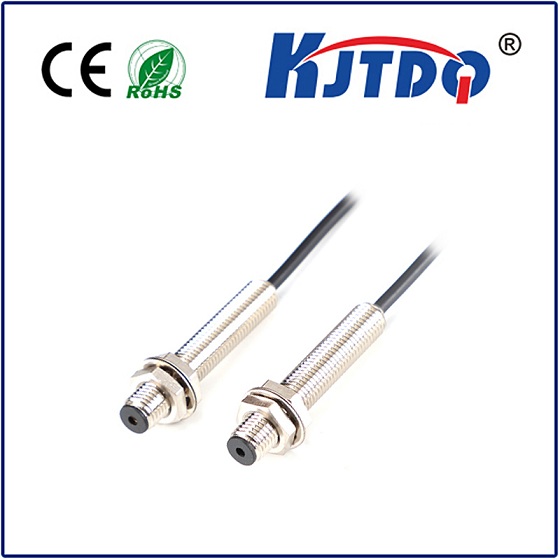
At its heart, the E3F-5DN3-5L is a diffuse reflective photoelectric sensor. It operates by emitting a beam of modulated infrared light from its built-in LED. When this light encounters an object within its sensing range, a portion of the light is reflected back to the sensor's receiver. The internal circuitry detects this reflected signal and triggers an output state change. The "5L" designation often refers to specific characteristics such as a 5-meter sensing distance, a light-on/dark-on selectable operation mode, and an NPN normally open output configuration, making it compatible with a wide array of programmable logic controllers (PLCs) and control systems. Its compact, cylindrical housing is typically rated IP67, ensuring protection against dust ingress and temporary immersion in water, which is crucial for harsh industrial environments.
The advantages of choosing the E3F-5DN3-5L are numerous. Its key benefit lies in simplified installation. Unlike through-beam sensors that require separate emitter and receiver units, or retro-reflective models needing a reflector, this diffuse type only requires a single unit. This reduces mounting complexity, alignment time, and overall system cost. The sensor is highly effective for detecting objects of various colors, shapes, and surface textures, though the sensing distance can vary slightly based on the object's color and reflectivity. White or highly reflective surfaces are detected at the maximum range, while dark or matte surfaces may require a closer proximity. The stable performance, even in the presence of ambient light interference due to its modulated light source, ensures consistent operation on fast-moving production lines.
Practical applications for the E3F-5DN3-5L are extensive across multiple industries. In packaging machinery, it reliably detects the presence of boxes, bottles, or cans on a conveyor belt, triggering subsequent actions like filling, capping, or labeling. Within the automotive assembly sector, it is used for part verification, counting components, or ensuring a robot's end-effector is in the correct position. It can monitor material levels in silos or on production lines, and its durability makes it suitable for use in woodworking, textile manufacturing, and material handling equipment. For instance, it can be positioned to detect when a stack of sheets reaches a predetermined height or when an automated guided vehicle (AGV) arrives at a loading station.
Proper installation and maintenance are straightforward but critical for optimal performance. The sensor should be mounted securely to avoid vibration-induced errors. It is essential to consider the background environment; highly reflective surfaces behind the target object can sometimes cause false triggers. Regular cleaning of the lens from dust, oil, or debris is recommended to maintain sensing accuracy. When integrating with a control system, always verify the wiring according to the datasheet—connecting the brown wire (typically +V), blue wire (0V), and black wire (output signal) correctly to the power supply and PLC input module. Understanding the light-on versus dark-on mode allows for flexible logic design; light-on means the output activates when the received light intensity is sufficient (object present), while dark-on activates when the light is blocked.
For those seeking a dependable, cost-effective, and easy-to-implement sensing solution, the E3F-5DN3-5L photoelectric switch presents a compelling choice. Its blend of performance, durability, and simplicity addresses the core needs of modern automated systems. By understanding its capabilities and following best practices for deployment, users can significantly enhance the efficiency and reliability of their detection tasks, minimizing downtime and ensuring smooth, continuous operation. When selecting sensors for your next project, considering the proven track record and versatile functionality of this model is a step toward building a more resilient and intelligent automation framework.