In the complex and demanding world of industrial automation, reliability is not just a feature; it's the foundation. Among the myriad of components that keep production lines moving, sensors play a pivotal role. The E60-20R2PK photoelectric switch stands out as a critical component for countless applications, offering precision and durability where it matters most. This guide delves into the specifics of this sensor, its operational principles, and why it has become a trusted choice for engineers and system integrators globally.
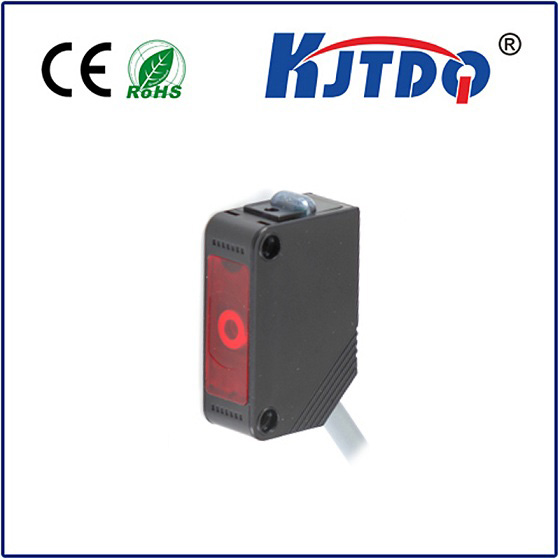
Photoelectric switches, at their core, operate by emitting a beam of light to detect the presence, absence, or distance of an object. The E60-20R2PK model utilizes a through-beam sensing method. This involves a separate emitter and receiver unit. The emitter projects a focused beam of light, typically infrared or visible red, across a designated path. The receiver, positioned directly opposite, continuously monitors for this light signal. When an object passes between the two units, it interrupts the beam. This interruption is instantly detected by the receiver, which then triggers an electrical output signal. This method is renowned for its long sensing range, high accuracy, and immunity to environmental factors like object color or surface finish, making the E60-20R2PK exceptionally reliable for precise detection tasks over distances up to 20 meters.
The designation "E60-20R2PK" provides key insights into its specifications. The 'E60' series indicates a robust, cylindrical housing designed for industrial environments. The '20' denotes its 20-meter standard sensing range, a significant capability for large-scale applications. 'R2' often refers to specific output characteristics—in this case, a relay output with normally open and normally closed contacts, providing versatile switching options for different control circuits. The 'PK' suffix typically indicates a polarized filter or specific lens type that helps suppress interference from ambient light, such as sunlight or high-intensity factory lighting, ensuring stable operation even in challenging optical conditions. This combination of features makes it suitable for demanding scenarios like warehouse logistics, packaging machinery, material handling systems, and automated assembly lines.
Selecting the right sensor is crucial for system efficiency. The E60-20R2PK offers distinct advantages. Its long-range detection eliminates the need for multiple shorter-range sensors in large installations, simplifying design and reducing costs. The robust metal or high-grade plastic housing provides an IP67 protection rating, meaning it is dust-tight and can withstand temporary immersion in water, ensuring performance in harsh, wash-down environments common in food processing or pharmaceutical industries. The relay output allows it to directly control loads like solenoids, contactors, or indicator lamps without requiring an additional amplifier in many cases. Furthermore, its easy alignment due to the visible red beam (in many variants) and stable mounting options with standard brackets save valuable installation and maintenance time.
For optimal performance, correct installation and alignment are paramount. The emitter and receiver must be precisely aligned so the beam is received at full strength. Many units feature alignment indicators, such as LED signals that change color or intensity when optimal alignment is achieved. It is essential to secure both units firmly to prevent vibration from misaligning them over time. Considerations for the operating environment are also key. While the sensor is resistant to ambient light, placing it away from direct, intense light sources is good practice. Ensuring the lens remains clean from dust, oil, or debris is vital for maintaining signal integrity. Regular functional checks should be part of routine maintenance to prevent unexpected downtime.
When integrated into a control system, the E60-20R2PK acts as the eyes of the operation. Its output signal is fed into a Programmable Logic Controller (PLC), a relay module, or directly into other machinery controls. This signal can be used to start or stop processes, count objects on a conveyor, verify the position of a machine part, or initiate safety protocols. Its high-speed response time makes it capable of detecting rapidly moving objects, which is essential in high-throughput production environments. The reliability of this photoelectric switch directly contributes to reduced machine stoppages, improved product quality through precise control, and enhanced overall equipment effectiveness (OEE).
In conclusion, the E60-20R2PK photoelectric switch is more than just a component; it is a cornerstone of modern industrial sensing. Its combination of long-range, robust construction, reliable through-beam operation, and environmental resistance addresses the core needs of automation professionals. By providing accurate and consistent object detection, it enables smoother, more efficient, and more intelligent manufacturing and logistics processes. For any project requiring dependable long-distance detection, understanding and utilizing the capabilities of the E60-20R2PK is a step toward building a more resilient and productive automated system.