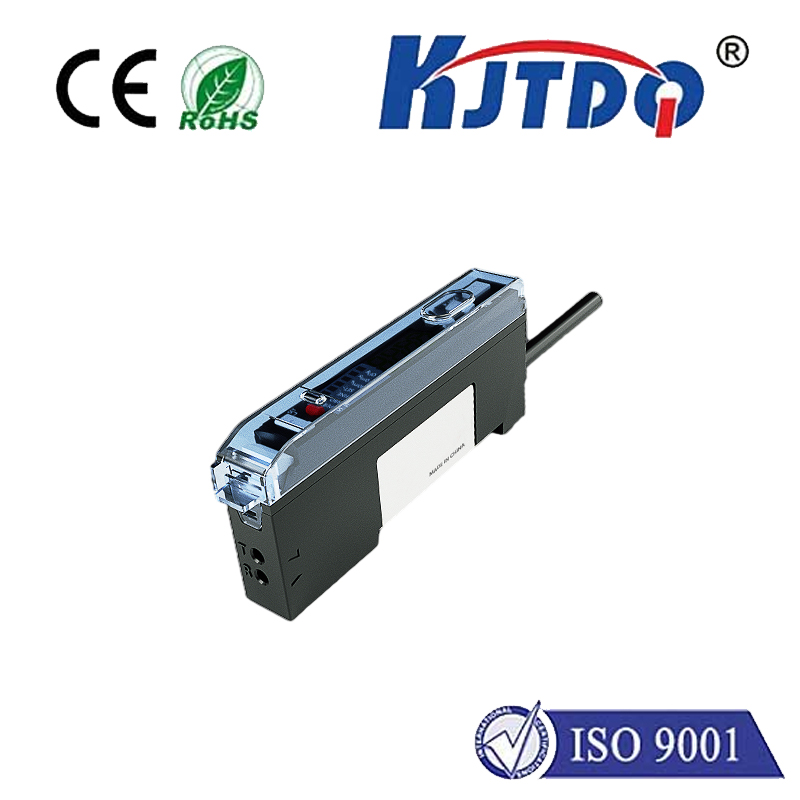
In the world of industrial automation, precision and reliability are non-negotiable. The E3FA-DP11 photoelectric switch stands as a cornerstone component for countless sensing applications, from packaging lines to material handling systems. This diffuse-reflective sensor represents a critical link in the chain of automated processes, where its performance directly impacts efficiency, safety, and overall productivity. Unlike other sensing technologies, the E3FA-DP11 operates on a simple yet robust principle: it emits a beam of light from its built-in LED and detects the light reflected directly from the target object. This design eliminates the need for a separate reflector, simplifying installation and reducing component costs.
The core advantage of the diffuse-reflective model like the E3FA-DP11 lies in its versatility and ease of setup. Engineers and technicians appreciate the straightforward mounting process. Since the sensor and the target are on the same side, there's no complex alignment with a distant receiver. This makes it ideal for applications where space is constrained or where mounting a reflector opposite the sensor is impractical. Common use cases include detecting the presence of boxes on a conveyor belt, monitoring fill levels in transparent containers, or ensuring a part is correctly positioned before a robotic arm engages. The sensor's housing is typically rugged, designed to withstand industrial environments with potential exposure to dust, moisture, and minor physical impacts.
A key specification to understand is the sensing distance. For the E3FA-DP11, this distance is precisely defined and fixed. It is crucial to select a model with a range appropriate for the application. Placing the target too close or beyond the specified limit can result in unreliable detection or failure. The target's properties—its color, surface texture, and material—also significantly influence performance. Light-colored, matte surfaces reflect light well and are easily detected. Dark, shiny, or transparent objects pose a greater challenge as they may absorb or scatter the light beam, requiring careful testing during the integration phase. Some advanced models within this family may feature background suppression technology, which helps ignore distant objects and focus detection on a specific, predefined range.
Electrical integration is another critical aspect. The E3FA-DP11 is typically available in multiple output configurations, such as NPN (sinking) or PNP (sourcing) transistor outputs. Choosing the correct type is essential for compatibility with the programmable logic controller (PLC) or other control circuitry in use. The wiring process must follow the manufacturer's datasheet precisely, paying close attention to voltage ratings (commonly 12-24V DC) and load current limits. Proper wiring ensures not only functionality but also protects the sensor and connected equipment from electrical damage. Many units feature a visible LED indicator that provides immediate feedback on the sensor's status—whether it is powered on or in a detection state—aiding immensely in troubleshooting.
Maintenance, while minimal, is vital for long-term reliability. The lens of the photoelectric switch must be kept clean. Accumulation of dust, oil, or debris can scatter or block the light beam, causing false triggers or missed detections. A regular cleaning schedule using appropriate, non-abrasive materials helps maintain optimal performance. Environmental factors like strong ambient light, especially from sources with similar wavelengths to the sensor's emitter, can cause interference. In such cases, using sensors with modulated light (which pulses at a specific frequency) or installing physical shields can mitigate these issues. When a sensor appears faulty, a systematic approach to troubleshooting is recommended: verify power supply, check wiring connections, inspect the lens for cleanliness, and test with a standard target at the correct distance.
Ultimately, the E3FA-DP11 photoelectric switch is more than just a component; it is a reliable sentinel in the automated workflow. Its correct selection, installation, and maintenance are fundamental to creating resilient and efficient systems. By understanding its operating principles, limitations, and integration requirements, engineers can leverage this technology to build smarter, more responsive automation solutions that drive modern manufacturing and logistics forward. Its proven design continues to be a trusted choice for ensuring that the right object is in the right place at the right time.