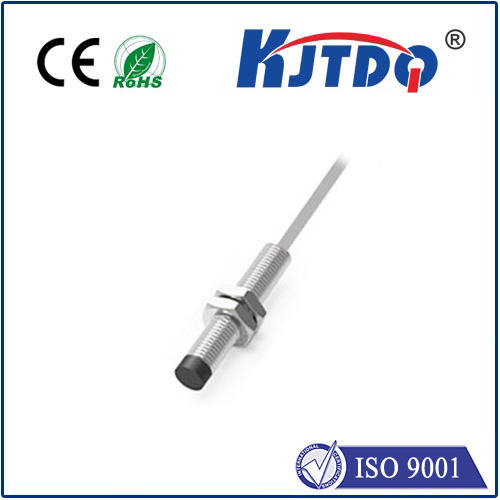
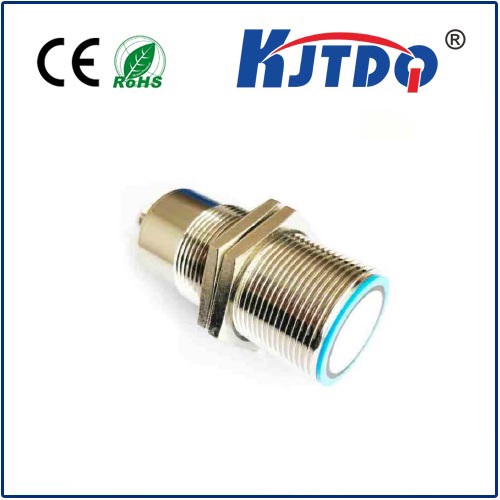
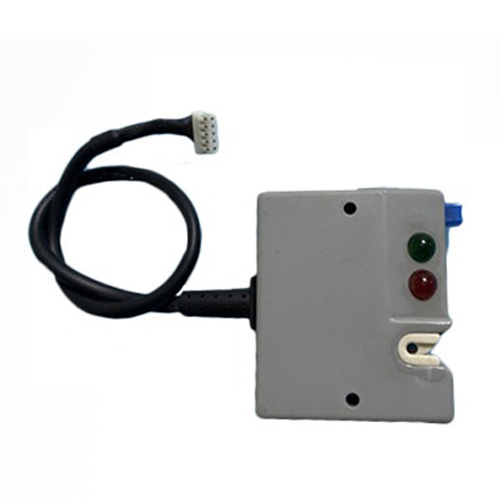
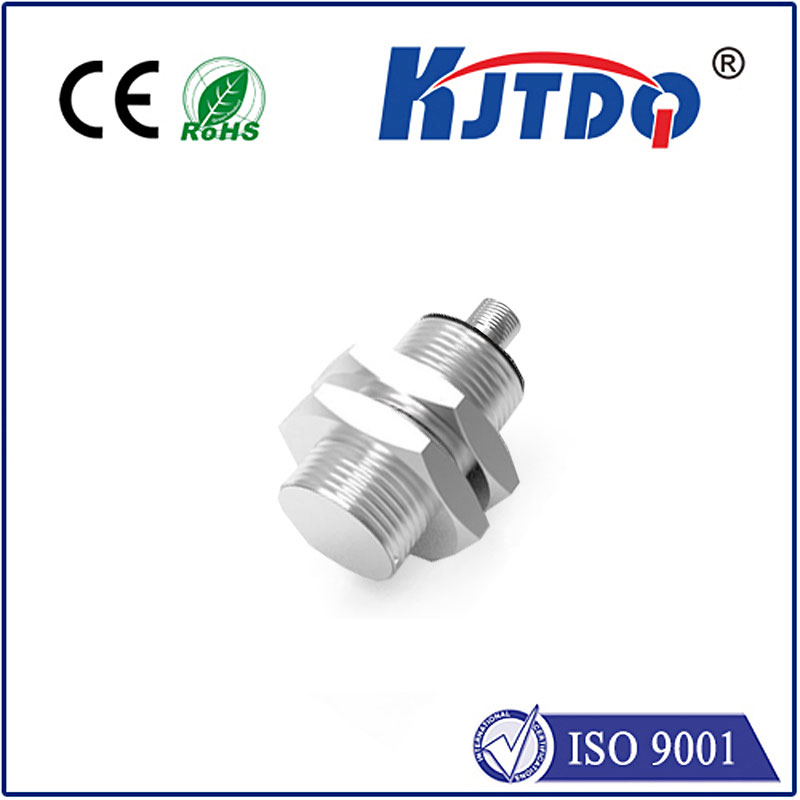
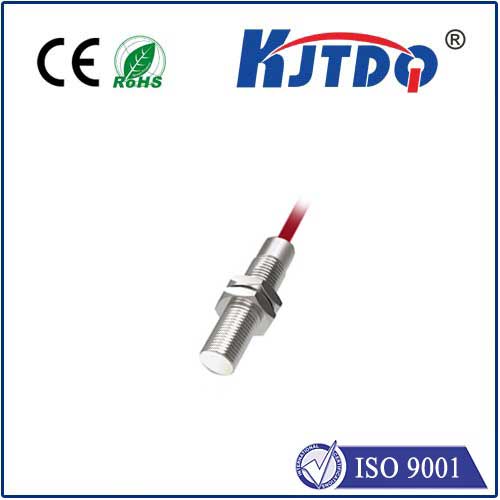
In the demanding world of industrial automation, precision and reliability are not just preferences; they are absolute necessities. Downtime caused by sensor failure can lead to significant production losses and operational headaches. This is where the MV100-RT/35/95/103 photoelectric switch stands out, offering a robust and dependable solution for a wide array of object detection challenges. Engineered for performance in diverse environments, this sensor is a critical component for engineers and system integrators seeking to enhance their automation processes.
The MV100-RT/35/95/103 is a retro-reflective photoelectric sensor, a design known for its simplicity and effectiveness. Unlike through-beam sensors that require separate emitter and receiver units, this model combines both into a single housing. It emits a focused beam of light towards a dedicated reflector. When an object interrupts this beam, the sensor triggers a switching signal. The "RT" designation typically indicates its retro-reflective nature, while the numerical code often specifies key parameters like sensing range, connection type, and output configuration—in this case, a 35mm housing, with 95 likely referring to a 10-30V DC operating voltage and 103 indicating a specific sensing distance or output type, such as a normally open (NO) or normally closed (NC) contact.
One of the primary advantages of the MV100-RT/35/95/103 is its impressive operational range and ease of installation. By utilizing a reflector, it effectively doubles the practical sensing distance compared to a standard diffuse sensor, allowing for detection over several meters without the wiring complexity and alignment issues of a through-beam setup. This makes it ideal for applications like conveyor belt monitoring, pallet detection in warehouses, or controlling access gates where objects need to be sensed across a defined path.
Durability is a cornerstone of its design. Housed in a rugged 35mm cylindrical body, often rated at IP67 or higher, the MV100-RT/35/95/103 is built to withstand harsh industrial environments. It is resistant to dust, water jets, and common vibrations, ensuring consistent performance in settings like packaging plants, automotive assembly lines, and material handling systems. The stable, modulated infrared or visible red light source is another key feature, providing immunity to ambient light interference from factory lighting or sunlight, which is a common pitfall for less advanced sensors.
The versatility of its output—commonly a solid-state NPN or PNP transistor output—allows for seamless integration with Programmable Logic Controllers (PLCs), motor starters, and other control systems. Many models also feature a clear LED indicator for operational status and alignment, simplifying setup and troubleshooting. Whether detecting transparent films, glossy bottles, or irregularly shaped packages, the adjustable sensitivity potentiometer allows technicians to fine-tune the sensor to the specific application, minimizing false triggers.
Consider a bottling plant where glass bottles move at high speed on a conveyor. The MV100-RT/35/95/103 can be positioned to count bottles, verify their presence before labeling, or detect jams. In automated storage and retrieval systems (AS/RS), it ensures the precise positioning of shuttles and confirms the presence of totes. Its reliability translates directly into smoother operations, reduced waste, and higher overall equipment effectiveness (OEE).
For system designers, selecting the right sensor is a calculated decision. The MV100-RT/35/95/103 photoelectric switch offers a compelling balance of range, resilience, and integration ease. It eliminates the guesswork from object detection, providing a proven, off-the-shelf component that delivers day-in, day-out performance. By choosing this sensor, businesses invest not just in a device, but in the uninterrupted flow and precision of their entire automated process, safeguarding productivity and minimizing maintenance overhead. In the landscape of industrial sensors, it remains a trusted and efficient choice for achieving reliable automation.