Проверка
Проверка
Проверка
Проверка
Проверка
Проверка
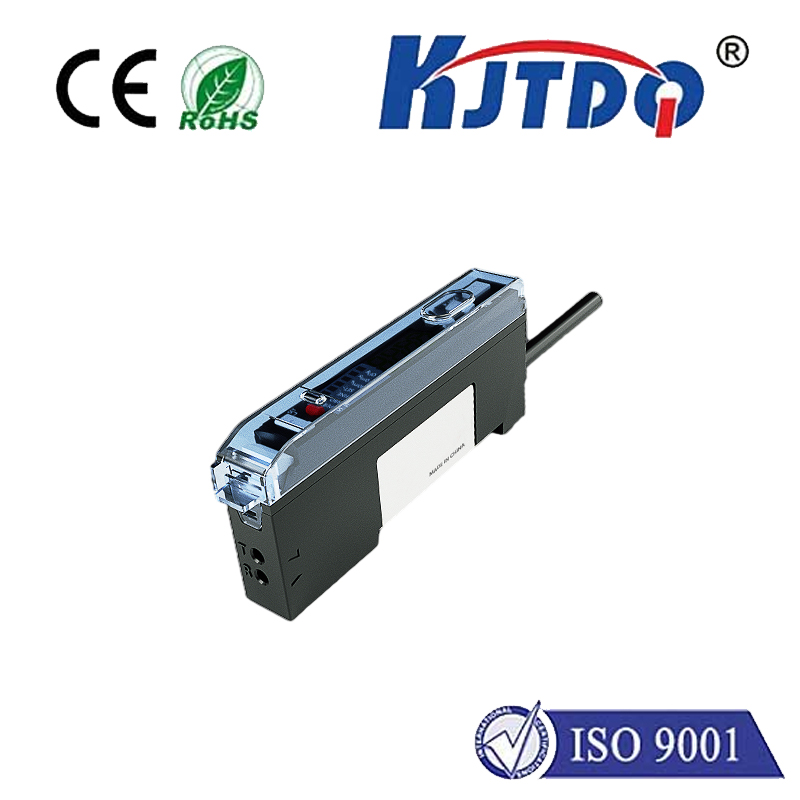
In the realm of industrial automation, the quest for reliable, precise, and durable sensing solutions is perpetual. Among the myriad of components that form the backbone of modern production lines and control systems, photoelectric switches stand out for their versatility and accuracy. The QSD30LDQ photoelectric switch, a prominent model within the KJTDQ series, exemplifies the technological advancements in this field, offering engineers and system integrators a robust tool for countless applications.
At its core, the QSD30LDQ is a type of through-beam photoelectric sensor. This design involves separate units for the emitter and the receiver. The emitter projects a focused beam of light—typically infrared or visible red—across a designated distance. The receiver, positioned directly opposite, continuously monitors this light beam. When an object passes between the two units, it interrupts the beam. This interruption is instantly detected by the receiver, which then triggers a switching action, sending a clear signal to the connected programmable logic controller (PLC) or other control unit. This fundamental principle is deceptively simple but forms the basis for highly reliable object detection.
The "30" in its designation often refers to its sensing range, which in this case is up to 30 meters. This long-range capability is a significant advantage, allowing for detection across wide conveyor belts, in large warehouses, or at entry/exit points of substantial facilities. The QSD30LDQ is engineered to perform consistently over this distance, maintaining a stable beam that is resistant to minor misalignments and environmental interference like ambient light fluctuations, thanks to advanced modulation techniques.
Durability is a non-negotiable feature for industrial components. The QSD30LDQ is typically housed in a rugged casing, often rated with a high Ingress Protection (IP) code such as IP67. This rating signifies complete protection against dust ingress and the ability to withstand temporary immersion in water. This makes it perfectly suited for harsh environments commonly found in manufacturing plants, food processing, packaging, and outdoor logistics, where exposure to moisture, dust, oil mist, and vibration is a daily occurrence.
Installation and alignment, often perceived as challenges with through-beam sensors, are streamlined with the QSD30LDQ. Many models come equipped with visual indicators, like a bright LED beam spot or alignment aids, which simplify the initial setup and ongoing maintenance. The stable output signal ensures that once calibrated, the sensor provides consistent performance with minimal drift, reducing downtime and maintenance costs.
The applications for the QSD30LDQ photoelectric switch are vast and varied. In material handling, it is indispensable for counting boxes on a high-speed conveyor, detecting the presence of pallets, or ensuring proper positioning before a robotic arm engages. In the automotive industry, it can be used to verify the passage of vehicle chassis along an assembly line. In packaging machinery, it ensures cartons are correctly positioned for sealing or labeling. Its long-range capability also makes it ideal for security applications, such as detecting personnel or vehicles in restricted areas, or in parking garage systems to monitor space occupancy.
When selecting a photoelectric switch like the QSD30LDQ, several technical specifications are crucial. Beyond the sensing range, one must consider the response time—the speed at which the sensor can detect an interruption and change its output state. For high-speed production lines, a fast response time is critical. The output type (e.g., NPN or PNP transistor) must be compatible with the control system's input module. The power supply requirements (typically 10-30V DC) and the load current capacity are also key parameters for seamless integration.
Troubleshooting is generally straightforward. Common issues include misalignment due to vibration, lens contamination from dust or grime, or electrical connection problems. Regular cleaning of the lenses and periodic verification of alignment are part of standard preventive maintenance. The robust construction of the QSD30LDQ minimizes failures, but its diagnostic LEDs provide immediate visual feedback on its operational status (power, beam reception, output activation), allowing for quick fault identification.
In conclusion, the QSD30LDQ photoelectric switch from the KJTDQ series represents a blend of long-range precision, industrial ruggedness, and operational simplicity. It transforms the basic function of object detection into a reliable, maintenance-friendly process that enhances efficiency, safety, and automation intelligence. For system designers and maintenance engineers seeking a proven solution for demanding detection tasks over considerable distances, the QSD30LDQ stands as a compelling and trustworthy choice, solidifying the critical role of photoelectric sensing in the automated world.