In the intricate world of industrial automation, where precision, reliability, and durability are non-negotiable, the choice of sensing components can make or break a system's performance. Among the myriad of options available, the RL20-3053PK photoelectric switch stands out as a robust and versatile solution, engineered to meet the demanding challenges of modern manufacturing and material handling environments. This guide delves into the core features, operational principles, and practical applications of this essential device, providing a comprehensive overview for engineers, system integrators, and maintenance professionals.
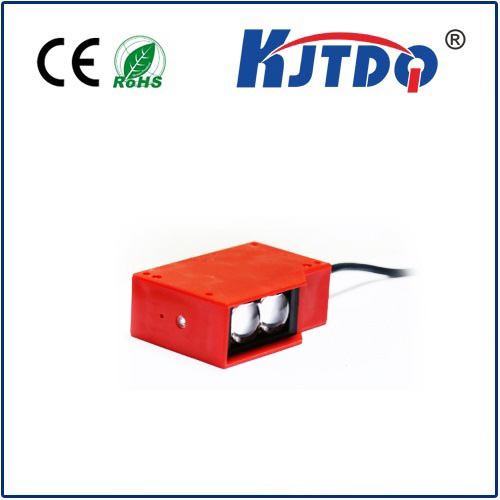
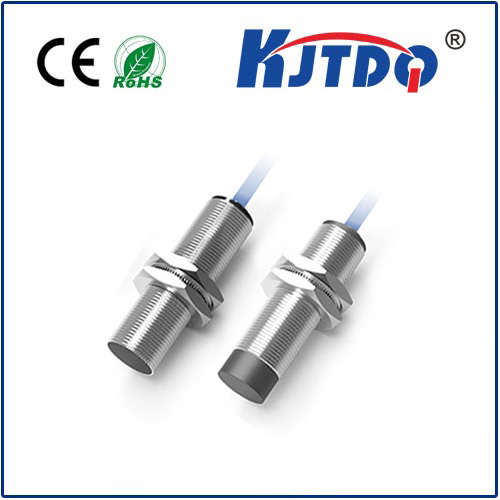
At its heart, the RL20-3053PK is a through-beam photoelectric sensor. This design employs a separate transmitter and receiver unit. The transmitter projects a focused beam of light—typically infrared or red visible light—across a defined distance. The receiver, positioned directly opposite, continuously monitors for this light signal. When an object passes between the two units, it interrupts the beam. This interruption is instantly detected by the receiver, which then triggers a change in its output state (e.g., from ON to OFF, or vice-versa, depending on the configuration). This fundamental through-beam principle offers significant advantages, most notably exceptional sensing ranges and high immunity to environmental interference like dust, steam, or target object color and surface finish. The "PK" designation often relates to specific housing material or connector type, indicating a design suited for challenging conditions.
The RL20-3053PK is built for the rigors of the factory floor. Its housing is typically constructed from high-grade, chemically-resistant plastics or metals, providing robust protection against physical impacts, oil, and coolants. Many models feature an IP67 or higher ingress protection rating, meaning they are dust-tight and can withstand temporary immersion in water, making them ideal for washdown areas in food and beverage or pharmaceutical industries. The device operates reliably across a wide temperature range, ensuring consistent performance from cold storage facilities to hot manufacturing cells.
One of the key strengths of this photoelectric switch lies in its application versatility. In packaging lines, it is indispensable for precise object counting, ensuring the correct number of items are boxed. On conveyor systems, it serves as a critical part of position detection, triggering robotic arms for pick-and-place operations or signaling the start and stop of conveyor segments. In automated storage and retrieval systems (AS/RS), the RL20-3053PK provides accurate pallet detection, guiding cranes and ensuring inventory is correctly logged. Its long sensing range and reliable beam-breaking detection make it perfect for monitoring large object passage, such as vehicles on an assembly line or containers passing through a gateway.
Installation and alignment, crucial for through-beam sensors, are simplified in modern designs like the RL20-3053PK. Many units incorporate alignment indicators, such as LED signals that change color or intensity when the beam is properly received. The fixed-position housing is designed for easy mounting on standard brackets or machinery. Wiring is straightforward, with color-coded cables or plug-in connectors (like the M8 or M12 types) that reduce installation time and minimize errors. For maintenance, the robust design means a long service life with minimal downtime. The clear operational status provided by LEDs allows for quick diagnostics, and the modular nature of the separate transmitter and receiver means a faulty unit can be replaced individually without recalibrating the entire pair.
When selecting a sensor like the RL20-3053PK, several technical specifications demand attention. The sensing distance, or operating range, defines the maximum reliable gap between the transmitter and receiver. The light source type (infrared for longer range and discretion, red light for visible alignment aid) is another consideration. Output type is critical; it may be a discrete NPN or PNP transistor output, which interfaces directly with programmable logic controllers (PLCs) or relay modules. Response time, measured in milliseconds, determines how fast the sensor can detect an interruption and change its output, a vital factor for high-speed production lines. Finally, the power supply requirements, usually within a standard DC range (e.g., 10-30V DC), must match the available control voltage.
In conclusion, the RL20-3053PK photoelectric switch represents a cornerstone of industrial sensing technology. Its through-beam operation delivers unmatched reliability for detection tasks over distance, while its rugged construction ensures longevity in harsh environments. From ensuring packaging accuracy to enabling complex robotic sequences, this sensor plays a silent yet pivotal role in the smooth, efficient, and safe operation of automated systems. For any project requiring dependable non-contact detection of objects, the RL20-3053PK offers a proven, high-performance solution that engineers have trusted for years to keep their processes running seamlessly.