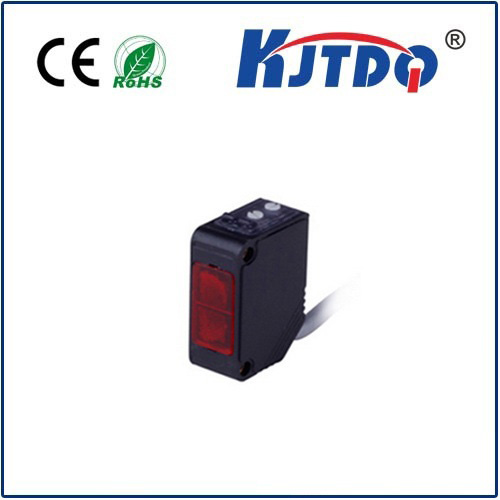
In the world of industrial automation, precision and reliability are non-negotiable. The BR20M-TDTL2 photoelectric switch stands as a testament to this principle, offering a robust and versatile solution for countless sensing applications. This device, a through-beam type sensor, operates on a simple yet highly effective principle: it consists of a separate transmitter and receiver. The transmitter emits a focused beam of light, typically infrared or red visible light, which is then received by the opposing unit. When an object passes between these two components, it interrupts the light beam, triggering an immediate output signal. This fundamental operation makes the BR20M-TDTL2 exceptionally reliable for detecting the presence, absence, or position of objects on production lines, in packaging machinery, and within material handling systems.
One of the defining characteristics of the BR20M-TDTL2 is its impressive sensing range. Capable of detecting objects over considerable distances, it provides designers and engineers with greater flexibility in machine layout. This extended range is crucial in large-scale installations where components cannot be placed in close proximity. Furthermore, the through-beam design offers the highest level of immunity to environmental factors compared to other sensing modes like diffuse-reflective or retro-reflective. Since it relies on a direct beam, it is less susceptible to interference from the color, texture, or reflectivity of the target object. A dark, matte-finished item is detected as reliably as a shiny, light-colored one, ensuring consistent performance across diverse product batches.
Durability is engineered into the core of the BR20M-TDTL2. Housed in a rugged, typically metal or high-grade polymer casing, it is built to withstand the harsh conditions of industrial environments. It is resistant to dust, moisture, and vibrations, often conforming to IP67 ratings, meaning it can handle temporary immersion and is completely protected against dust ingress. This resilience translates to reduced downtime and lower maintenance costs, as the sensor continues to operate reliably in settings where other components might fail. The electrical output is typically a solid-state transistor (NPN or PNP configuration), providing a fast, bounce-free signal compatible with modern programmable logic controllers (PLCs) and other control systems.
Installation and alignment, often perceived as challenges for through-beam sensors, are streamlined with the BR20M-TDTL2. Many models feature built-in alignment indicators, such as LED lights that change state or brightness when the beam is properly received. This visual feedback allows for quick and accurate setup, minimizing commissioning time. Once aligned, the stable beam ensures long-term operational consistency without the need for frequent recalibration. Its versatility is further highlighted by its application range: from detecting transparent bottles on a filling line and counting items on a high-speed conveyor to ensuring safety in automated guided vehicle (AGV) systems by sensing obstructions.
When selecting a photoelectric switch, the BR20M-TDTL2 presents a compelling case for applications demanding high reliability over long distances. Its through-beam technology provides superior performance in environments with airborne contaminants like dust or steam, where reflective methods might generate false signals. For industries such as automotive manufacturing, food and beverage processing, and logistics warehousing, this reliability is paramount. It ensures that processes run smoothly, quality control checkpoints are accurately monitored, and overall system efficiency is maintained.
In conclusion, the BR20M-TDTL2 photoelectric switch is more than just a component; it is a critical enabler of industrial automation efficiency. Its combination of long-range detection, environmental robustness, and consistent accuracy makes it a preferred choice for engineers seeking to build resilient and productive systems. By providing a dependable "yes" or "no" regarding object presence, it forms the foundational sensory layer upon which complex automated processes are built and optimized.