In the complex and demanding world of industrial automation, reliability is not just a feature; it is the foundation. Every component in a production line, from the mightiest robotic arm to the smallest sensor, must perform flawlessly under harsh conditions. Among these critical components, photoelectric switches stand as silent sentinels, detecting presence, absence, or position with a beam of light. The E3FA-DP13 photoelectric switch emerges as a premier example of this technology, engineered to deliver unwavering performance where it matters most. This diffuse-reflective sensor is designed for those who cannot afford downtime, offering a robust solution for a myriad of detection tasks.
The core principle behind the E3FA-DP13 is diffuse reflection. Unlike through-beam sensors that require a separate receiver, or retro-reflective models that use a reflector, the E3FA-DP13 houses both the light emitter and receiver in a single, compact housing. It operates by projecting a modulated infrared or red light beam towards the target. When an object enters its sensing range, the light diffusely reflects off the object's surface and is picked up by the receiver, triggering a switching signal. This self-contained design simplifies installation dramatically, reducing wiring complexity and setup time. There's no need for precise alignment with a separate component across a conveyor, making it an ideal choice for applications where mounting space is limited or where installing a receiver opposite the emitter is impractical.
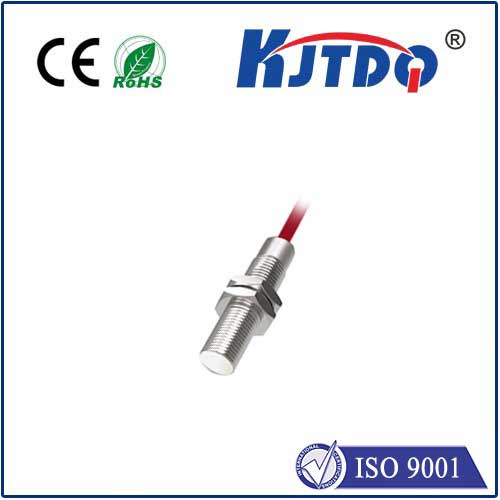
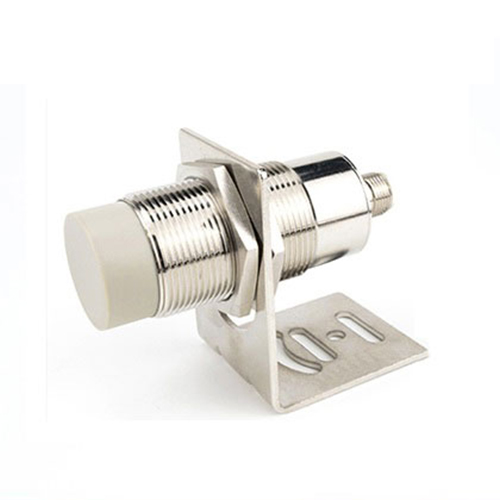
What truly sets the E3FA-DP13 apart is its specification sheet, which reads like a checklist for industrial resilience. Housed in a rugged, cylindrical metal body, it boasts an IP67 rating. This signifies complete protection against dust ingress and the ability to withstand temporary immersion in water up to one meter deep. Whether it's facing spray from washdown procedures in food and beverage plants or dust clouds in a packaging facility, the E3FA-DP13 is built to endure. Its operating temperature range is suitably broad for most industrial environments, ensuring stable performance from chilly warehouses to warm machine rooms.
Performance parameters are equally impressive. The model offers a standard sensing distance, allowing for reliable detection of objects within its specified range. A key feature is its built-in sensitivity adjustment, often via a potentiometer. This allows technicians to fine-tune the sensor's response, preventing false triggers from background objects or ensuring it detects low-reflectivity materials. The output is typically a solid-state NPN or PNP transistor switch, providing a fast, bounce-free signal compatible with Programmable Logic Controllers (PLCs) and other control systems. The response time is swift, capable of keeping pace with high-speed production lines without missing a beat.
The practical applications for the E3FA-DP13 are vast and varied. On assembly lines, it reliably detects the presence of components on a pallet or verifies that a part is correctly positioned before a robotic weld. In packaging machinery, it counts bottles, boxes, or pouches as they stream by, ensuring accurate fill levels and batch counts. Within material handling systems, it can act as a jam detector on conveyor belts or signal when a storage bin is full. Its robust construction makes it a favorite in the automotive industry for part verification and in the woodworking sector for detecting lumber. Essentially, anywhere an automated process requires non-contact detection of solid objects, the E3FA-DP13 is a strong candidate.
Selecting and implementing this sensor requires attention to detail. The first step is understanding the detection target—its size, color, material, and surface texture. A shiny, metallic object may reflect light differently than a matte, dark plastic one, potentially affecting the effective sensing distance. The installation environment is crucial; while the sensor is tough, ensuring it is mounted securely and away from direct sources of intense ambient light (like sunlight or welding arcs) prevents interference. Regular maintenance, though minimal, involves keeping the lens clean from obstructions like dust, oil, or debris to maintain optimal light transmission and reception.
In conclusion, the E3FA-DP13 photoelectric switch represents a fusion of sophisticated optical sensing and industrial-grade durability. It removes complexity from installation while adding reliability to operation. For engineers and maintenance professionals tasked with keeping automated systems running smoothly, choosing a component like the E3FA-DP13 is a strategic decision. It is more than just a sensor; it is a dependable partner in the pursuit of efficiency, safety, and continuous production. By providing accurate, non-contact detection in a tough package, it helps build the resilient backbone that modern manufacturing demands, ensuring that the light of automation never flickers.