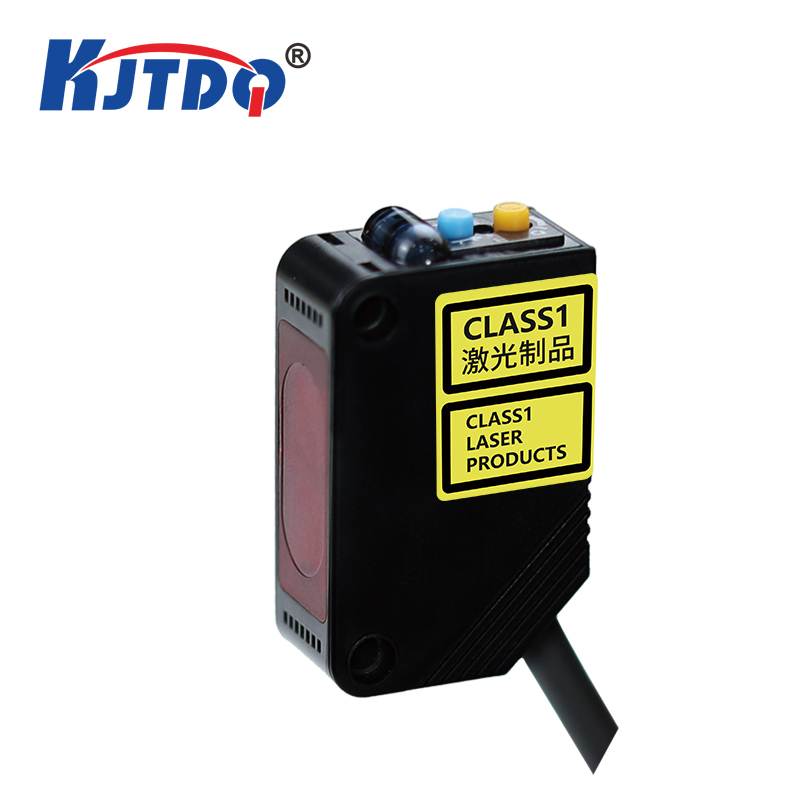
In the complex and demanding world of industrial automation, the reliability of every component is paramount. Among these critical components, photoelectric sensors stand as the silent sentinels, enabling precise detection, counting, and positioning. The ZL76-3082NK photoelectric switch emerges as a standout solution, engineered to deliver consistent performance in challenging environments. This guide delves into the features, applications, and advantages that make this sensor a preferred choice for engineers and system integrators worldwide.
The ZL76-3082NK is a through-beam photoelectric sensor, a design known for its long sensing distance and high reliability. This model typically operates by having a separate emitter and receiver unit. The emitter projects a focused beam of light—often infrared or laser—towards the receiver. An object is detected when it interrupts this beam. This principle allows the ZL76-3082NK to achieve detection ranges that are superior to other types like diffuse or retro-reflective sensors, making it ideal for large machinery or conveyor systems where components need to be monitored across significant gaps.
Durability is a non-negotiable trait for industrial sensors. The ZL76-3082NK is frequently housed in a robust metal or high-grade industrial plastic casing, rated with a high Ingress Protection (IP) code such as IP67. This rating signifies complete protection against dust and protection against temporary immersion in water. Consequently, it can withstand harsh conditions commonly found in manufacturing plants, packaging lines, and outdoor applications, including exposure to oil, coolant sprays, and particulate matter. Its construction ensures longevity and reduces maintenance downtime, a critical factor for cost-sensitive operations.
A key technical feature of sensors like the ZL76-3082NK is their output configuration. It commonly offers a stable NPN or PNP transistor output, providing a clear digital signal (ON/OFF) to Programmable Logic Controllers (PLCs) or other control systems. This plug-and-play compatibility simplifies integration into existing automation networks. Furthermore, many variants come equipped with a sensitivity adjustment potentiometer or teach-in function. This allows technicians to fine-tune the sensor's response, filtering out background interference or adjusting for partially transparent objects, thereby minimizing false triggers and enhancing system accuracy.
The practical applications for the ZL76-3082NK photoelectric switch are vast and varied. In material handling, it is indispensable for object detection on high-speed conveyors, ensuring proper spacing and preventing jams. In the automotive industry, it can be used for precise part positioning during assembly robots. Within packaging machinery, it reliably counts bottles, cans, or boxes with high speed and precision. It also finds use in security systems as a part of safety light curtains or gate monitoring, and in forestry or agricultural equipment for detecting log positions or grain levels. Its versatility stems from its fundamental through-beam reliability.
When selecting a photoelectric sensor, comparing the ZL76-3082NK to alternatives highlights its strengths. Compared to diffuse sensors, it offers a much longer and more stable sensing range, unaffected by the color or reflectivity of the target object. Versus retro-reflective models, it is not fooled by highly reflective surfaces that might bounce the beam back prematurely. While magnetic proximity sensors are excellent for detecting metal, the ZL76-3082NK can detect any opaque material—plastic, wood, glass, or liquid—making it a more universal solution. Its primary consideration is the need for precise alignment during installation, a task made easier by mounting brackets and alignment indicators often provided.
For optimal performance, correct installation and maintenance are crucial. The emitter and receiver must be securely mounted and precisely aligned; even a slight misalignment can cause operational failure. Using protective accessories like mounting brackets and protective shrouds can guard against physical impact. Regular cleaning of the lenses is recommended to prevent buildup of dust or grime that could attenuate the light beam. Periodically checking the alignment and output signal as part of a preventive maintenance schedule will ensure the sensor continues to operate at peak efficiency for years.
In conclusion, the ZL76-3082NK photoelectric switch represents a blend of robust engineering, practical functionality, and proven reliability. Its through-beam design delivers unwavering accuracy over long distances, while its rugged build shrugs off industrial hazards. For system designers seeking a dependable detection solution that minimizes downtime and maximizes process integrity, this sensor offers a compelling answer. By understanding its capabilities and implementing it correctly, businesses can achieve a higher level of automation efficiency and control, solidifying the ZL76-3082NK's role as a cornerstone of modern industrial sensing.