Проверка
Проверка
Проверка
Проверка
Проверка
Проверка
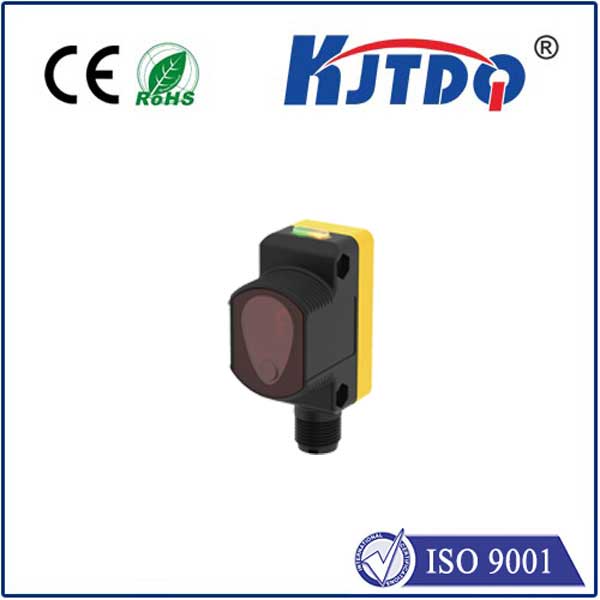
In the world of industrial automation and machinery control, precision and reliability are non-negotiable. The CDD-11N photoelectric switch stands as a cornerstone component for countless applications demanding accurate, non-contact object detection. This comprehensive guide delves into the core features, operational principles, and diverse use cases of this versatile sensor, providing essential insights for engineers, system integrators, and maintenance professionals.
At its heart, the CDD-11N is a through-beam photoelectric sensor. This design consists of two separate units: a transmitter and a receiver. The transmitter emits a focused beam of light, typically infrared or red visible light. The receiver, positioned directly opposite, continuously monitors for this beam. When an object passes between the two units, it interrupts the light beam. The receiver detects this interruption and triggers an electrical signal change at its output. This simple yet highly effective principle makes through-beam sensors like the CDD-11N exceptionally reliable and capable of achieving the longest sensing distances among photoelectric types, often several meters even for compact models. The "N" in the model designation frequently indicates a normally open (NO) output configuration, meaning the output circuit closes (turns on) when an object is detected.
The robustness of the CDD-11N is a key factor in its widespread adoption. Housed in a durable, often metal or high-strength polymer casing, it is built to withstand the harsh environments common in industrial settings. It is resistant to dust, moisture, and vibration, ensuring stable operation in manufacturing plants, packaging lines, and material handling systems. Many variants offer IP67 protection ratings, meaning they are dust-tight and can withstand temporary immersion in water, allowing for washdowns in food and beverage or pharmaceutical applications.
One of the primary advantages of the through-beam design is its high immunity to environmental interference. Since the receiver is only looking for the specific light signal from its paired transmitter, it is less likely to be fooled by ambient light, reflective backgrounds, or the color and surface finish of the target object. This makes the CDD-11N an excellent choice for detecting transparent objects like glass or plastic bottles, which can challenge other sensing technologies. Its consistent performance is crucial for high-speed counting, precise positioning on conveyor belts, and safety interlock systems where a missed detection is unacceptable.
Installation and alignment, while requiring initial care, are straightforward. The transmitter and receiver must be precisely aligned so the beam is directly received. Many models feature built-in alignment indicators, such as LED lights that change color or brightness when optimal alignment is achieved. Once installed, these sensors typically require minimal maintenance, offering a set-and-forget solution that contributes to lower total cost of ownership and reduced machine downtime.
The applications for the CDD-11N photoelectric switch are vast. In automotive assembly, it can detect the presence of components on a robotic arm's path. In warehouse logistics, it counts boxes moving along a sorting line. In printing machinery, it verifies paper feed. In automated doors, it provides safety beams to prevent closure when a person is in the doorway. Its versatility also extends to agriculture for product counting and to the electronics industry for PCB board insertion verification.
When integrating a CDD-11N sensor into a control system, compatibility is essential. The sensor's output (typically a transistor or relay) must interface correctly with the programmable logic controller (PLC) or other control unit. Understanding the voltage requirements (commonly 10-30V DC) and load current is necessary for designing a safe and effective circuit. Proper wiring, following the manufacturer's datasheet, ensures longevity and prevents damage from electrical faults.
In conclusion, the CDD-11N photoelectric switch represents a proven and reliable technology for object detection. Its through-beam operation delivers unmatched accuracy and range for its size, while its rugged construction guarantees endurance. For any task requiring dependable, non-contact sensing of objects regardless of material, color, or surface, the CDD-11N provides a fundamental solution that keeps automated processes running smoothly, safely, and efficiently. Selecting the right sensor, like the CDD-11N, is a critical step in building resilient and productive industrial systems.