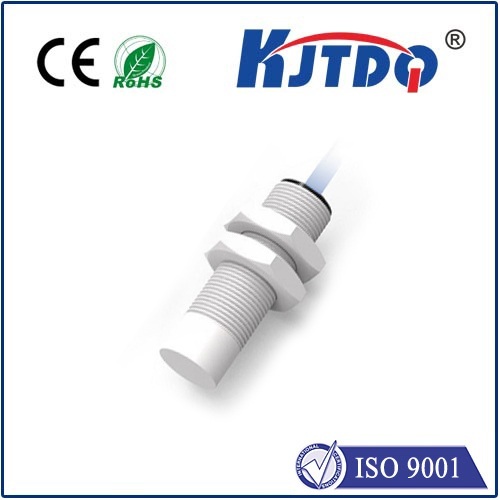
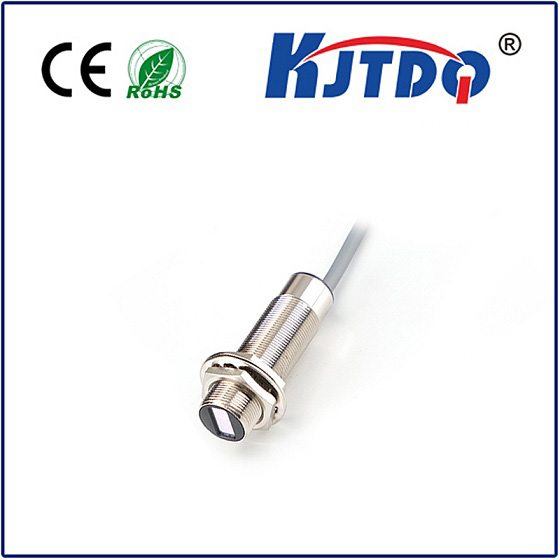
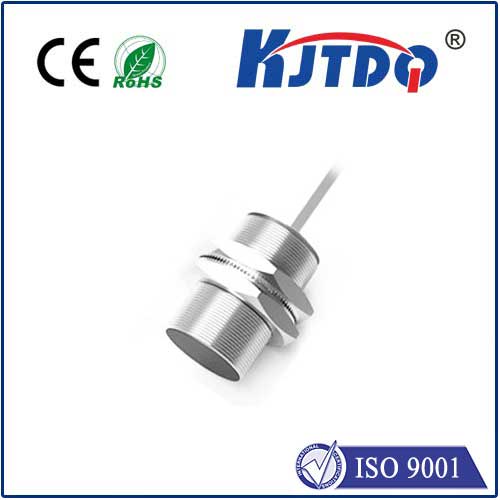
In the rapidly evolving landscape of industrial automation, precision, reliability, and durability are non-negotiable. The QS18VP6R photoelectric switch stands as a testament to engineering excellence, offering a robust sensing solution for a myriad of demanding applications. This diffuse reflective sensor is designed to detect objects without the need for a separate reflector, simplifying installation and reducing system complexity. Its compact, cylindrical housing belies a powerful core capable of delivering consistent performance in environments where other sensors might falter.
The operational principle of the QS18VP6R is elegantly straightforward yet highly effective. It emits a beam of modulated light from its integrated LED. When an object enters its sensing field, a portion of this light is reflected back to the receiver within the same unit. The built-in circuitry then processes this signal to trigger a solid-state output. This self-contained operation eliminates alignment hassles associated with through-beam sensors, making it an ideal choice for applications with space constraints or where mounting a separate reflector is impractical. The "VP" in its model number often indicates a visible red light beam, which greatly aids in precise setup and troubleshooting, allowing technicians to visually confirm the sensing spot.
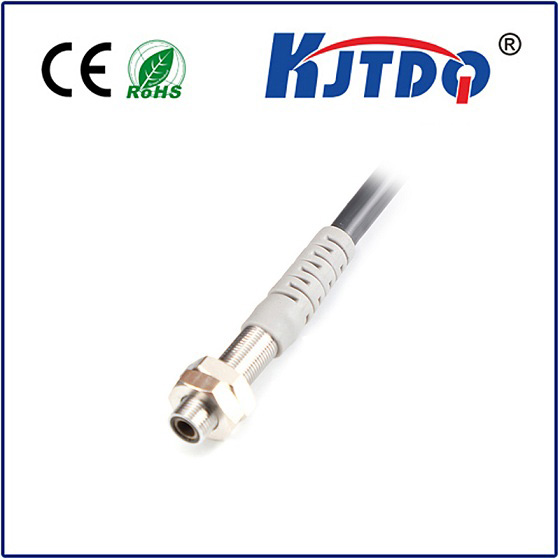
One of the most compelling features of the QS18VP6R is its impressive sensing range for a diffuse model. Capable of detecting objects from a few millimeters up to several hundred millimeters, it provides remarkable flexibility. This range, combined with its high switching frequency, makes it suitable for high-speed counting, packaging, and sorting tasks on production lines. Whether it's detecting transparent bottles, identifying labels on conveyors, or ensuring the presence of components in an assembly jig, this sensor performs with unwavering accuracy. Its robust construction, typically featuring a nickel-plated brass barrel and tempered glass lens, ensures resistance to common industrial hazards like dust, moisture, and mechanical impact. Many variants offer IP67 protection, allowing them to withstand temporary immersion and harsh washdowns, which is critical in food processing or pharmaceutical manufacturing.
The output configuration is another area where the QS18VP6R excels. It commonly provides both a normally open (NO) and a normally closed (NC) solid-state PNP or NPN output, offering direct compatibility with a wide range of programmable logic controllers (PLCs), counters, and other control systems. This plug-and-play compatibility minimizes integration time and effort. Furthermore, models often include a sensitivity adjustment potentiometer. This allows fine-tuning on-site to ignore background objects or to optimize detection for specific surface colors and materials, from shiny metallic parts to matte black plastics, ensuring reliable operation across diverse product lines.
Implementing the QS18VP6R brings tangible benefits to operational efficiency. Its reliability directly reduces machine downtime caused by false triggers or missed detections. The ease of installation and setup lowers labor costs and accelerates deployment or line changeovers. In material handling, it ensures precise positioning of pallets and products. In automated assembly, it verifies part placement before a critical process step, preventing costly errors and waste. In packaging machinery, it guarantees that every box is correctly filled and sealed. The sensor's longevity and minimal maintenance requirements translate into a lower total cost of ownership, providing an excellent return on investment over its extended service life.
When selecting a photoelectric switch, the QS18VP6R series should be a primary consideration for any application requiring dependable diffuse reflection sensing. Its blend of proven performance, environmental resilience, and user-friendly design addresses the core challenges faced in modern industrial settings. For system integrators and plant engineers seeking to enhance automation reliability, this sensor represents a trusted component that forms the sensory foundation for smarter, more efficient, and more productive operations. Its consistent delivery of accurate data is the first, critical link in the chain of automated decision-making that drives industry forward.