In the world of industrial automation, precision and reliability are non-negotiable. The E3FA-TN11-D photoelectric switch stands as a cornerstone component for countless sensing applications, offering a blend of durability and accuracy that engineers and system integrators have come to depend on. This through-beam type sensor is designed to detect objects with exceptional consistency, making it a preferred choice in environments where performance cannot be compromised.
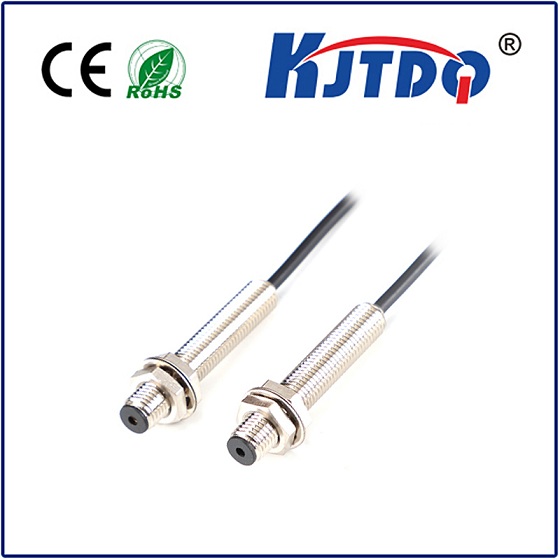
The core principle behind the E3FA-TN11-D is straightforward yet highly effective. It consists of two separate units: a transmitter and a receiver. The transmitter emits a focused beam of light, typically infrared or red visible light, which is then captured by the opposing receiver. When an object passes between these two units, it interrupts the light beam. This interruption is instantly detected by the receiver, which then triggers a switching signal. This simple "beam break" method allows for very long sensing distances and is remarkably immune to factors like object color, surface finish, or reflectivity, which can plague other sensing technologies. The "TN" in its model name signifies this through-beam design, renowned for its robustness in challenging conditions.
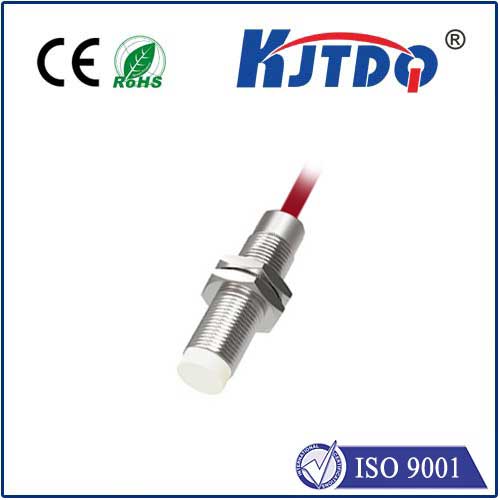
What sets the E3FA-TN11-D apart in a crowded market is its specific construction and feature set. Housed in a rugged, cylindrical metal barrel, it is built to withstand the rigors of industrial settings, including exposure to dust, moisture, and mechanical vibration. Its IP67 rating confirms its resistance to dust ingress and temporary immersion in water, ensuring reliable operation in washdown areas or outdoor installations. The device typically operates on a standard DC voltage range, providing a stable NPN output configuration that is widely compatible with Programmable Logic Controllers (PLCs) and other control systems. The "D" suffix often denotes specific output characteristics or connector type, which should always be verified against the manufacturer's datasheet for the specific application.
The practical applications for this sensor are vast and varied. In packaging lines, it is indispensable for precise object counting, ensuring every box or bottle is accounted for. Within automated assembly systems, it provides critical position verification, confirming that a component is present and correctly aligned before the next stage of the process begins. It acts as a safety sentinel on conveyor systems, detecting jams or monitoring the height of stacked materials. Furthermore, its through-beam design makes it excellent for detecting transparent objects, such as glass or clear plastic bottles, a task where diffuse reflection sensors often fail.
Selecting and installing the E3FA-TN11-D requires attention to detail for optimal performance. The first step is ensuring the operating voltage matches your control system's power supply. Mounting the transmitter and receiver in perfect opposition is crucial; even a slight misalignment can drastically reduce the effective sensing range or cause false triggers. Utilizing mounting brackets designed for this model can simplify installation and enhance stability. The sensing distance, which can be several meters, must be considered in the context of the application environment to avoid interference from ambient light or other light sources. Regular maintenance, primarily involving lens cleaning to remove dust or grime, is a simple but vital practice to maintain long-term sensor accuracy.
When compared to other sensing methods like inductive proximity sensors or capacitive sensors, the E3FA-TN11-D photoelectric switch offers distinct advantages. Inductive sensors only detect metals, while capacitive sensors can be influenced by humidity or material composition. The through-beam photoelectric sensor provides a consistent, non-contact method for detecting almost any material that interrupts its beam. While diffuse reflection sensors integrate the transmitter and receiver into a single unit, simplifying installation, they have shorter ranges and can be affected by the object's properties. The E3FA-TN11-D's separate units provide superior range and reliability, justifying the more complex two-part installation for critical applications.
In conclusion, the E3FA-TN11-D represents more than just a component; it is a reliable partner in automation. Its through-beam technology, rugged design, and proven performance make it a fundamental tool for engineers seeking to build resilient and efficient systems. By understanding its operating principles, key features, and ideal application scenarios, professionals can leverage this photoelectric switch to enhance productivity, improve safety, and reduce downtime across a diverse spectrum of industrial operations. Its continued prevalence in factory floors worldwide is a testament to its enduring value and effectiveness.