In the rapidly evolving landscape of industrial automation, the demand for reliable, high-precision measurement solutions is paramount. The DS500-N111 laser sensor emerges as a critical component in this domain, offering unparalleled accuracy and robustness for a wide array of applications. This device represents a significant leap forward in non-contact measurement technology, enabling manufacturers to enhance quality control, optimize processes, and reduce operational costs.
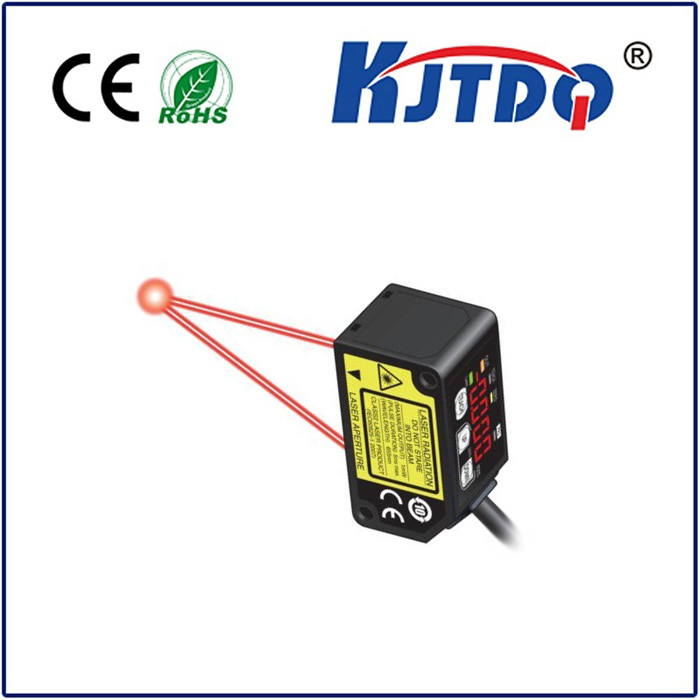
The core technology behind the DS500-N111 is its advanced laser triangulation principle. By projecting a focused laser beam onto a target surface and analyzing the reflected light with a high-resolution CMOS array, the sensor calculates distance or displacement with micron-level precision. This method ensures consistent performance even on challenging surfaces with varying reflectivity or color. The sensor's integrated microprocessor handles complex calculations in real-time, providing stable and repeatable readings essential for closed-loop control systems.
One of the standout features of the DS500-N111 is its exceptional measurement range and resolution. Engineered for industrial environments, it maintains accuracy across varying temperatures and in the presence of ambient light interference. The robust housing, typically rated at IP67, protects internal components from dust, moisture, and mechanical shock, ensuring longevity on factory floors, in robotics cells, or on automated assembly lines. Its compact design allows for easy integration into space-constrained applications without compromising performance.
Practical applications for this laser sensor are vast and diverse. In automotive manufacturing, it is deployed for precise gap and flush measurement between body panels, ensuring aesthetic quality and aerodynamic efficiency. In electronics assembly, it verifies component placement height and checks for coplanarity of ball grid arrays (BGAs). Within the packaging industry, the sensor monitors fill levels, checks seal integrity, and controls web tension. Furthermore, it plays a vital role in robotics for precise guidance and object detection, enabling more adaptive and intelligent automated systems.
Integration is streamlined through multiple interface options. The DS500-N111 typically offers analog outputs (e.g., 0-10V, 4-20mA) for direct connection to PLCs (Programmable Logic Controllers) and digital interfaces like RS-232 or Ethernet/IP for networked systems. This flexibility allows engineers to incorporate the sensor into both new and existing automation architectures seamlessly. Configuration is often managed via intuitive software, enabling quick setup of parameters such as measurement window, response time, and output filtering to match specific task requirements.
When selecting a laser sensor like the DS500-N111, key performance specifications must be considered. These include its measuring range, which defines the minimum and maximum working distances; linearity, indicating deviation from a perfect measurement line; and spot size, which affects resolution on small features. The sensor's response speed is crucial for high-throughput production lines, while its ability to handle different surface materials—from shiny metals to dark, absorbent plastics—determines application versatility.
The implementation of such precise measurement tools directly impacts operational efficiency. By providing real-time, accurate data, the DS500-N111 enables proactive process adjustments, minimizing material waste and reducing the rate of defective products. This leads to significant cost savings and supports lean manufacturing initiatives. Its reliability reduces unplanned downtime for manual calibration or sensor replacement, contributing to higher overall equipment effectiveness (OEE).
Looking ahead, the role of advanced sensors like the DS500-N111 will only expand with trends such as Industry 4.0 and the Industrial Internet of Things (IIoT). Its capability to generate precise digital data makes it a fundamental data source for smart factories, feeding information into larger systems for analytics, predictive maintenance, and fully autonomous process optimization. The fusion of precise physical measurement with digital intelligence is setting new standards for productivity and quality in modern manufacturing.
In conclusion, the DS500-N111 laser sensor stands as a testament to the innovation driving industrial automation forward. Its precision, durability, and adaptability make it an indispensable tool for engineers and technicians aiming to achieve higher levels of control and efficiency in their automated processes. As industries continue to push the boundaries of what's possible, such reliable measurement technology will remain at the core of intelligent manufacturing systems worldwide.