In the rapidly evolving landscape of industrial automation and precision engineering, the demand for reliable, accurate, and robust distance measurement solutions has never been greater. Among the array of technologies available, laser sensors stand out for their speed and precision. The LR-TB2000 laser sensor emerges as a particularly noteworthy contender, designed to meet the rigorous demands of modern applications. This guide delves into the core features, operational principles, and practical benefits of this advanced sensing device, providing a comprehensive overview for engineers, system integrators, and procurement specialists.
At its heart, the LR-TB2000 is a time-of-flight (ToF) laser distance sensor. It operates by emitting a focused laser beam towards a target object. The sensor's sophisticated internal circuitry precisely measures the time it takes for the reflected light to return. Since the speed of light is a constant, this time measurement is directly and accurately converted into a distance reading. This fundamental principle allows the LR-TB2000 to deliver non-contact measurements with exceptional repeatability and minimal influence from the target's surface color or material, within specified parameters, unlike some ultrasonic or eddy current sensors.
The performance specifications of the LR-TB2000 are engineered for challenging environments. It typically offers a substantial measuring range, capable of handling distances that cover several meters, making it versatile for both close-quarter positioning and larger-scale monitoring tasks. Its resolution is exceptionally fine, often down to the sub-millimeter level, ensuring that even the most minute positional changes are detected. Perhaps one of its most critical features is its high response speed. With update rates in the kilohertz range, the sensor can track fast-moving objects or rapidly changing processes in real-time, a capability essential for dynamic production lines, robotic guidance, and automated material handling.
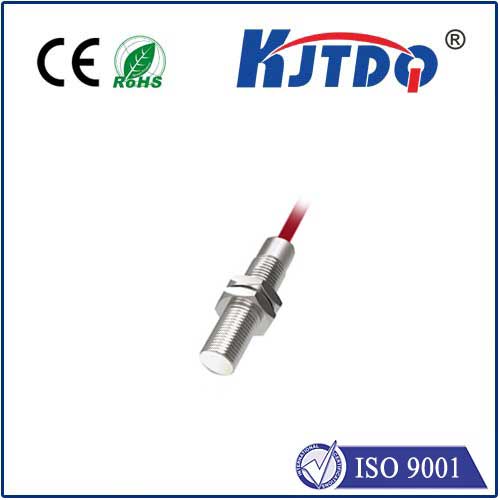
Durability and integration ease are paramount in industrial settings. The LR-TB2000 is commonly housed in a rugged, IP67-rated enclosure, making it resistant to dust ingress and capable of withstanding water jets. This robust construction ensures reliable operation in harsh factory conditions, including areas with significant vibration, oil mist, or temperature fluctuations. Connectivity is streamlined through standard industrial interfaces such as analog voltage/current outputs (e.g., 0-10V, 4-20mA) and digital communication protocols like RS-485 or IO-Link. These outputs allow for seamless integration into existing Programmable Logic Controller (PLC) systems, data acquisition units, and broader Industrial Internet of Things (IIoT) networks, facilitating centralized monitoring and control.
The practical applications of the LR-TB2000 laser sensor are vast and varied. In manufacturing, it is indispensable for precise positioning of robotic arms, ensuring components are placed correctly during assembly. It serves as a critical tool for height detection, profile scanning, and thickness measurement of products on conveyor belts. In logistics and warehousing, it can monitor stack height, control filling levels in silos, or guide automated guided vehicles (AGVs). Furthermore, in construction and civil engineering, its long-range capability can be utilized for deformation monitoring, alignment checks, and volume calculation of stockpiled materials.
When deploying the LR-TB2000, several best practices can optimize its performance. Ensuring a clean lens is vital, as dirt or debris can attenuate the laser beam. The sensor should be mounted securely to minimize mechanical vibration that could affect readings. For optimal accuracy, it is crucial to consider the target's surface properties; while highly versatile, extremely dark, absorbent, or transparent surfaces may require specific calibration or the use of a reflector. Understanding the sensor's linearity and setting appropriate warning thresholds within its operational range will prevent erroneous data and enhance system reliability.
In conclusion, the LR-TB2000 laser sensor represents a fusion of advanced optical measurement technology and industrial-grade robustness. Its high precision, rapid response, and environmental resilience make it a powerful tool for enhancing efficiency, quality control, and automation intelligence across numerous sectors. By providing accurate, non-contact distance data, it empowers systems to make informed decisions, reduce waste, and improve overall operational safety. For any project demanding dependable and precise spatial awareness, the LR-TB2000 stands as a proven and capable solution, driving innovation and productivity forward.