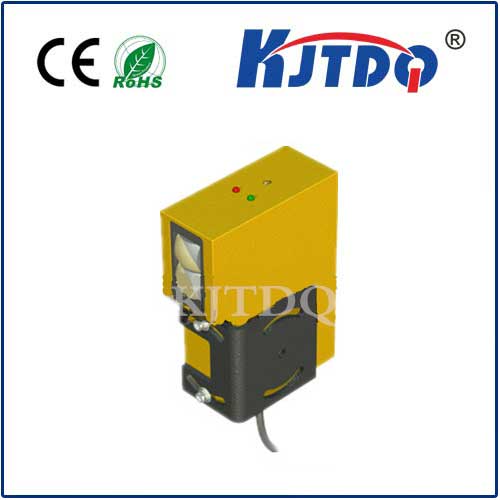
In the rapidly evolving landscape of industrial automation, the demand for sensors that deliver unwavering accuracy, durability, and seamless integration has never been higher. Among the myriad of components driving this technological revolution, the OD1-B015C05I25 laser sensor stands out as a paragon of precision measurement. Engineered for challenging environments, this sensor represents a significant leap forward in non-contact detection and measurement capabilities.
The core of the OD1-B015C05I25's performance lies in its advanced laser triangulation principle. By projecting a focused, visible red laser dot onto a target surface and analyzing the reflected light's position on a high-resolution receiver, the sensor calculates distance with exceptional accuracy. This method allows for precise measurements regardless of the target's color, material, or surface texture—a common challenge for other optical sensors. The result is reliable data critical for quality control, positioning, and inspection tasks across diverse industries.
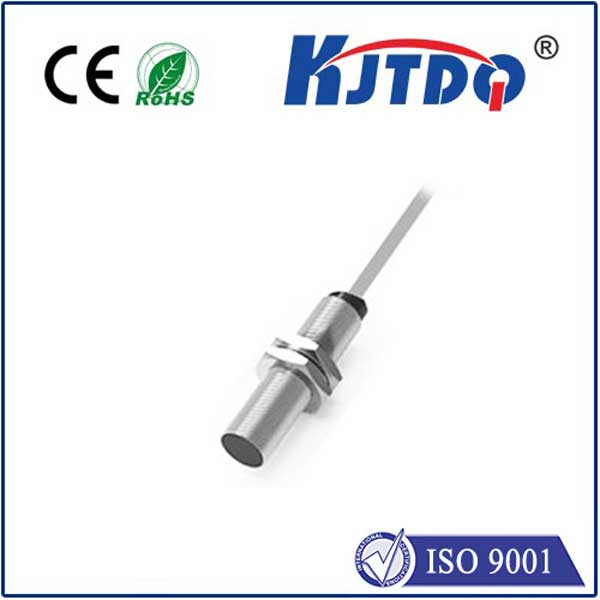
Durability is a non-negotiable requirement in industrial settings, and the OD1-B015C05I25 is built to endure. Housed in a robust, compact metal casing, it boasts an IP67 protection rating, making it resistant to dust ingress and capable of withstanding temporary immersion in water. This rugged construction ensures consistent operation in environments filled with coolant mist, oil particles, or mechanical vibrations. Its design prioritizes longevity, reducing downtime and maintenance costs associated with less robust sensor solutions.
Integration into existing systems is remarkably straightforward. The sensor features multiple output options, including analog voltage and current signals, as well as discrete switching outputs via PNP or NPN configurations. This flexibility allows it to communicate seamlessly with Programmable Logic Controllers (PLCs), human-machine interfaces (HMIs), and data acquisition systems from various manufacturers. The intuitive setup, often facilitated by teach-in buttons or software, enables quick configuration of sensing windows, thresholds, and output logic, minimizing commissioning time.
The practical applications of the OD1-B015C05I25 laser sensor are vast and varied. In automotive assembly lines, it ensures precise gap and flush measurement between body panels. Within the electronics industry, it verifies component height and placement on printed circuit boards before soldering. Packaging machinery relies on its speed to detect label presence, check fill levels, or count products on high-speed conveyors. In robotic guidance systems, it provides critical feedback for accurate pick-and-place operations, enhancing both speed and precision.
A key advantage is its adjustable sensing range and high resolution. Operators can fine-tune the sensor for specific tasks, whether detecting minute height variations on a machined part or monitoring the diameter of rolled materials. The high switching frequency allows it to keep pace with the fastest production lines, ensuring no detail is missed. This adaptability makes it a versatile tool, often eliminating the need for multiple specialized sensors and simplifying inventory management.
When selecting a sensor for critical automation tasks, factors like long-term stability and environmental compensation are paramount. The OD1-B015C05I25 incorporates internal compensation mechanisms to mitigate the effects of ambient temperature fluctuations, ensuring measurement consistency over extended periods. This reliability translates directly into improved product quality, reduced waste, and higher overall equipment effectiveness (OEE).
Ultimately, the integration of a component like the OD1-B015C05I25 laser sensor is an investment in operational excellence. It provides the reliable, high-fidelity data that modern automated systems require to function optimally. By enabling precise control and detailed inspection, it helps manufacturers maintain stringent quality standards, optimize production processes, and respond agilely to market demands. In a competitive industrial world where margins for error are continually shrinking, such technological precision is not just an advantage—it is an essential foundation for innovation, efficiency, and sustained growth.