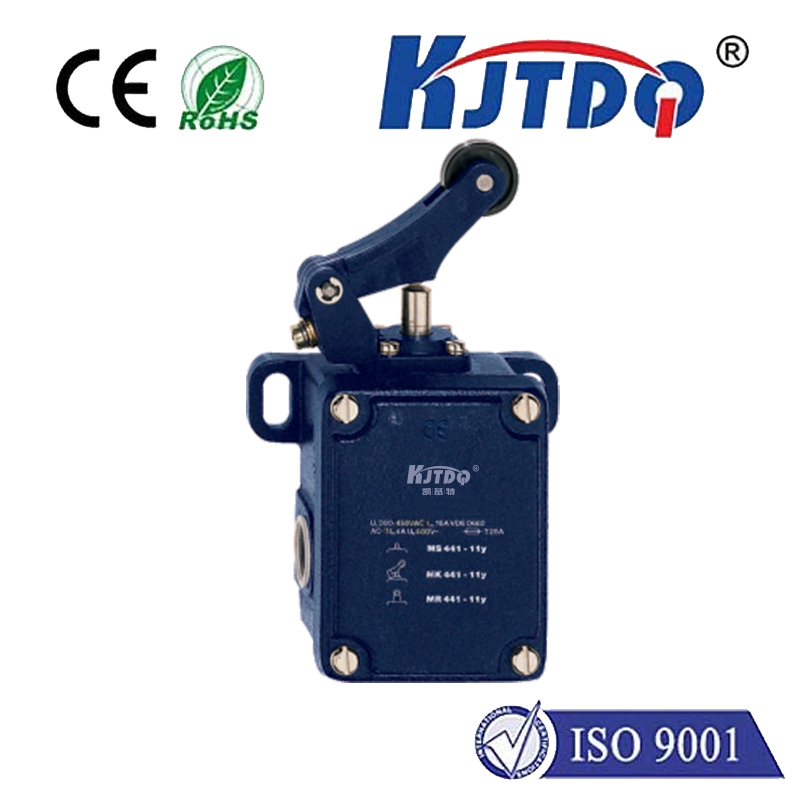
In the demanding world of industrial automation and material handling, conveyor belts are the arteries that keep operations flowing. However, the immense power and continuous motion of these systems introduce significant safety risks for personnel working in proximity. This is where a critical safety component, the emergency stop switch, becomes non-negotiable. The ZS7110/1SWV/55N Pull Cord Switch, often referred to by industry professionals as a reliable safety sentinel, stands out as a paramount solution for ensuring worker protection and operational integrity.
The core function of a pull cord switch is deceptively simple yet profoundly important: to provide a immediate and accessible means to halt conveyor operation in case of an emergency anywhere along its length. The ZS7110/1SWV/55N model embodies this principle with robust engineering. It is typically installed at regular intervals along both sides of a conveyor belt. The switch is connected to a steel wire rope—the pull cord—that runs parallel to the conveyor. In an emergency, such as a worker becoming entangled, equipment jam, or spotting a hazardous material spill, any person can simply pull this cord. This action mechanically activates the switch, sending a stop signal directly to the conveyor's motor control circuit, resulting in an instantaneous shutdown. This "fail-safe" design is crucial for preventing injuries and minimizing damage to machinery and products.
What distinguishes the ZS7110/1SWV/55N in a crowded market of safety devices? Its design and construction speak volumes about its reliability. Housed in a sturdy, often corrosion-resistant enclosure, it is built to withstand harsh industrial environments characterized by dust, moisture, vibration, and temperature fluctuations. The internal mechanism is engineered for high durability and precise actuation, ensuring it functions correctly when called upon, even after long periods of inactivity. Many models feature a highly visible, brightly colored actuator or housing for easy identification. A key operational feature is the manual reset mechanism. After the emergency stop has been activated, the switch cannot be reset remotely or automatically. A designated operator must physically go to the switch's location, assess that the emergency situation has been fully resolved, and manually reset it. This mandatory local reset procedure is a vital safety step, preventing an accidental or premature restart that could put personnel in danger.
Beyond the fundamental emergency stop, advanced versions of pull cord switches like the ZS7110/1SWV/55N series may incorporate additional functionalities that enhance system monitoring and diagnostics. Some are equipped with dual contacts, allowing for not only the primary stop signal but also a separate signal to a control panel or PLC (Programmable Logic Controller) to indicate which specific switch along the line was activated. This "trip indication" feature drastically reduces troubleshooting time after an event. Furthermore, models with a "pre-trip" or "run-alarm" function can provide an early warning. If the pull cord is partially tensioned or begins to sag, it can trigger an audible or visual alarm without stopping the conveyor, signaling maintenance personnel to inspect and rectify the issue before a full emergency stop becomes necessary, thereby reducing unplanned downtime.
The installation and maintenance of the ZS7110/1SWV/55N Pull Cord Switch are straightforward but require diligent attention to detail. Correct placement is essential; switches must be installed within easy reach (as per regional safety regulations like OSHA or ISO standards) and at intervals that ensure no point on the conveyor is too far from an emergency stop. The pull cord must be tensioned appropriately—too loose, and it may not activate reliably; too tight, and it could cause false trips. Regular testing is a mandatory part of any safety protocol. Facilities should establish a schedule where each pull cord switch is functionally tested to verify its immediate response and the complete shutdown of the conveyor system. Visual inspections for physical damage, corrosion, or obstructions around the switch and along the cable run are equally important.
In conclusion, while conveyor systems drive productivity, their safe operation hinges on dependable safety interfaces. The ZS7110/1SWV/55N Pull Cord Switch is more than just a mandated device; it is an active guardian of human safety and asset protection. Its robust construction, fail-safe operation, and potential for integrated diagnostics make it an indispensable component in mining, packaging, manufacturing, airport baggage handling, and any industry reliant on continuous conveyance. Investing in and properly maintaining high-quality pull cord switches like this model is not a compliance cost but a fundamental commitment to creating a secure and responsible working environment. It ensures that the line between normal operation and an emergency is always defined by a simple, accessible, and utterly reliable pull.