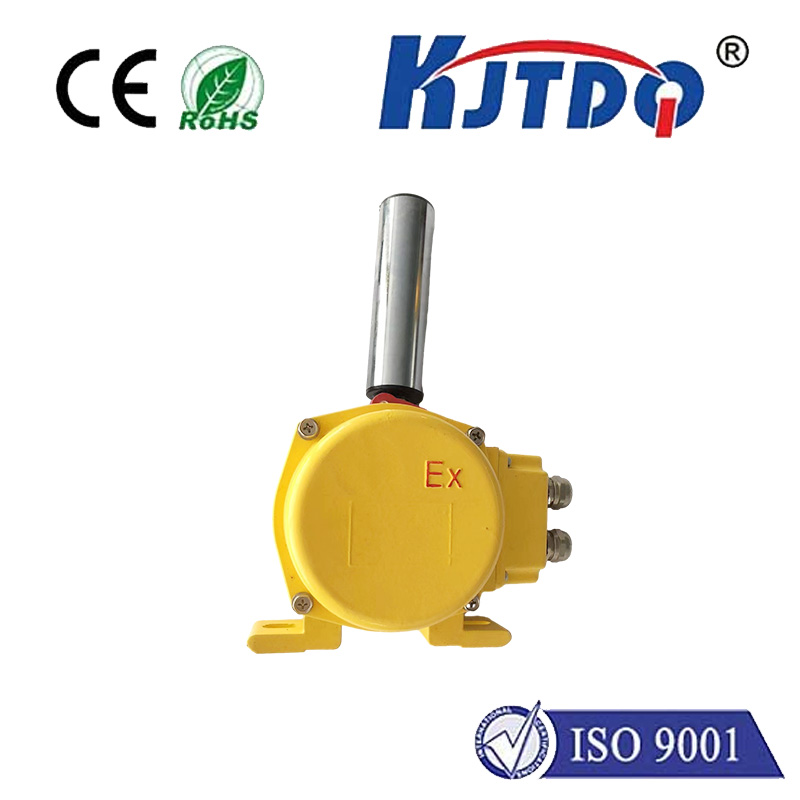
In the dynamic landscape of industrial automation and machinery control, the reliability of emergency stop and safety mechanisms is paramount. Among the critical components ensuring operational safety, the XCK-M.C Pull Cord Switch stands out as a vital safeguard. This device, often integrated into conveyor systems, material handling equipment, and long machinery lines, serves as a crucial manual emergency stop solution, allowing operators to halt equipment instantly from any point along its length by pulling a suspended cord.
The fundamental operation of the XCK-M.C Pull Cord Switch is elegantly simple yet robust. Typically installed at regular intervals along a conveyor belt or machinery, the switch is connected to a continuous rope or cable that runs parallel to the equipment. In the event of an emergency, such as a material spillage, equipment jam, or a personnel safety incident, any personnel can quickly pull this cord. This action mechanically actuates the switch, immediately breaking the control circuit and sending a stop signal to the motor drive or central control system. This rapid response is essential for preventing equipment damage, minimizing product loss, and, most importantly, protecting worker safety.
Design and construction features of the XCK-M.C model are tailored for harsh industrial environments. The housing is usually constructed from durable, corrosion-resistant materials like die-cast aluminum or reinforced plastics, ensuring longevity even in dusty, humid, or chemically exposed areas. Internally, it employs a high-precision switching mechanism, often with a positive break action, guaranteeing reliable circuit interruption regardless of the pull angle or force. Many models come with a manual reset function, requiring an operator to physically reset the switch at the location of activation. This feature is crucial for safety investigations, as it prevents automatic restart and ensures the cause of the stoppage is addressed before operations resume.
A key advantage of the XCK-M.C Pull Cord Switch is its versatility in integration. It can be configured with various actuator types and cable lengths to suit specific layout requirements. Compatibility with different control voltages (e.g., 24V DC, 110V AC, 230V AC) makes it adaptable to diverse electrical systems. Furthermore, modern iterations may include dual-channel safety outputs or compatibility with safety relays and PLCs (Programmable Logic Controllers), aligning with higher Safety Integrity Levels (SIL) or Performance Levels (PL) as per international standards like IEC 62061 and ISO 13849.
The application scope extends beyond traditional manufacturing. In mining operations, these switches are indispensable for belt conveyor safety, helping to prevent catastrophic failures. In packaging lines, they ensure quick response to jams. In airports for baggage handling systems, they contribute to both safety and operational efficiency. Proper installation and regular maintenance are critical. This includes ensuring the pull cord is at an accessible height, free from obstructions, and has appropriate tension. Regular functional testing, as part of a site's safety protocol, verifies the switch's operational readiness.
Implementing a reliable pull cord switch system like the XCK-M.C is not merely a regulatory compliance issue; it is a core component of a proactive safety culture. It empowers frontline workers with a direct and immediate means to control their work environment, fostering a safer workplace. For system integrators and plant managers, selecting a switch with proven durability, clear certification (such as CE, ATEX for hazardous areas if needed), and ease of maintenance translates into reduced downtime and lower total cost of ownership.
In conclusion, the XCK-M.C Pull Cord Switch represents a fundamental engineering solution where simplicity meets critical safety functionality. Its role in enabling rapid emergency response along extensive machinery makes it an unsung hero in industrial settings. By providing a fail-safe, manually operated emergency stop capability, it forms an essential layer in the hierarchy of controls, protecting both human and capital assets. As industries continue to advance towards greater automation, the importance of such reliable, human-centric safety interfaces remains undiminished, ensuring that efficiency never comes at the expense of worker well-being and operational security.