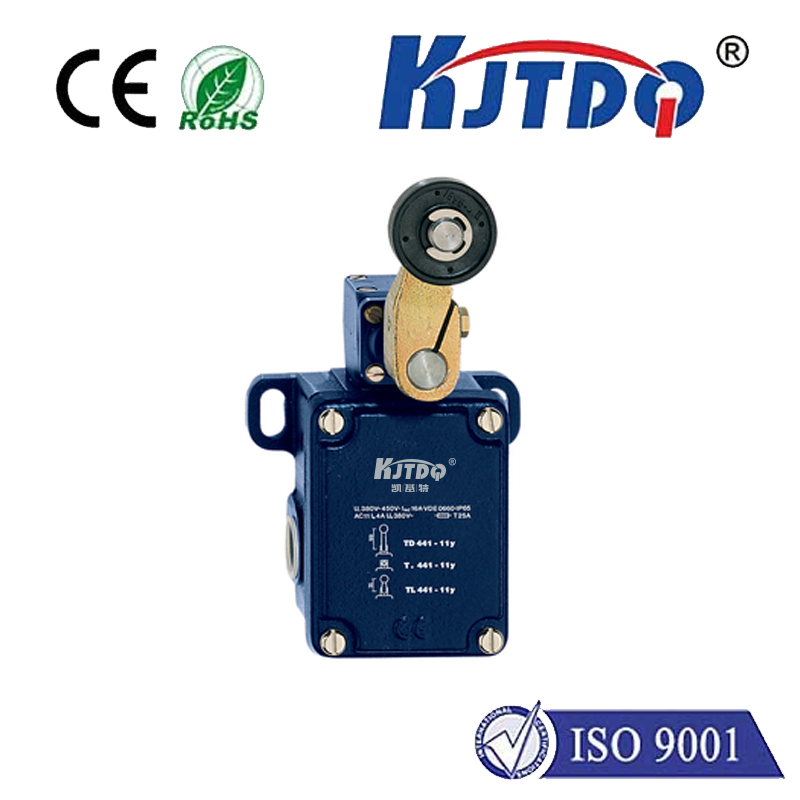
In the demanding environment of industrial operations, where machinery operates continuously and often autonomously, the implementation of fail-safe emergency stop mechanisms is not just a regulatory requirement but a fundamental pillar of workplace safety. Among these critical safety devices, the pull cord switch stands out for its simplicity, reliability, and immediate effectiveness. Specifically, the T441-11Y-8036-2 model represents a sophisticated iteration of this vital technology, engineered to meet the rigorous demands of modern conveyor systems, processing lines, and other long-reach machinery.
The primary function of a pull cord switch, such as the T441-11Y-8036-2, is to provide a readily accessible means for personnel to halt machinery in the event of an emergency, entrapment, or any hazardous situation. It consists of a switch housing mounted along the machinery's run and a durable, continuously accessible cable or cord that runs parallel to the operational path. When a hazard is detected, any operator along the line can pull this cord, which mechanically actuates the switch inside the housing. This action instantly breaks the safety circuit, sending a stop signal to the machinery's control system and initiating an immediate shutdown. This "rope-operated emergency stop" principle ensures that safety is not localized to a single control panel but is distributed along the entire length of the equipment.
The designation T441-11Y-8036-2 encapsulates specific technical and design features that define its application. This model is typically designed for robust performance. It often incorporates a highly visible, brightly colored housing for easy identification. The internal switching mechanism is built for millions of reliable operations, with contacts designed to handle the inductive loads commonly found in industrial motor circuits. A key feature of advanced models like this is the "latching" or "key-release" mechanism. After being activated by a pull on the cord, the switch remains in the tripped (safe) state until manually reset by an authorized operator using a key or tool. This prevents accidental or unauthorized restarting of the machinery before the cause of the emergency has been fully investigated and resolved, adding a crucial layer of safety during maintenance or troubleshooting.
Installation and positioning of the T441-11Y-8036-2 pull cord switch are critical for its effectiveness. The pull cord itself must be installed at a consistent and ergonomic height, typically between 0.8 to 1.1 meters from the walkway surface, ensuring it can be reached and operated effortlessly by personnel in a stressful situation. The cable must have sufficient tension to avoid sagging but not so much that it impedes smooth operation. Regular testing is a non-negotiable part of operational safety protocols. Facilities must establish and adhere to a schedule where the functionality of every pull cord switch is verified, often by physically pulling the cord at different points to confirm it successfully interrupts the machine's operation. This proactive maintenance ensures the device is always in a state of operational readiness.
Beyond basic emergency stopping, modern pull cord switches integrate seamlessly with broader Plant Safety and Control Systems. The output from the T441-11Y-8036-2 can be wired into a safety relay or a dedicated Safety PLC (Programmable Logic Controller). This integration allows for more sophisticated responses than a simple power cut. For instance, the system can trigger alarms, illuminate warning beacons, log the event and its location for audit trails, and even initiate sequenced shutdowns for complex machinery to prevent secondary damage. This connectivity transforms the simple mechanical pull action into a smart safety event within the industrial IoT ecosystem.
Selecting the correct safety component, like the T441-11Y-8036-2, requires careful consideration of the operational environment. Factors such as the IP (Ingress Protection) rating are paramount. A high IP rating (e.g., IP65 or IP67) ensures the switch is protected against dust and water jets, making it suitable for harsh environments like mining, aggregate processing, or food and beverage production where washdowns are frequent. The temperature range, mechanical durability against vibration, and the electrical specifications (voltage, current rating) must all align with the specific application to guarantee long-term reliability and compliance with regional safety standards like ISO 13850 or ANSI/ASME B15.1.
In conclusion, the T441-11Y-8036-2 pull cord switch is far more than just a button on a rope. It is a meticulously engineered safety sentinel, a critical link between human operators and potentially dangerous machinery. Its presence along a conveyor or production line embodies the principle of accessible safety, empowering every worker to act decisively in a crisis. For facility managers, engineers, and safety officers, specifying, installing, and maintaining such certified safety components is a direct investment in protecting personnel, minimizing downtime from accidents, and fostering a culture where safety is seamlessly integrated into the daily workflow. Ensuring these devices are correctly implemented and maintained is a cornerstone of responsible and productive industrial operation.