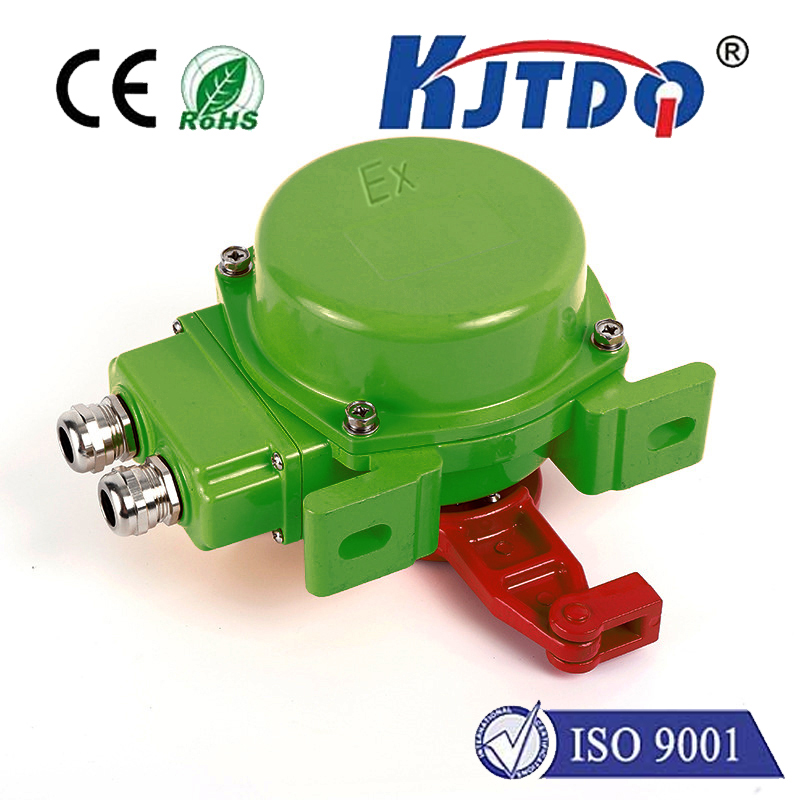
In the demanding world of industrial operations, where heavy machinery operates continuously, ensuring worker safety is not just a regulatory requirement but a fundamental ethical responsibility. Unplanned machine activation poses a significant hazard, potentially leading to severe injuries. This is where the EXKPT-LS pull cord switch emerges as a critical and reliable line of defense. Designed for robustness and fail-safe operation, this emergency stop device is engineered to bring machinery to an immediate halt from any point along a conveyor line or machine perimeter.
The core principle of the EXKPT-LS pull cord switch is elegant in its simplicity and effectiveness. It consists of a rugged, weather-resistant switch housing strategically installed along the equipment. A high-strength, corrosion-resistant cable runs the entire length of the hazardous zone, accessible to operators at all times. In an emergency, any personnel can simply pull the cable. This action triggers the switch mechanism, instantly cutting power to the machine drive and initiating a controlled stop. The design prioritizes immediate activation with minimal effort, a crucial factor during critical situations. Unlike localized stop buttons, the pull cord provides a continuous emergency stop belt, offering protection along tens or even hundreds of meters.
What sets the EXKPT-LS model apart is its construction for harsh industrial environments. The enclosure typically boasts a high IP (Ingress Protection) rating, making it resistant to dust, water jets, and impacts. This ensures reliable performance in sectors like mining, aggregate processing, woodworking, packaging, and bulk material handling, where exposure to elements and particulate matter is constant. Internally, the switch utilizes a precise, heavy-duty mechanism with a positive break action. Many models feature a dual-channel configuration for safety integrity, aligning with Safety Integrity Level (SIL) or Performance Level (PL) standards. This means the system has built-in self-checking circuits to detect faults like welded contacts or cable slack, preventing undetected failures that could compromise safety.
Installation and maintenance are streamlined for operational efficiency. The EXKPT-LS is designed for easy mounting on machine frames or conveyor structures. The pull cord can be tensioned appropriately and is often equipped with a manual reset function. After an activation, the switch must be manually reset at the location of the pull, ensuring the cause of the emergency is addressed before machinery restart. This forced reset procedure is a vital safety feature. Regular testing, as simple as pulling the cord to verify the machine stops, is recommended to guarantee operational readiness.
Beyond basic functionality, modern EXKPT-LS switches offer features that enhance usability and integration. Visual indicators, like brightly colored flags or LED status lights, clearly show whether the switch is in a normal or tripped state. Some advanced versions come with auxiliary contacts that can send signals to a central Plant Control System or SCADA, logging emergency stop events for operational analysis and preventive maintenance. Choosing the right model involves considering factors like the required safety level, cable length, ambient temperature range, and the specific electrical specifications of the machinery.
For facility managers and safety engineers, implementing reliable emergency stop systems like the EXKPT-LS pull cord switch is a non-negotiable aspect of risk management. It empowers workers, giving them direct control to halt dangerous situations instantly. This not only protects personnel but also helps prevent extensive damage to expensive machinery and minimizes costly production downtime resulting from accidents. In an era where operational safety and efficiency are paramount, investing in certified, high-quality safety components is a strategic decision that safeguards both human capital and productivity. The EXKPT-LS stands as a proven, mechanical solution that delivers peace of mind, ensuring that every worker along a production line has the power to stop danger in its tracks with a single, decisive pull.