In industrial and manufacturing environments, safety is not just a priority—it's a fundamental requirement. When machinery operates at high speeds or handles heavy loads, having an immediate and reliable method to halt operations in an emergency can prevent accidents, protect valuable equipment, and, most importantly, save lives. This is where the importance of a well-designed emergency stop device comes into sharp focus. Among the various safety solutions available, the pull cord switch stands out for its simplicity, effectiveness, and wide applicability. The KBJ-220Y Pull Cord Switch, offered by KJTDQ, represents a pinnacle of design in this critical category, providing robust performance where it matters most.
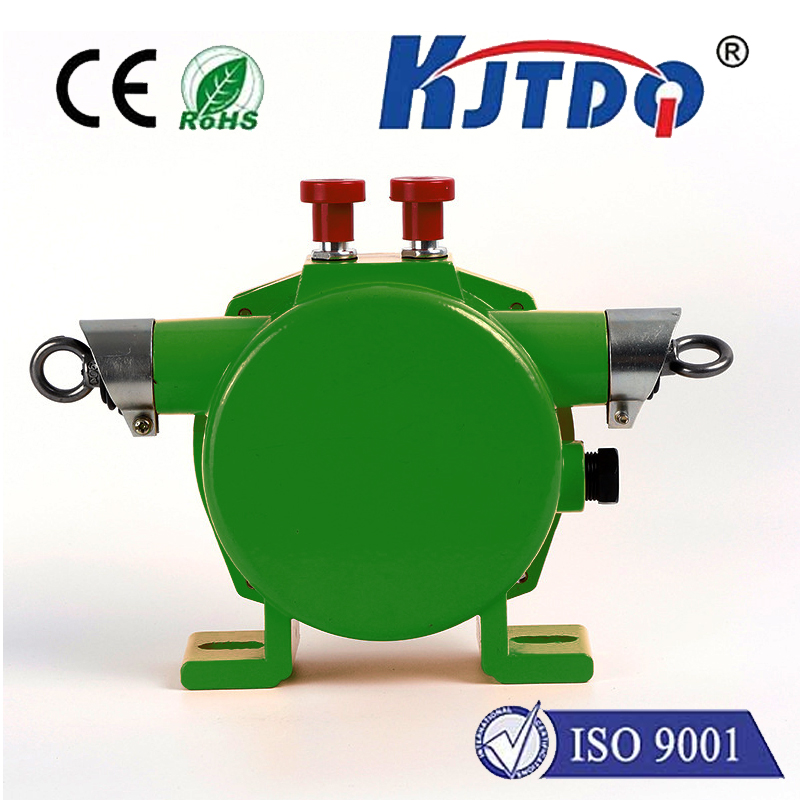
A pull cord switch, often referred to as a rope-operated emergency stop switch, is a safety device installed along the length of a conveyor belt, assembly line, or other long machinery. Its primary function is straightforward: to allow an operator anywhere along the line to quickly stop the equipment by pulling a suspended cable or rope. This immediate action breaks the electrical circuit, triggering the machinery to cease operation. The KBJ-220Y model is engineered to excel in this role, built to withstand the harsh conditions typical of mining, quarrying, cement production, bulk material handling, and packaging plants.
What sets the KBJ-220Y apart are its durable construction and thoughtful features. The housing is typically made from high-grade, corrosion-resistant materials like aluminum alloy or stainless steel, ensuring longevity even in environments with excessive dust, moisture, or temperature fluctuations. Inside, a reliable switching mechanism, often a heavy-duty micro-switch, provides a positive and unambiguous circuit break. The design usually includes a clearly visible actuator or flag that changes position when the cord is pulled, offering immediate visual confirmation that the switch has been activated—a crucial feature during troubleshooting or reset procedures.
The installation and maintenance of the KBJ-220Y are designed with practicality in mind. It can be mounted on either side of a conveyor frame, and its design often allows for adjustment of the pull force required to activate it, making it suitable for different operational setups and sensitivity requirements. The external reset function is another key safety feature. After an emergency stop, the switch must be manually reset at the device location. This prevents the machinery from being restarted remotely or accidentally before the issue that triggered the stop has been properly investigated and resolved, enforcing a vital safety protocol.
For facility managers and safety engineers, choosing the KBJ-220Y means investing in compliance and peace of mind. Devices like these are integral to meeting international safety standards such as ISO 13850 and IEC 60947-5-5, which govern the principles and requirements for emergency stop equipment. KJTDQ's commitment to quality ensures that the KBJ-220Y not only meets but often exceeds these benchmarks, contributing to a safer working culture. Its reliability reduces the risk of costly downtime caused by minor incidents escalating into major breakdowns or safety events.
In conclusion, in the complex ecosystem of industrial automation, safety devices are the unsung heroes. The KBJ-220Y Pull Cord Switch from KJTDQ is more than just a component; it is a critical link in the safety chain. Its robust design, reliable activation, and mandatory manual reset work in concert to create a safer environment for personnel and protect capital investments. For any operation relying on conveyor systems or long-range machinery, integrating this dependable emergency stop solution is a clear and responsible step toward operational excellence and unwavering safety commitment.