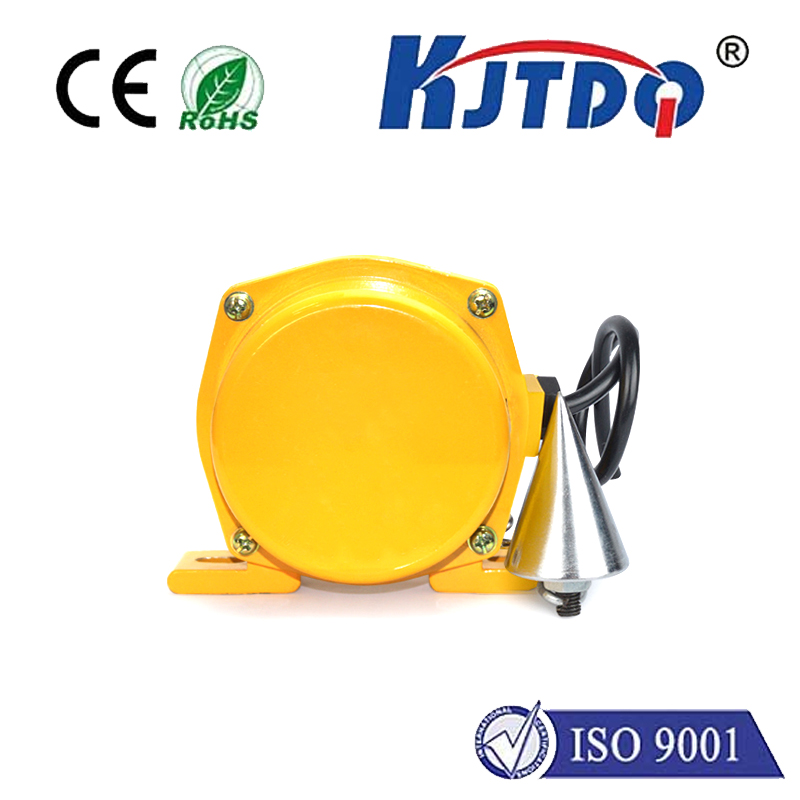
In the fast-paced world of industrial operations, where heavy machinery operates around the clock, ensuring the safety of personnel is not just a regulatory requirement but a fundamental ethical responsibility. Among the myriad of safety devices available, the pull cord switch stands as a critical and often underappreciated guardian. Specifically, the WLF6D2 pull cord switch model has emerged as a benchmark for reliability and immediate emergency response in conveyor systems, material handling equipment, and various automated production lines. This device is engineered to provide a fail-safe method for operators to halt machinery instantly from any point along its length, preventing potential accidents before they escalate into serious injuries or costly downtime.
The core principle behind the WLF6D2 pull cord switch is elegantly simple yet profoundly effective. Installed along the side of a conveyor or machinery runway, it consists of a sturdy, accessible cable or cord that runs the length of the hazardous area. This cord is directly linked to the switch's actuation mechanism. In the event of an emergency—such as a worker becoming entangled, a material jam, or any other unsafe condition—any person can quickly pull this cord. This action immediately triggers the switch, which is wired into the machinery's main control circuit, causing an instantaneous and complete shutdown of power. The "pull to stop" function is intuitive, requiring minimal training, and works reliably even in environments with poor visibility, high noise levels, or where an operator's hands are occupied.
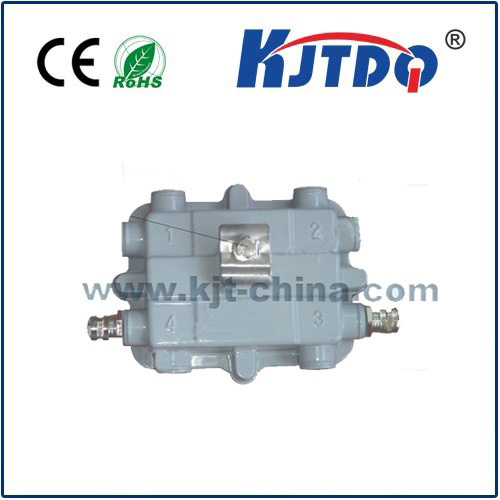
What sets the WLF6D2 model apart in a crowded market are its robust construction features designed for harsh industrial environments. Typically housed in a heavy-duty, corrosion-resistant enclosure (often meeting IP67 ratings for dust and water ingress protection), it is built to withstand exposure to moisture, dust, extreme temperatures, and constant vibration. The internal switching mechanism is designed for high durability, capable of handling millions of operational cycles without failure. Many models, including variants of the WLF6D2, offer a dual-channel safety configuration. This means they utilize two independent switch contacts; for the machine to operate, both circuits must be correctly closed. Any fault or discrepancy between the two channels causes a safety shutdown, providing an additional layer of protection against internal component failure. Furthermore, these switches are designed with a manual reset function. After an emergency stop has been activated, the switch cannot be reset remotely or automatically. A physical, deliberate action—often involving a key or tool—is required at the switch location itself to restore power. This prevents accidental or unauthorized restarting, ensuring the area is safe before operations resume.
The applications for the WLF6D2 pull cord switch are vast and critical across multiple sectors. In mining and quarrying, they are indispensable along long conveyor belts transporting raw materials, allowing workers to stop the belt if a blockage or personal danger arises. In packaging and bottling plants, they secure automated lines where rapid movement poses pinch-point hazards. At airports, they line baggage handling systems to protect maintenance staff. In warehouse and distribution centers, they are essential for sortation conveyor safety. Beyond immediate accident prevention, the strategic installation of these switches contributes significantly to a stronger safety culture. It empowers every employee, regardless of their role, to take direct and immediate action for their own safety or that of their colleagues. This democratization of emergency control fosters a proactive attitude towards hazard identification and risk mitigation.
Choosing and implementing the right pull cord switch, however, requires careful consideration. It is not a one-size-fits-all component. Factors such as the length of the cord run, the required switching capacity (in amps), the environmental conditions (presence of chemicals, explosive atmospheres requiring ATEX certification), and compliance with local and international safety standards (like ISO 13850, which governs emergency stop functions) must all be evaluated. The WLF6D2 series typically offers options to meet these varied demands. Proper installation is equally crucial. The pull cord must be installed at a consistent, easily reachable height, with adequate tension to prevent sagging but not so much that it is difficult to pull. Clear, highly visible signage must mark its location and function. Regular testing and maintenance are non-negotiable; a monthly functional test where the cord is pulled to verify an immediate machine stop should be a standard part of any facility's safety protocol.
In conclusion, while technological advancements bring increasingly sophisticated automation to industry, the need for simple, direct, and foolproof safety interventions remains paramount. The WLF6D2 pull cord switch embodies this principle. It serves as a vital, last-line mechanical defense, bridging the gap between complex control systems and human instinct. Investing in high-quality, reliable safety components like the WLF6D2 is not merely a cost of doing business—it is a direct investment in human well-being, operational continuity, and corporate integrity. In the calculus of industrial management, there is no metric more important than ensuring that every worker returns home safely, and devices like these are fundamental to achieving that goal.