Проверка
Проверка
Проверка
Проверка
Проверка
Проверка
In industrial environments where conveyor systems, assembly lines, and large machinery are in constant operation, emergency stop mechanisms are not just a regulatory requirement but a critical component of daily safety protocols. Among these vital safety devices, the pull cord switch stands out for its simplicity, reliability, and immediate response capability. Specifically, the JSB-KLS-II model represents a significant advancement in this field, offering robust performance tailored for demanding applications. This article explores the functionality, key features, and essential benefits of integrating the JSB-KLS-II pull cord switch into modern industrial safety systems.
The core principle of a pull cord switch, often called an emergency stop switch or rope pull switch, is straightforward. It is installed along the length of a conveyor belt or machinery. A cable or rope runs parallel to the equipment and is connected to the switch's actuation mechanism. In an emergency—such as a worker becoming entangled, a material jam, or any other hazardous situation—any person along the line can pull the cord. This action immediately triggers the switch, sending a stop signal to the machinery's control system, thereby halting operation to prevent injury or damage. The JSB-KLS-II is engineered to perform this function with exceptional durability and precision, even in harsh conditions involving dust, moisture, and vibration.
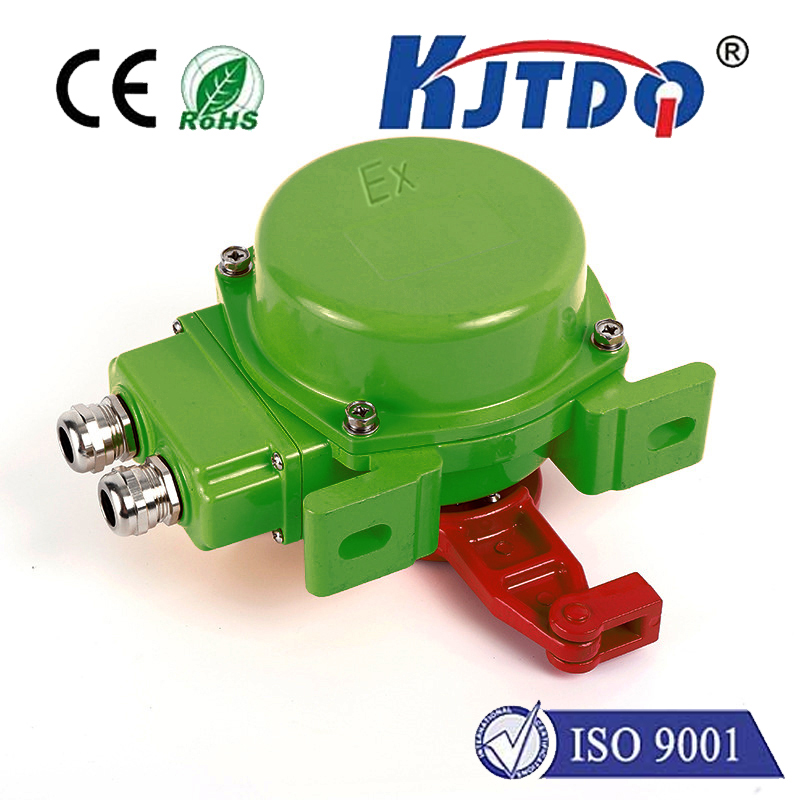
What sets the JSB-KLS-II model apart are its enhanced design features. Typically constructed with a heavy-duty, corrosion-resistant metal enclosure, it is built to withstand the rigors of industrial settings like mining, quarrying, cement plants, and bulk material handling. The switch mechanism itself is designed for high reliability, often featuring a direct-action design that minimizes the risk of failure. Many models include a clearly visible indicator flag that changes position when the cord is pulled, providing immediate visual confirmation of the activation from a distance. This is crucial for troubleshooting and resetting the system after an emergency stop.
Furthermore, the JSB-KLS-II often incorporates a manual reset function. After the emergency cord is pulled and the system stops, the switch cannot be reset remotely or automatically. A responsible operator must physically go to the switch location, assess that the hazard has been cleared, and manually reset it. This forced local reset is a critical safety feature that prevents accidental or unauthorized restarting of equipment, ensuring the area is safe before operations resume. This aligns perfectly with global safety standards like ISO 13850, which governs emergency stop function principles.
Installation and maintenance are also key considerations. The JSB-KLS-II is designed for ease of mounting along conveyor structures. Its design often allows for adjustment of the pull cord tension to prevent sagging or false triggers. Regular testing, as simple as pulling the cord during scheduled safety checks, is recommended to ensure the switch and the entire emergency stop circuit are functioning correctly. Its robust construction typically translates to low maintenance needs, contributing to a lower total cost of ownership despite its critical role.
The benefits of deploying a reliable pull cord switch like the JSB-KLS-II are multifaceted. Primarily, it empowers personnel, giving every worker along a production line the ability to initiate an immediate shutdown, fostering a proactive safety culture. It directly helps companies comply with occupational health and safety regulations, reducing the risk of costly fines and work stoppages. Most importantly, it prevents accidents, protecting both human lives and valuable capital equipment from catastrophic damage. The resulting reduction in downtime and liability exposure offers a compelling return on investment.
In conclusion, in the complex ecosystem of industrial automation, passive safety is insufficient. Active, accessible, and fail-safe emergency intervention points are paramount. The JSB-KLS-II pull cord switch exemplifies this philosophy through its durable construction, reliable activation, and mandatory manual reset. For engineers, facility managers, and safety officers seeking to fortify their operational safety infrastructure, specifying and maintaining high-quality components like the JSB-KLS-II is a fundamental step toward achieving zero-harm workplaces and ensuring continuous, protected productivity.