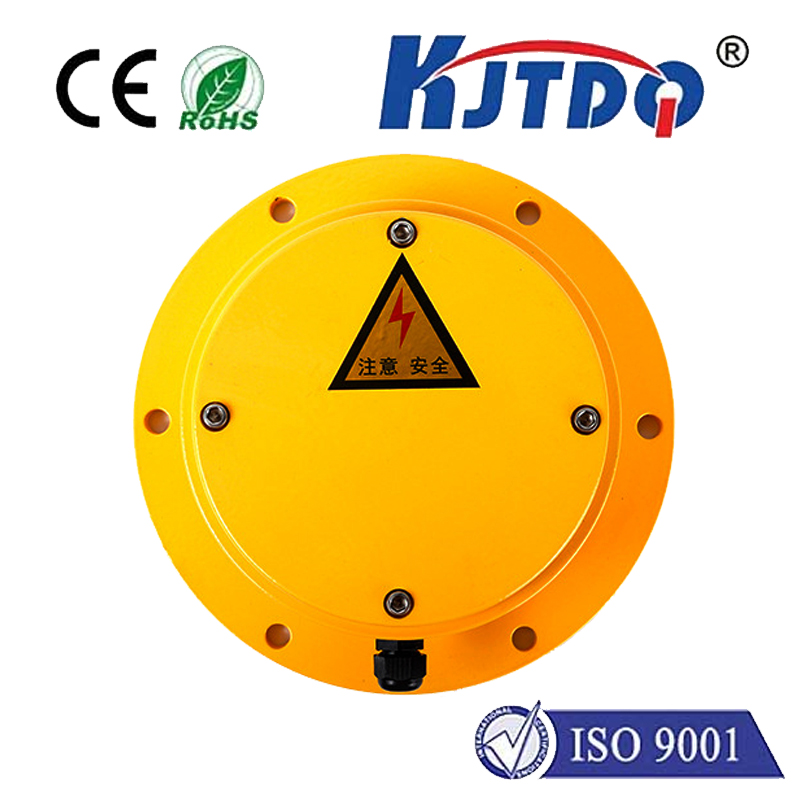
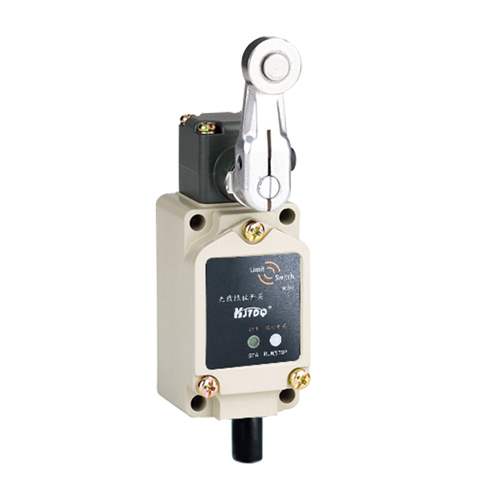
In the world of industrial automation and material handling, safety is not just a priority; it's a fundamental requirement. Among the myriad of safety devices that protect personnel and equipment, the humble pull cord switch plays a critical, often understated role. The HL-5200 Pull Cord Switch stands out as a robust and reliable solution designed to bring operations to an immediate halt in case of an emergency along conveyor belts, assembly lines, and other long machinery runs.
Imagine a lengthy conveyor system transporting materials across a factory floor or a mining site. Operators and maintenance personnel work in close proximity to these moving parts. The primary function of the HL-5200 is to provide a readily accessible and fail-safe method to stop the conveyor from any point along its length. By pulling the cord, which runs parallel to the conveyor, an operator can instantly trigger the switch, cutting power to the drive motor and activating the brake system. This simple action can prevent entanglements, equipment damage from blockages or misalignment, and more severe personal injuries. Its design is inherently intuitive, requiring minimal training—in a moment of crisis, the natural reaction is to pull the cord.
The effectiveness of the HL-5200 hinges on its durable construction and thoughtful engineering. Typically housed in a rugged, corrosion-resistant enclosure, often meeting IP65 or higher ratings, it is built to withstand harsh industrial environments filled with dust, moisture, and vibration. The internal mechanism is designed for high reliability, often featuring a direct-acting, positive break contact system that ensures the safety circuit opens immediately upon activation, regardless of the cord's pull direction. Many models come with a manual reset function, requiring an operator to physically reset the switch at the location of the stop. This is a crucial safety feature, as it forces an investigation into the cause of the emergency stop before machinery can be restarted, preventing automatic resets that could lead to repeated hazards.
Installation and integration are straightforward. The HL-5200 is mounted at strategic intervals along the conveyor, with the steel wire rope or nylon cord running through pull boxes. It is wired into the conveyor's safety or control circuit, typically in series with other emergency stops. Modern versions may offer additional features like dual-channel outputs for connection to safety PLCs (Programmable Logic Controllers), status indication lamps, or even integrated RFID tags for identifying the exact stop location in large, networked systems. This integration capability is vital for modern factories aiming for not only safety but also operational intelligence and quick troubleshooting.
Beyond basic emergency stopping, the HL-5200 contributes significantly to compliance with stringent international safety standards such as ISO 13850 (Safety of machinery — Emergency stop function — Principles for design) and various regional regulations like OSHA guidelines. Its presence is a clear, auditable demonstration of an organization's commitment to creating a safe working environment. Regular testing and maintenance of these switches are as important as their installation. A simple weekly "pull test" ensures the cord moves freely and the switch mechanism engages correctly, keeping the safety system in a constant state of readiness.
While technology advances with wireless emergency stops and sophisticated sensor-based systems, the mechanical simplicity and absolute reliability of the pull cord switch like the HL-5200 ensure its continued relevance. It provides a physical, unambiguous, and highly visible safety link between human operators and powerful machinery. For engineers, facility managers, and safety officers specifying equipment for new installations or upgrading existing lines, choosing a proven component like the HL-5200 Pull Cord Switch is a decision that safeguards both people and productivity. It is more than just a switch; it is a fundamental pillar of responsible industrial operation, ensuring that every worker has the power to stop danger in its tracks with a single, decisive pull.