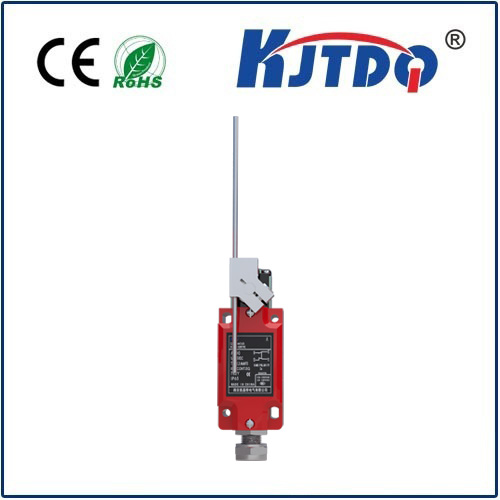
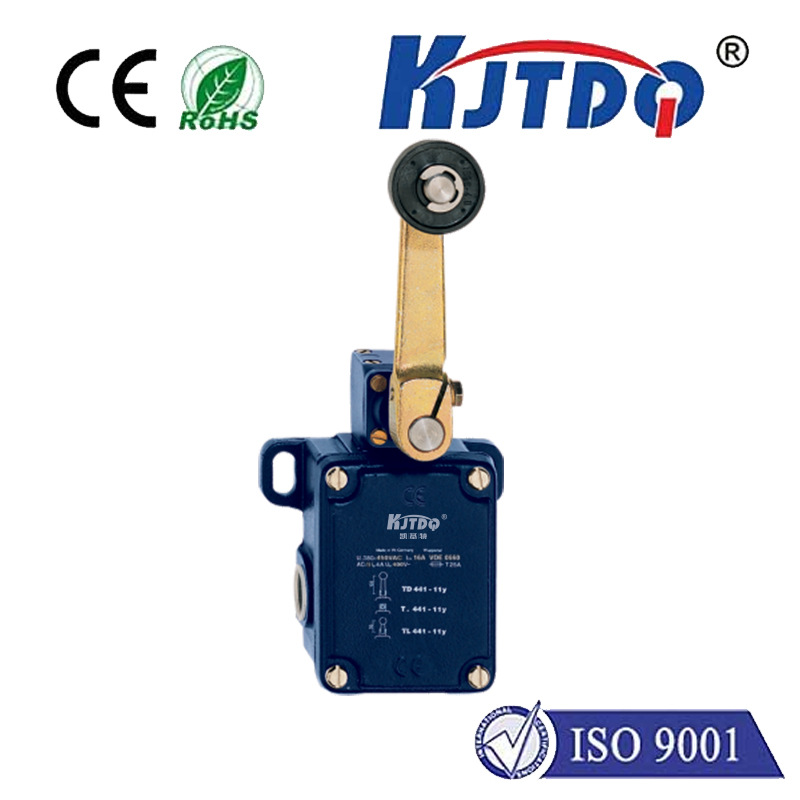
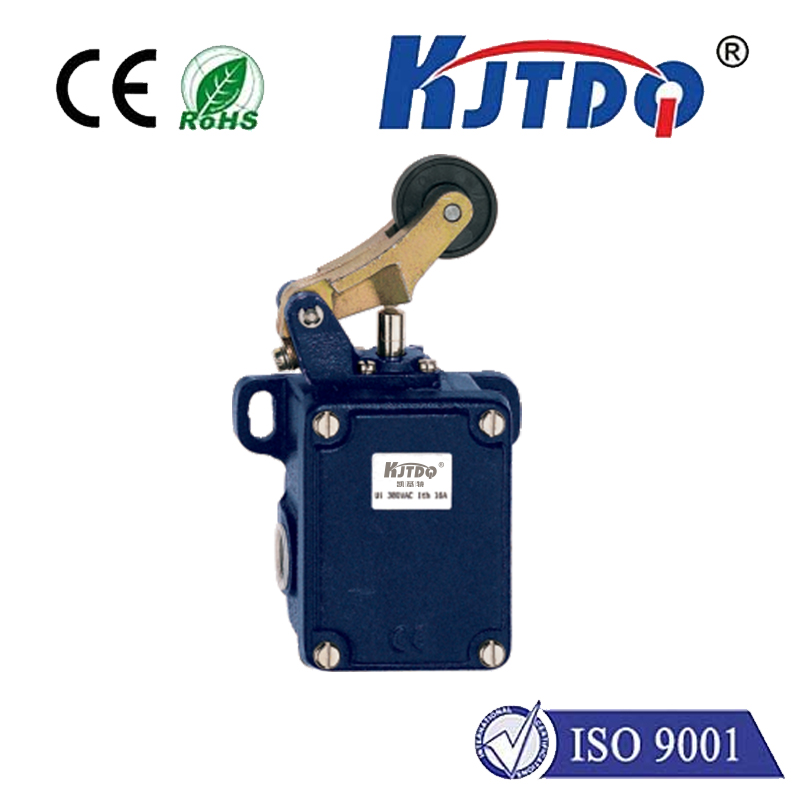
In the intricate world of industrial automation, precision and reliability are non-negotiable. Machines must operate within defined parameters to ensure safety, product quality, and operational efficiency. This is where the TER rotary limit switch emerges as a critical component, a silent guardian orchestrating the precise movements of cranes, conveyors, mixers, and countless other rotating machinery. Far from being a simple on/off device, a well-engineered rotary limit switch is a sophisticated control element that translates mechanical rotation into accurate electrical signals.
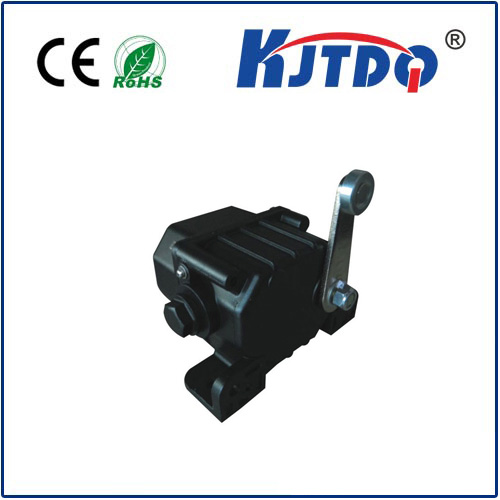
At its core, a TER rotary limit switch is a electromechanical device designed to monitor and control the angular position or rotational movement of a shaft. It is typically mounted onto the rotating part of a machine, such as a gearbox output shaft or a motor-driven axle. As the shaft turns, it drives the switch's internal cam mechanism. This mechanism is meticulously set to actuate or deactuate one or more electrical contacts at pre-determined rotational angles. These contacts are then wired into the machine's control circuit, enabling functions like stopping rotation at a specific point, initiating a secondary process, triggering an alarm, or providing positional feedback to a Programmable Logic Controller (PLC).
The versatility of TER rotary limit switches lies in their robust design and configurability. High-quality models are built to withstand the harsh realities of industrial environments. They feature sealed housings, often rated IP65 or higher, to resist ingress from dust, oil, and water. The internal components are engineered for longevity, capable of enduring millions of operational cycles. The true power, however, is in the cam setting. Technicians can precisely adjust the angular position at which each switch contact operates. This allows a single TER switch to manage multiple control events within one full revolution or over multiple revolutions, making it an incredibly flexible solution for complex sequencing.
Consider a standard overhead traveling crane in a manufacturing plant. A TER rotary limit switch installed on the trolley's travel mechanism is indispensable. It can be programmed to cut power to the travel motor when the trolley approaches the end of its runway, preventing a catastrophic collision. Simultaneously, another set of contacts within the same switch unit could be set to activate a warning beacon as the trolley enters a predefined "slow-down" zone, promoting safer operation. This dual functionality from one device simplifies wiring, reduces the number of components, and enhances system reliability.
Another compelling application is in bulk material handling, such as stacker-reclaimers or rotary valve feeders. Here, TER switches provide absolute position control, ensuring that equipment rotates to exact locations for loading or unloading. Their mechanical nature offers a distinct advantage in scenarios where absolute position feedback is required without the need for complex programming or continuous power, unlike some purely electronic sensors. They provide a fail-safe mechanical backup or primary control that is immune to electrical noise and signal interference common in industrial settings.
Selecting the right TER rotary limit switch requires careful consideration of several operational factors. The mechanical specifications are paramount: the required number of switching points, the switching angle accuracy, the maximum operating speed (RPM), and the torque needed to drive the switch. Electrically, the voltage, current rating (both AC and DC), and the type of contacts (e.g., slow-break, snap-action) must match the control circuit's demands. Environmental conditions cannot be overlooked; the housing material and ingress protection rating must be suitable for the presence of moisture, chemicals, extreme temperatures, or explosive atmospheres (requiring certified explosion-proof models).
Installation and maintenance, while straightforward, are crucial for optimal performance. Proper alignment during mounting is essential to prevent binding and ensure accurate angle transmission. Regular inspection schedules should include checking the tightness of mechanical connections, verifying the cam settings have not shifted, and ensuring the housing seals remain intact. Periodically exercising the contacts helps prevent oxidation and ensures reliable electrical connection. This proactive approach minimizes unplanned downtime, which is a key metric in any automated facility.
In an era increasingly dominated by digital sensors and networked IO-Link devices, the TER rotary limit switch maintains its vital role. Its strength is its simplicity, durability, and unambiguous operation. It provides a direct, physically verifiable link between mechanical movement and electrical control. For engineers designing or maintaining systems where safety and repeatable positional accuracy are critical, integrating a robust TER rotary limit switch is not just an option—it is a fundamental principle of sound machine design. It represents a proven, trustworthy technology that continues to form the backbone of precise motion control in industries worldwide, from steel mills and ports to food processing plants and packaging lines.